
 AC repair
 Furnace & heating
 Heat pumps
 Ductless mini splits
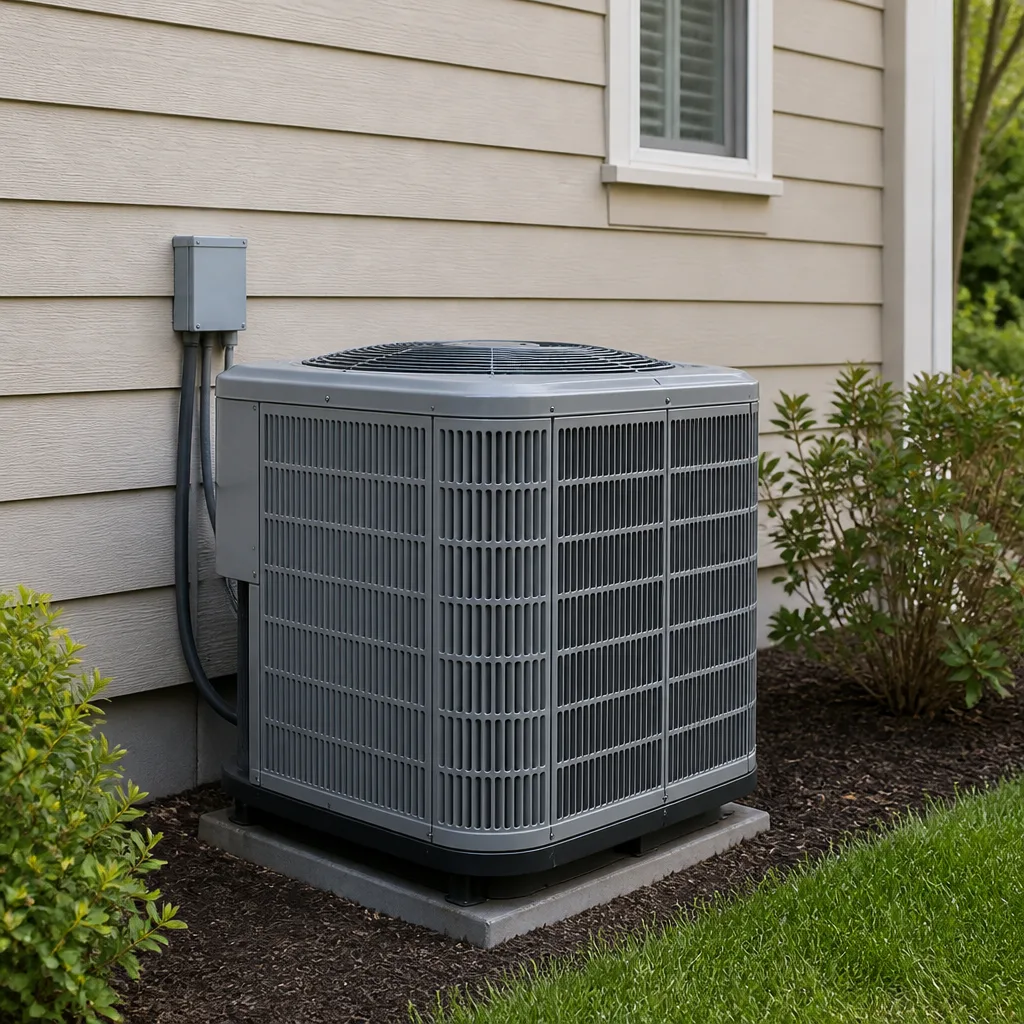 Carrier
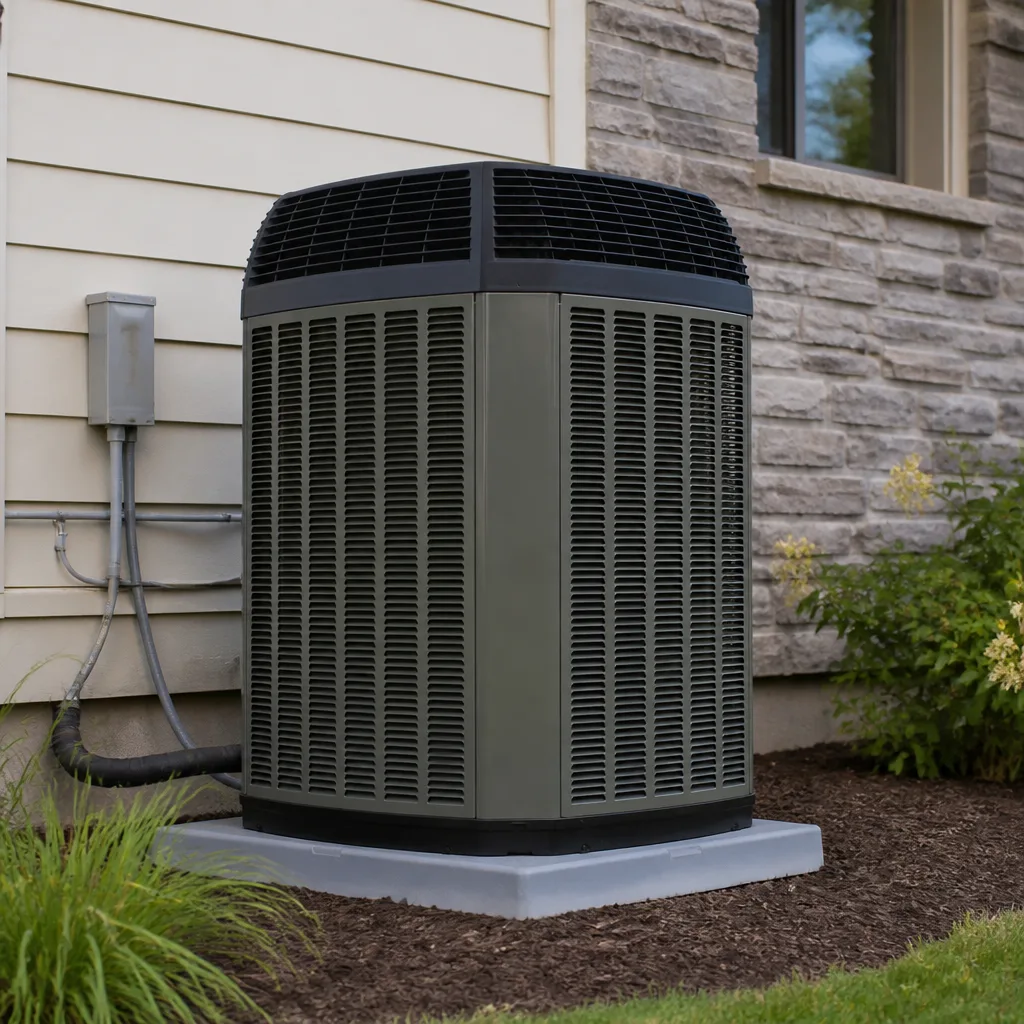 Trane
Trane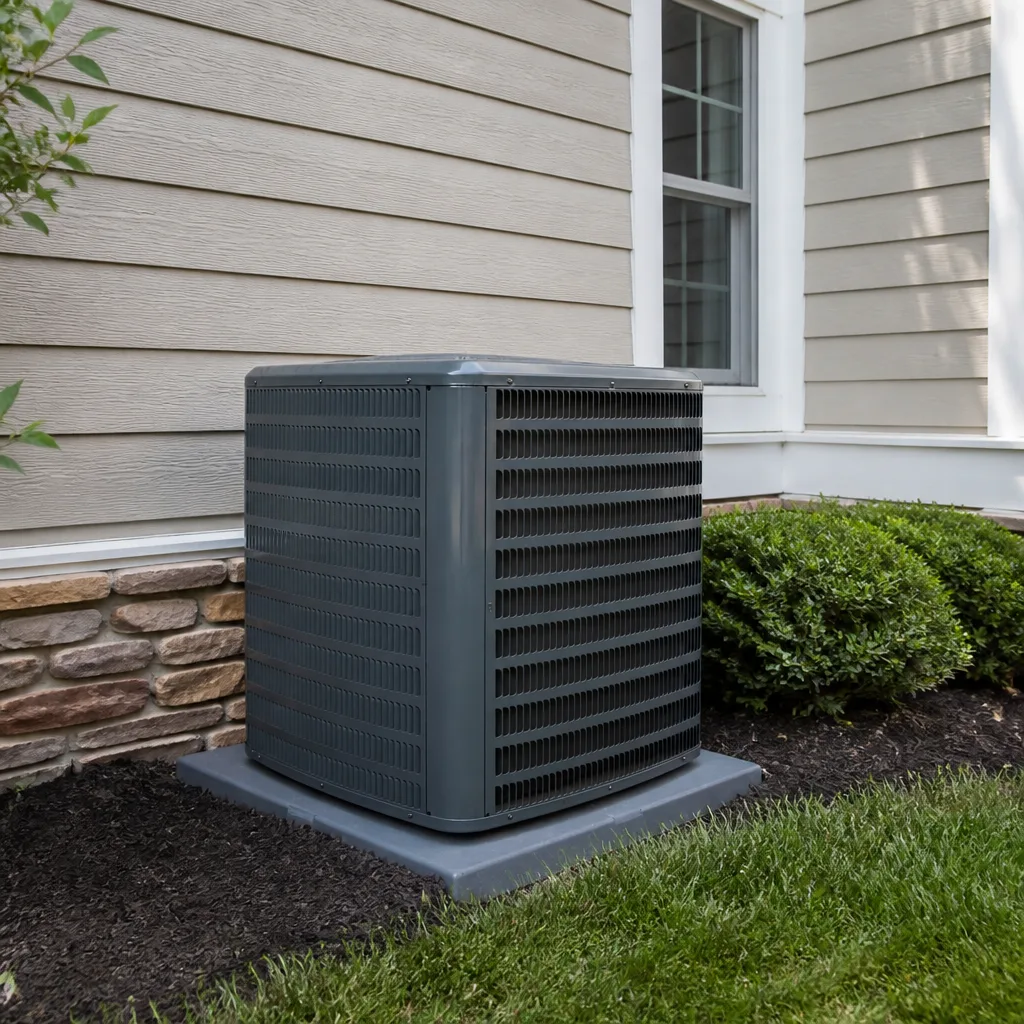 Goodman
Seasonal tune-up and full diagnostic on your Carrier, Trane, or Goodman system - readings shown to you before any repair is proposed
Diagnosis first, numbers second - you approve the repair price before a single part goes in.
Get your free estimateDaikin Capacitor Replacement: The Austin Owner’s Guide
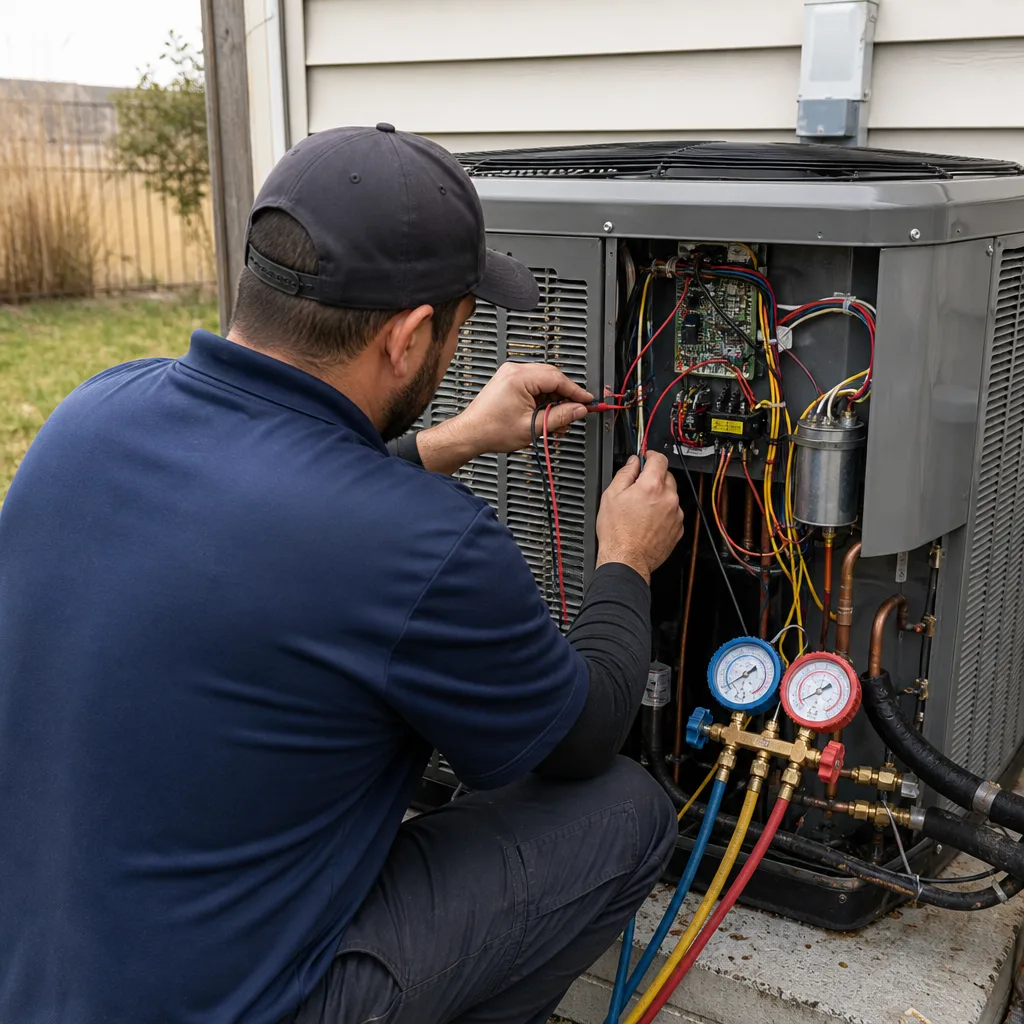
Daikin capacitor replacement in Austin typically runs $150 – $380 installed, parts and labor included, and in most cases we can have your system running the same day you call. A capacitor is a small cylinder inside your outdoor condenser or air handler that stores and releases the electrical charge your compressor and fan motors need to start. When it fails, you’ll usually notice the outside unit humming but not starting, or the fan not spinning while the system tries to run. Austin’s summer heat pushes capacitors hard; the thermal stress of 100-degree afternoons shortens their life, and we replace more of them in July and August than the rest of the year combined. We keep Daikin-compatible capacitors in common microfarad ratings on our trucks, so the swap often takes under an hour once we’re at your door.
Two things about Daikin parts you may not hear elsewhere. First, Daikin builds their outdoor units with single and dual capacitors depending on the model line, and the wrong one will not work, even if it physically fits. Second, Daikin equipment runs at different electrical characteristics than the generic parts-store capacitors in some cases, so matching the original spec matters more than on older Carrier or Trane units. If a technician reaches for a “close enough” capacitor, that’s a red flag. We name the problem, name the price, and then we fix it, no surprises after the fact.
Which Daikin Models This Applies To
This page covers residential Daikin split systems and heat pumps across the main model families: the DX series, the FIT (VRV-style) line, and the older R-410A legacy units still running in Austin homes. The capacitor we’re talking about lives in two places depending on your setup. On a standard split system, it’s inside the outdoor condenser cabinet near the compressor and fan motor. On some FIT and multi-zone systems, there’s a second smaller capacitor on the indoor air handler blower motor. Both can fail independently.
How to know you have the right part: the capacitor itself has a printed label with two numbers that matter: the microfarad rating (abbreviated MFD or µF, usually between 5 and 80 for Daikin residential units) and the voltage rating (370 or 440 VAC). Daikin typically specifies capacitors rated for 440 VAC on outdoor units, which is a meaningful spec in Texas, where line voltage sags during peak summer demand and a 370V capacitor runs at its ceiling. A 440V-rated capacitor simply lasts longer in Austin’s electrical environment. That’s a checkable detail we verify on every Daikin capacitor replacement we do, rather than assuming the old part’s rating was correct when the system was installed. It’s not uncommon for us to find a previous repair used a lower-rated part that worked for a season and then failed.
On OEM versus aftermarket: Daikin-branded capacitors are fine but unremarkable; the brand doesn’t manufacture the capacitor itself. What matters is the spec. We use industrial-grade capacitors from manufacturers that build to exact microfarad and voltage tolerances, usually with a ±5% or tighter rating. Generic parts-store capacitors often carry ±10% tolerance, which can shorten compressor life and throw off motor efficiency. For a Daikin inverter system especially, a drift in capacitance reads as a system fault. Paying a little more for a tightly-spec’d part is cheaper than a compressor replacement in three years.
One compatibility gotcha that catches owners off guard: a dual capacitor (one cylinder, three terminals, runs both compressor and fan) cannot be swapped for two singles without rewiring, and vice versa. If your Daikin has a dual and someone installs two singles because that’s what’s on the truck, that’s not a proper repair. We stock both configurations for Daikin systems plus equivalents that fit Carrier, Trane, and Lennox equipment, since Austin homes have a mix of everything.
Styles & brands we work with
Signs Your Daikin Capacitor Replacement Is Failing
- Outside unit hums but the fan doesn’t spin. This is the classic call. The compressor is trying to start and drawing locked-rotor current, but the capacitor can’t supply the phase shift to get it moving. That hum is the sound of a motor fighting a dead part. The longer it sits like that, the more heat builds inside the motor windings.
- Fan spins slowly or only after you push it with a stick. Once a capacitor loses roughly 10% of its rated capacitance, the fan motor won’t produce full starting torque. In Austin, owners notice this when they walk past the unit and realize the fan is turning but barely moving air. A push-start is a temporary field trick, not a repair.
- System runs for 10 minutes, then shuts off before reaching temperature. A failing capacitor can cause the compressor to overheat and trip its internal thermal overload. The system resets after cooling down, so you get a cycle of start-stop that never satisfies the thermostat. Your house stays warm, the unit works harder than it should, and your electric bill climbs.
- AC runs but air from the vents is not cold. When the compressor capacitor is weak, the compressor may run but not pump refrigerant at full capacity. You’ll feel lukewarm air moving, which in an Austin August is basically the same as no cooling at all. People sometimes mistake this for low refrigerant when the fix is a $25 part.
- Visible bulging, leaking oil, or burned terminals on the capacitor itself. Capacitors fail visibly when they overheat and the internal dielectric oil expands, swelling the metal can or weeping from the top seal. If you’re comfortable opening the disconnect panel and looking, that’s one of the few trustworthy visual checks for this part. If you see any of that, kill power at the breaker and call us.
See the difference
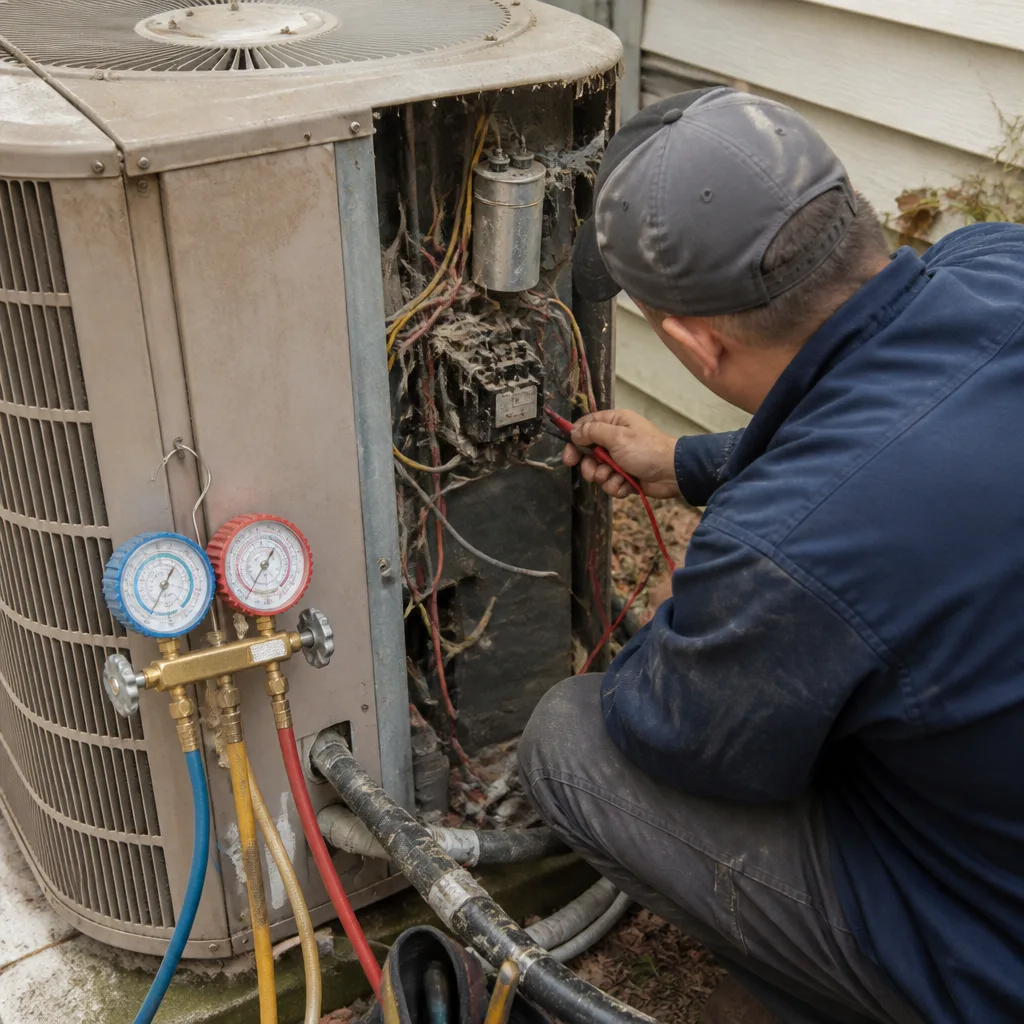 Before
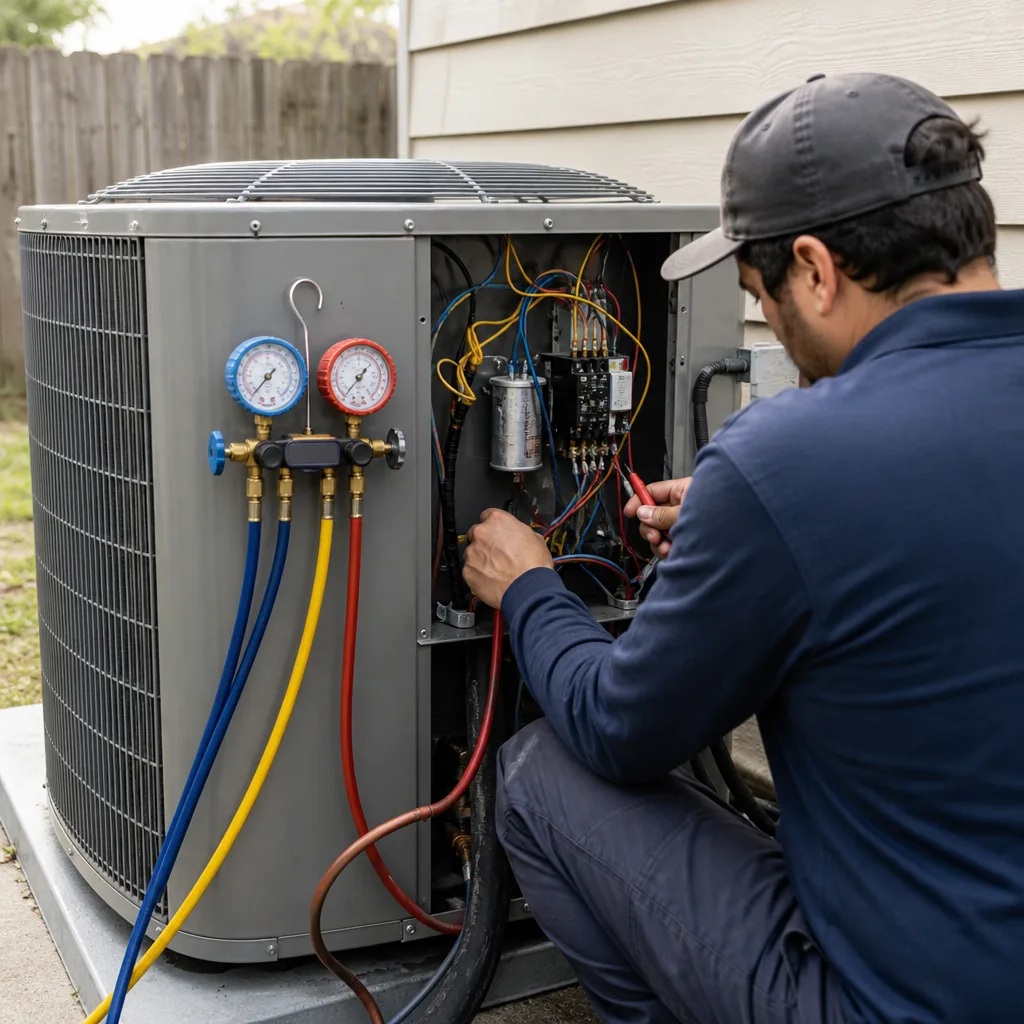 After
After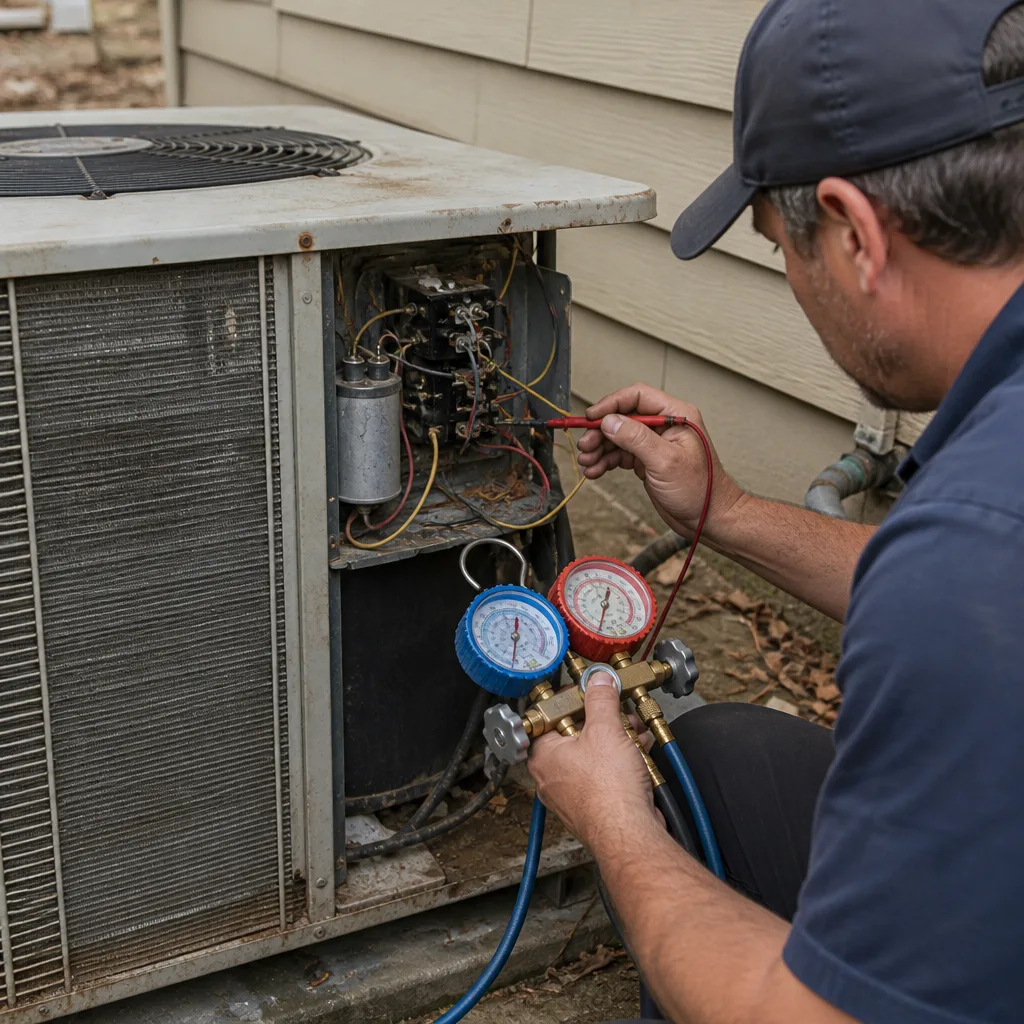 Before
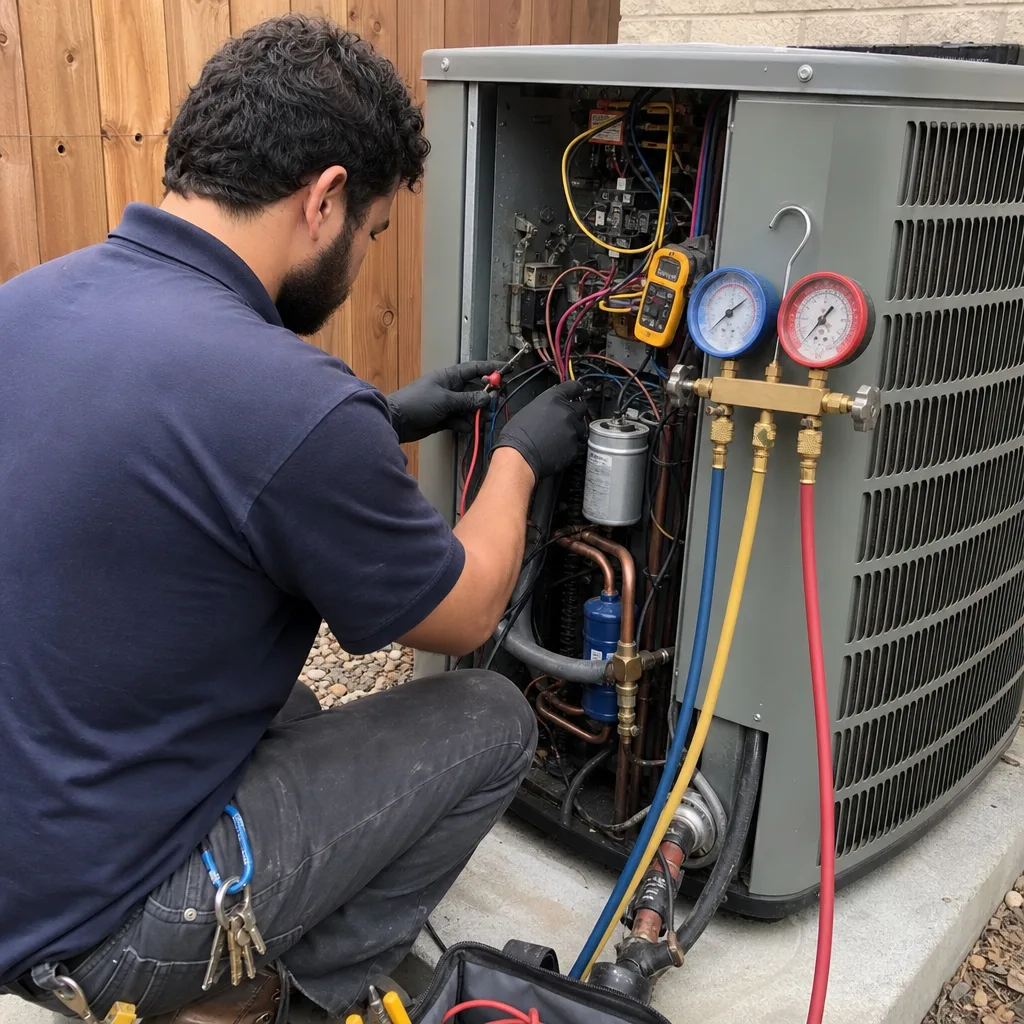 After
After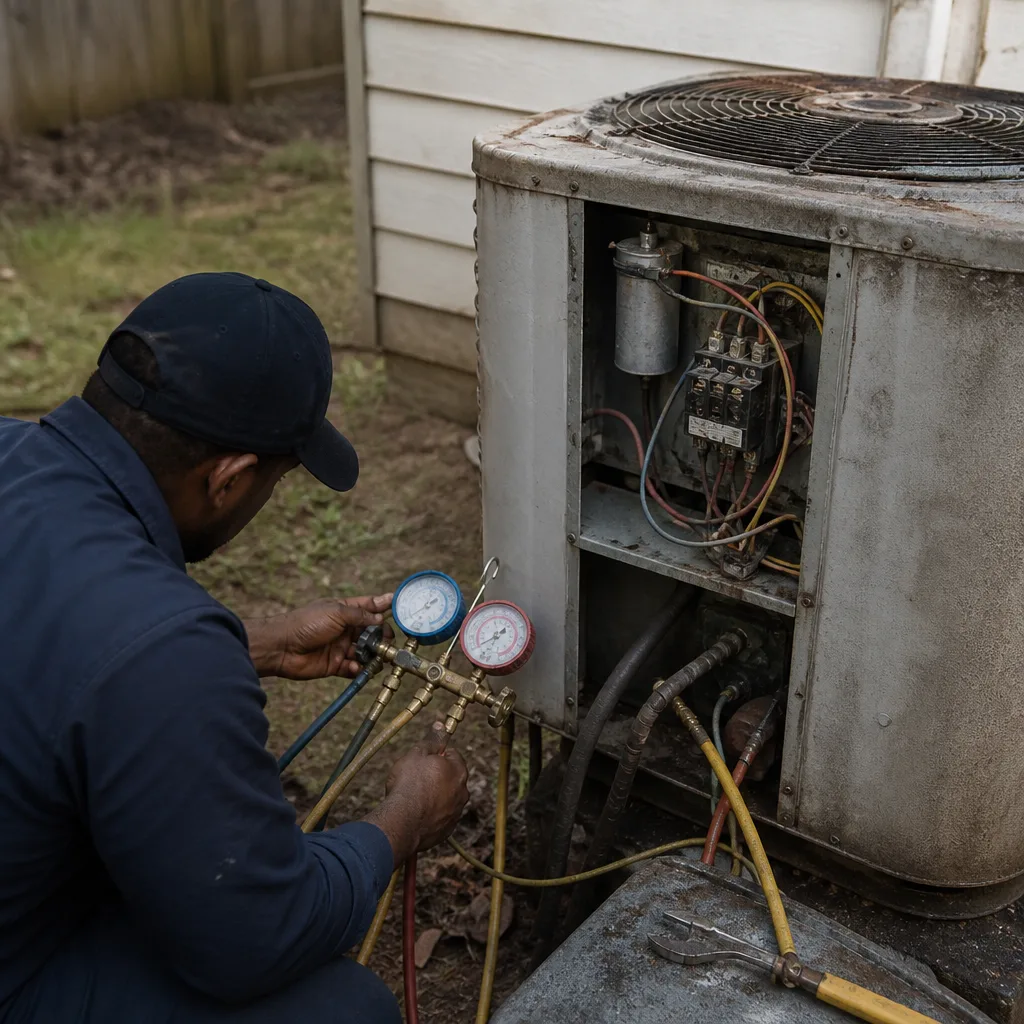 Before
 After
AfterReplacement Cost & What’s Included
Here’s a straight answer with real Austin market numbers. A Daikin capacitor replacement, including the part and the labor to correctly install and test it, generally runs $150 – $380 in the Austin area. Where you land in that range depends on three things: whether it’s a single or dual capacitor (duals cost more), the microfarad and voltage rating (Daikin’s higher-spec 440V parts sit at the upper end), and whether we need to pull and identify the failed part first or you can give us the reading from the label. Single-capacitor jobs on common Daikin DX units usually settle around $180 – $250. Dual or higher-spec replacements run $250 – $380.
Every Daikin capacitor replacement from Brandt HVAC Co Austin includes the new capacitor, the removal and disposal of the old one, terminal cleaning and tightening, and a full system test: we check the compressor and fan motor amp draw against the spec, verify the new running voltage, and confirm the system cools properly before we leave. You get a written price before any work starts, and the repair is covered by our 365-Day Done Right Promise. If it fails within a year, we come back and make it right at no charge. No argument, no diagnostic fee, no back-and-forth.
One more thing worth knowing while we’re on price. Some companies in the Austin market will quote a capacitor replacement low, then stack a diagnostic fee, a “service call” fee, and a disposal fee on top so the final bill is double. The way we do it is one written price that includes everything. If the number on your invoice is different from the number you agreed to, that’s our problem, not yours.
DIY or Call Us?
A capacitor stores a charge strong enough to stop your heart, and it can hold that charge for hours or days after the breaker is off. This is the honest safety paragraph: unlike changing a furnace filter or cleaning a condensate line, a capacitor is not a beginner-friendly repair. If you don’t know how to safely discharge one, if you aren’t certain which of the three terminals is what, or if you don’t own a meter that reads microfarads, don’t open the panel. The risk isn’t just shock; a shorted capacitor during a DIY attempt can cook the compressor relay or the control board, turning a $200 job into a $1,500 board replacement.
What you can safely do: confirm whether the system is doing the humming thing, check for a tripped breaker, and if you’re comfortable doing so, take a clear photo of the capacitor’s label through the service panel with power off at the disconnect. That photo tells us the exact part before we even arrive. But for the actual removal, discharge, install, and test, have a licensed tech do it. We’re at (361) 326-1553, we carry Daikin capacitors on our trucks, and we’ll have your unit cooling again the same day in most Austin neighborhoods.
FAQs
In Austin’s climate, expect 5 to 8 years from a quality capacitor, and sometimes less if the system is in direct afternoon sun or there’s no shade over the condenser. The hotter the operating environment, the faster the internal dielectric electrolyte degrades. Some OEM capacitors in Daikin units fail as early as year 4. If yours lasted 7 or more Texas summers, it gave reasonable service. Call (361) 326-1553 and we’ll quote a replacement on the spot.
No. A capacitor cannot be repaired; when it fails, the internal plates and dielectric have broken down, and no one in the HVAC trade rebuilds residential motor capacitors. The only correct fix is a new capacitor matched to the original microfarad and voltage rating. A repair that “band-aids” the old capacitor is a future callback waiting to happen.
The actual swap takes 30 to 60 minutes once our technician is on site, which includes pulling the old part, cleaning and tightening terminals, installing the new capacitor, and running the system through a full test. The larger variable is dispatch time, and that’s where live-answer matters: when you call us, a real person answers 24/7 and can often route a truck your way the same day.
We keep the most common Daikin single and dual capacitor ratings on our trucks across Austin, along with parts compatible with Carrier, Trane, and Lennox systems. If your Daikin requires an unusual spec we don’t have, we’ll tell you that honestly, get it sourced, and set a time to install it rather than improvising with the wrong part.
Written by Devin Marlowe, Owner, Brandt HVAC Co Austin at Brandt HVAC Co Austin, serving Austin and nearby areas.