
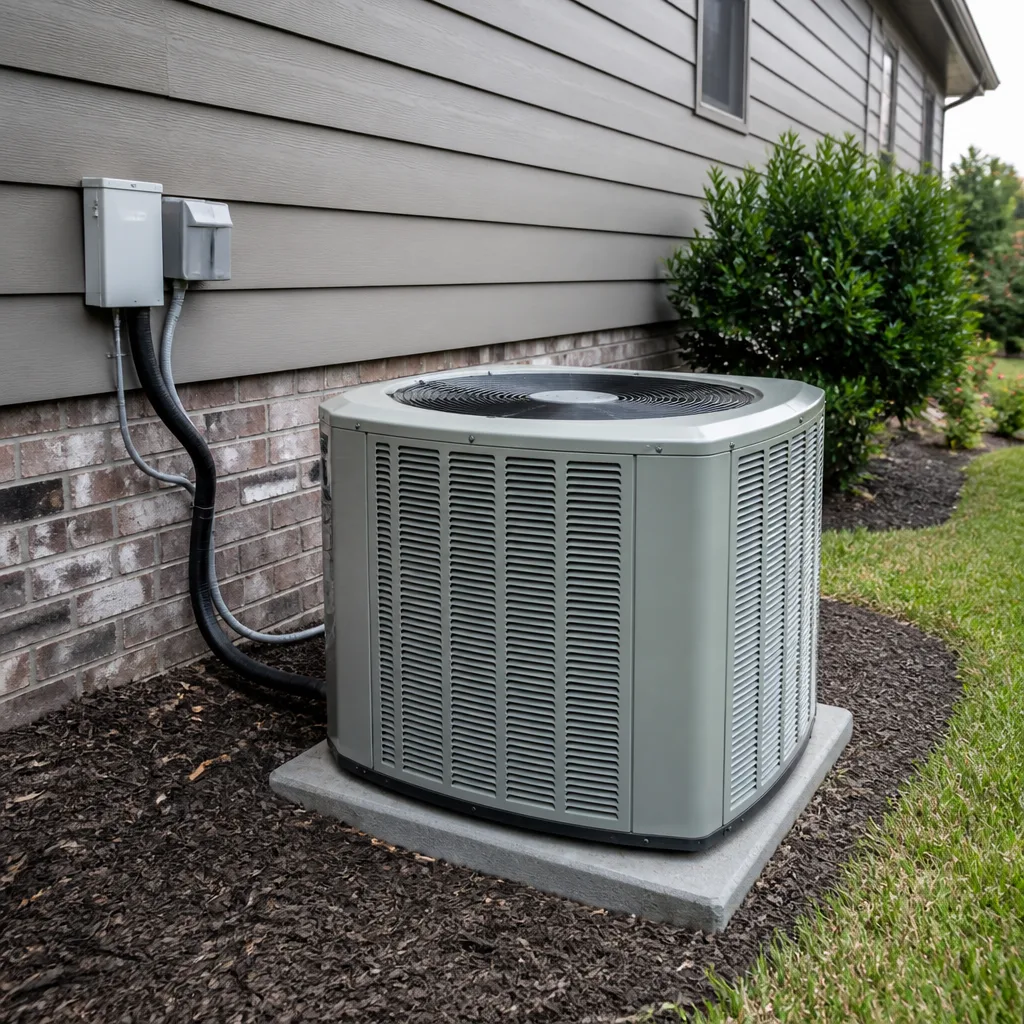
 AC repair
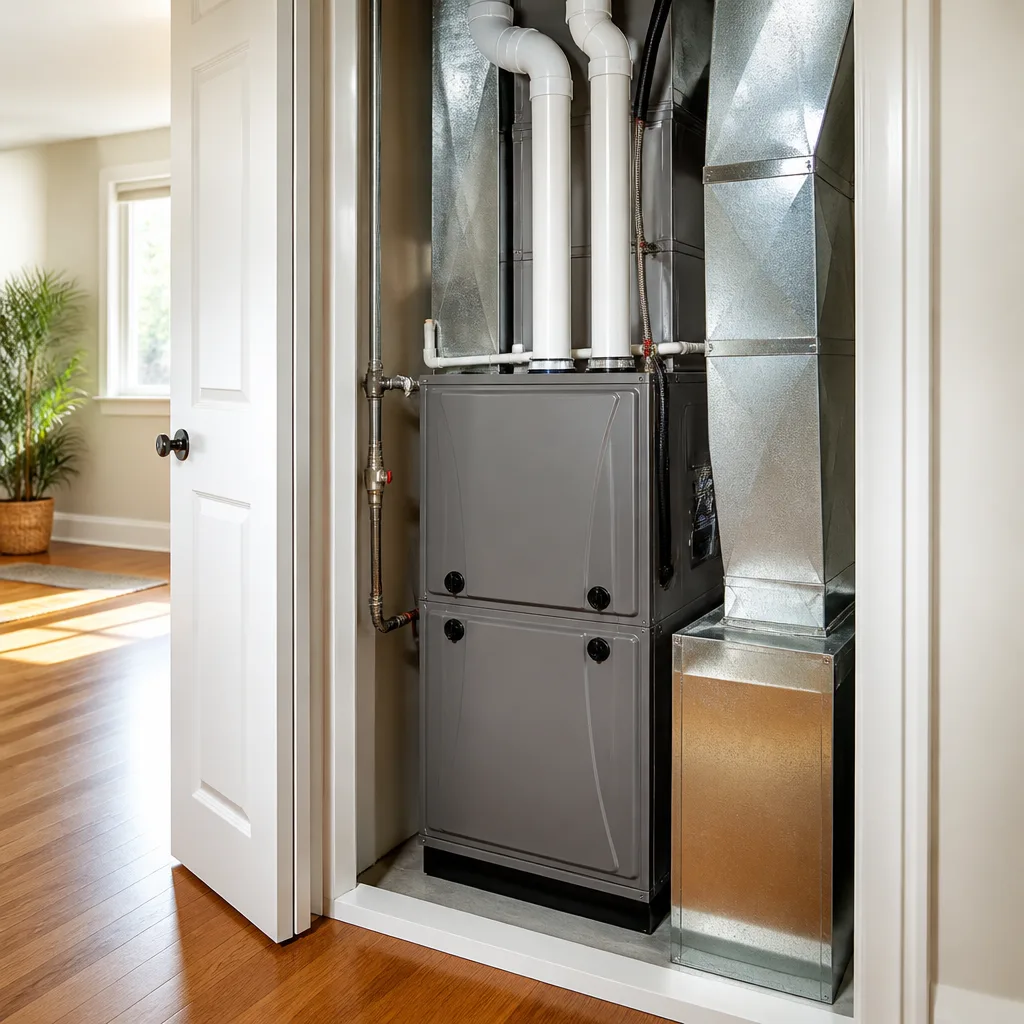 Furnace & heating
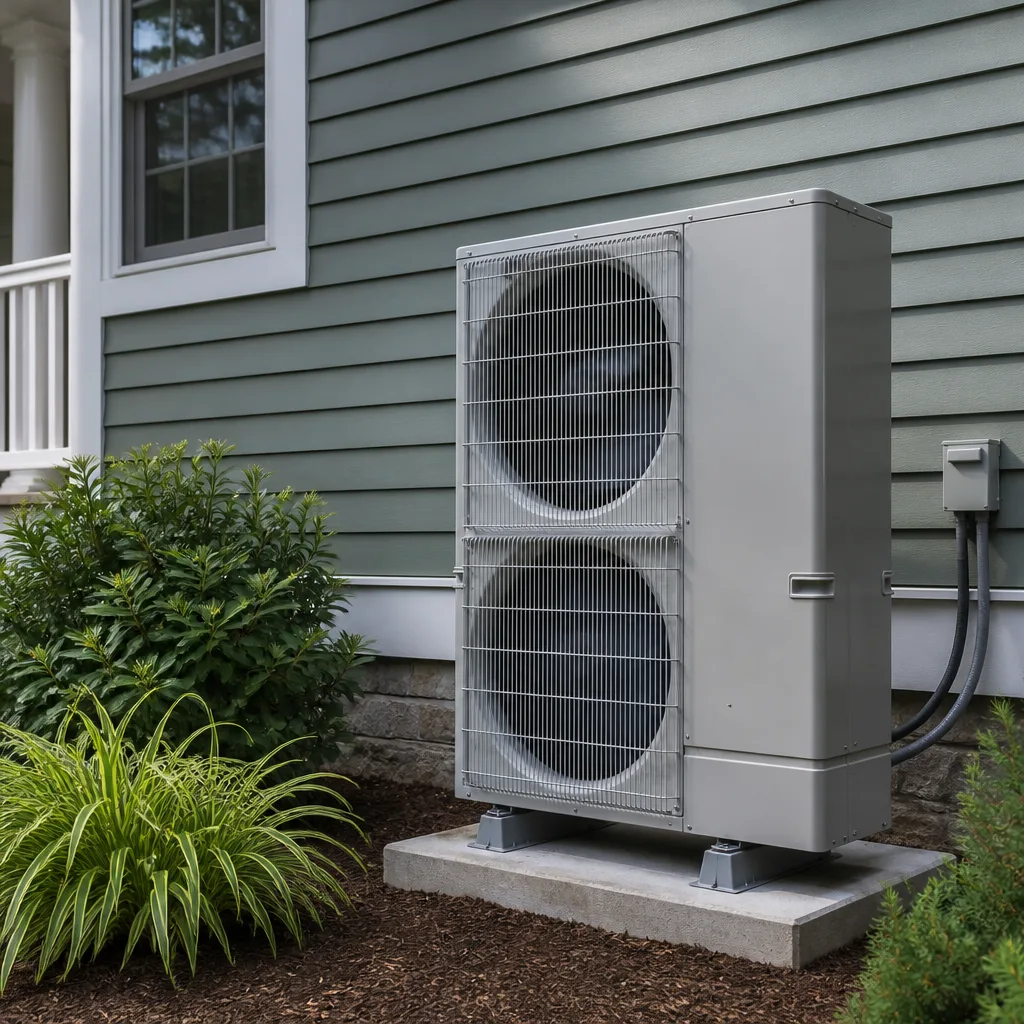 Heat pumps
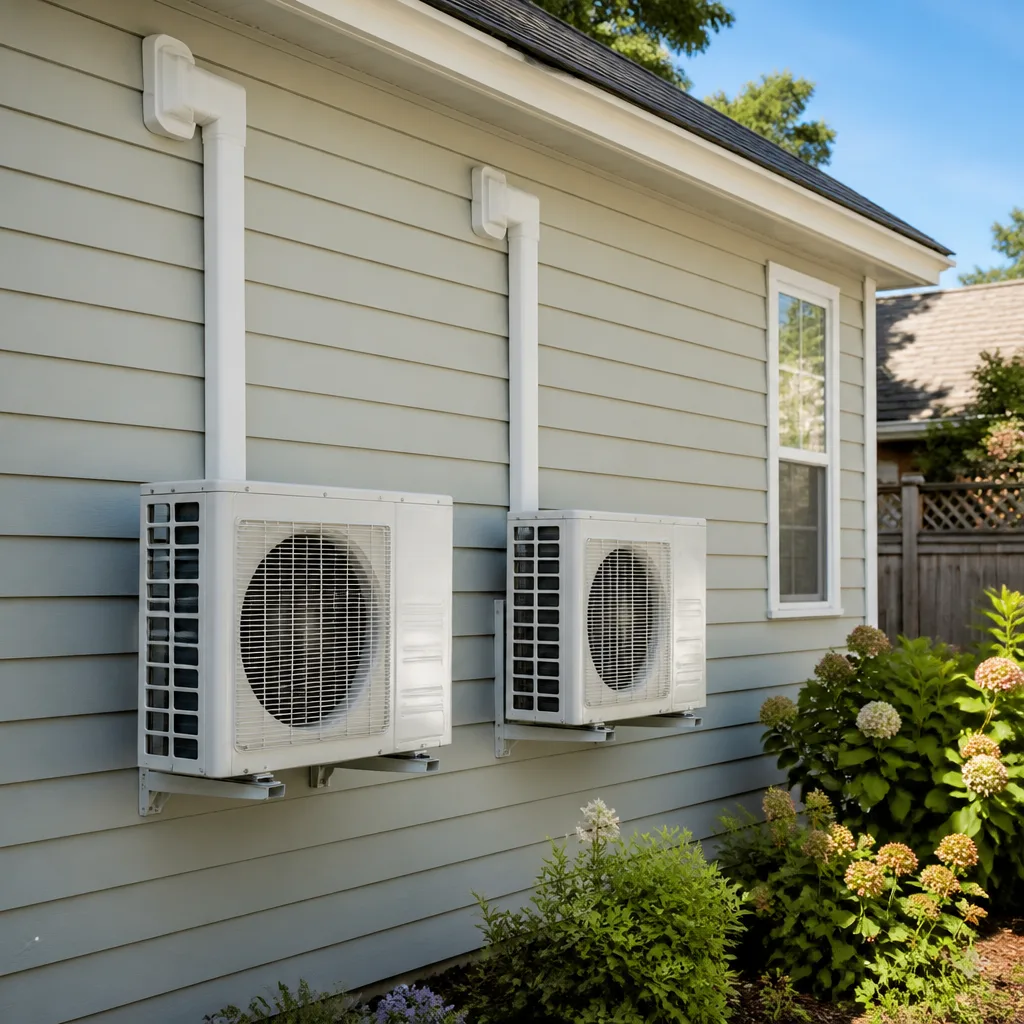 Ductless mini splits
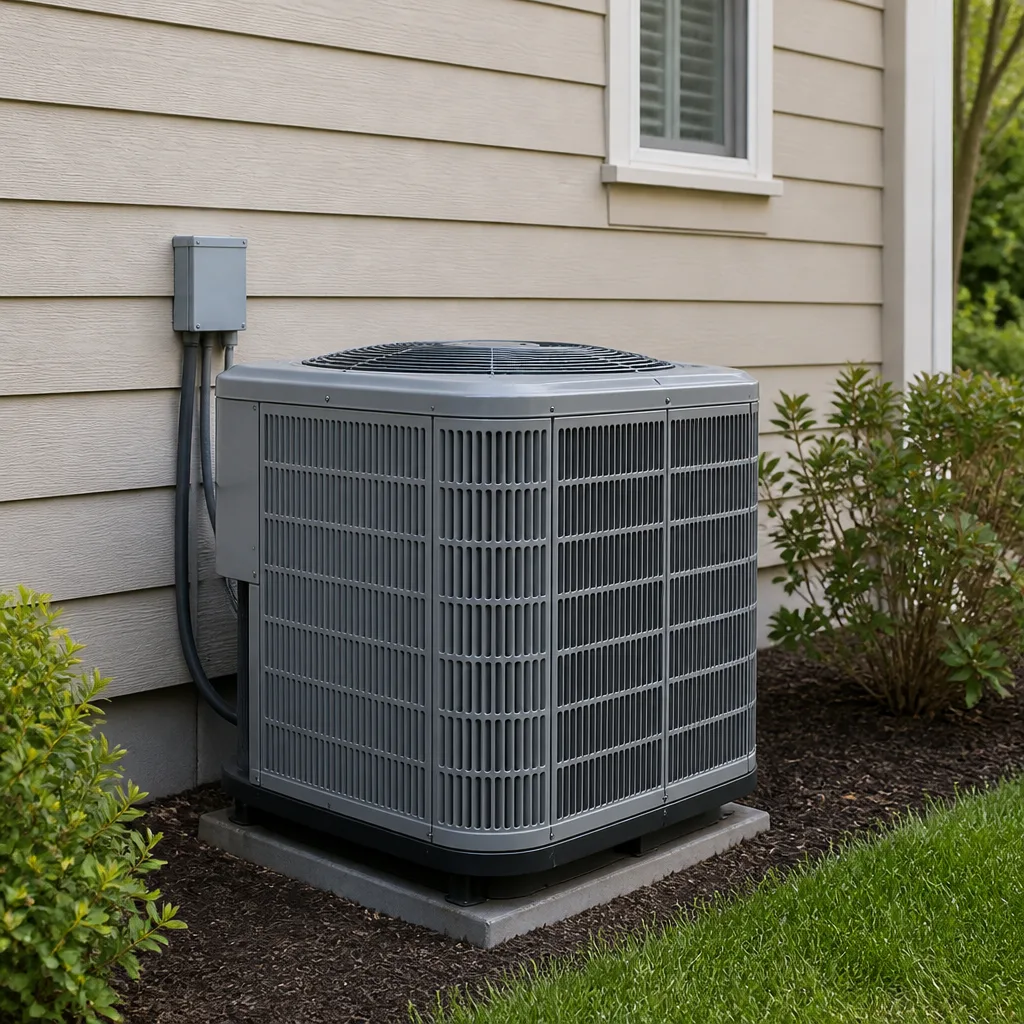 Carrier
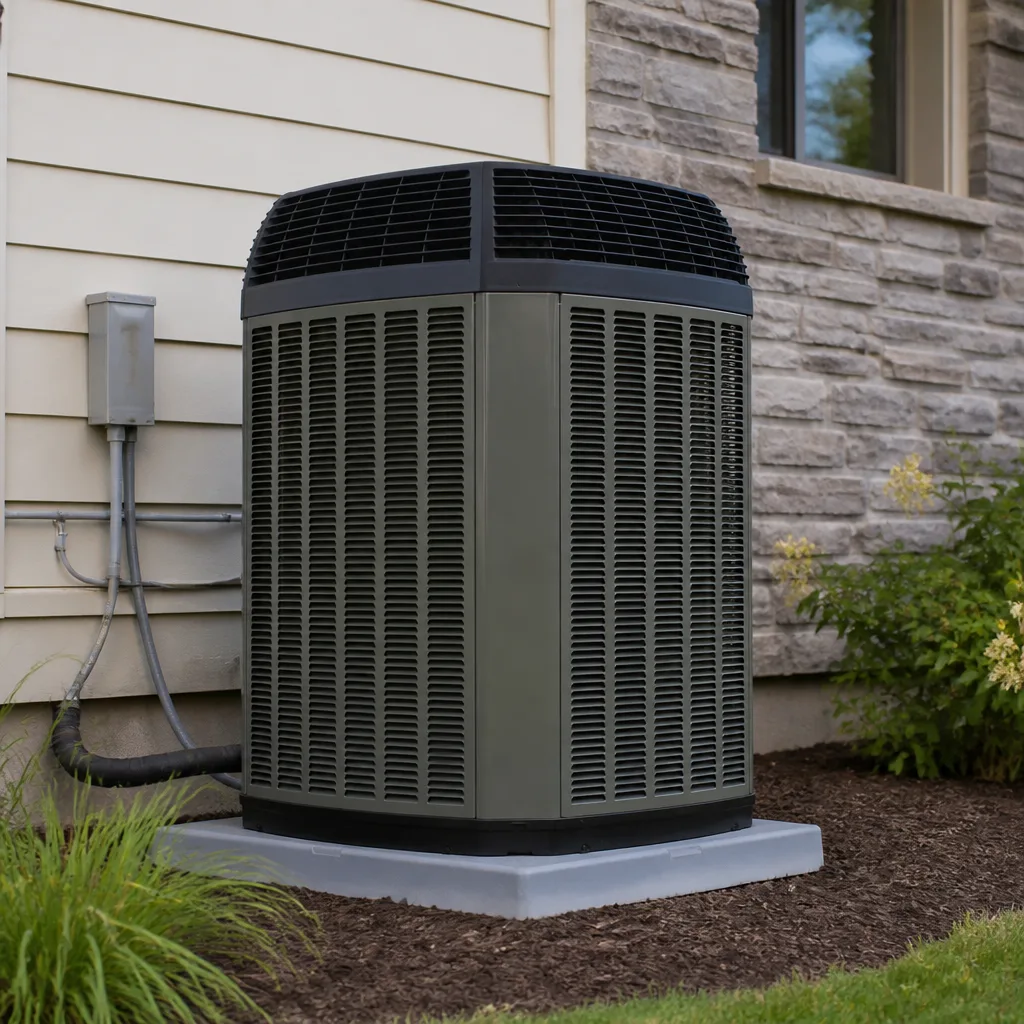 Trane
Trane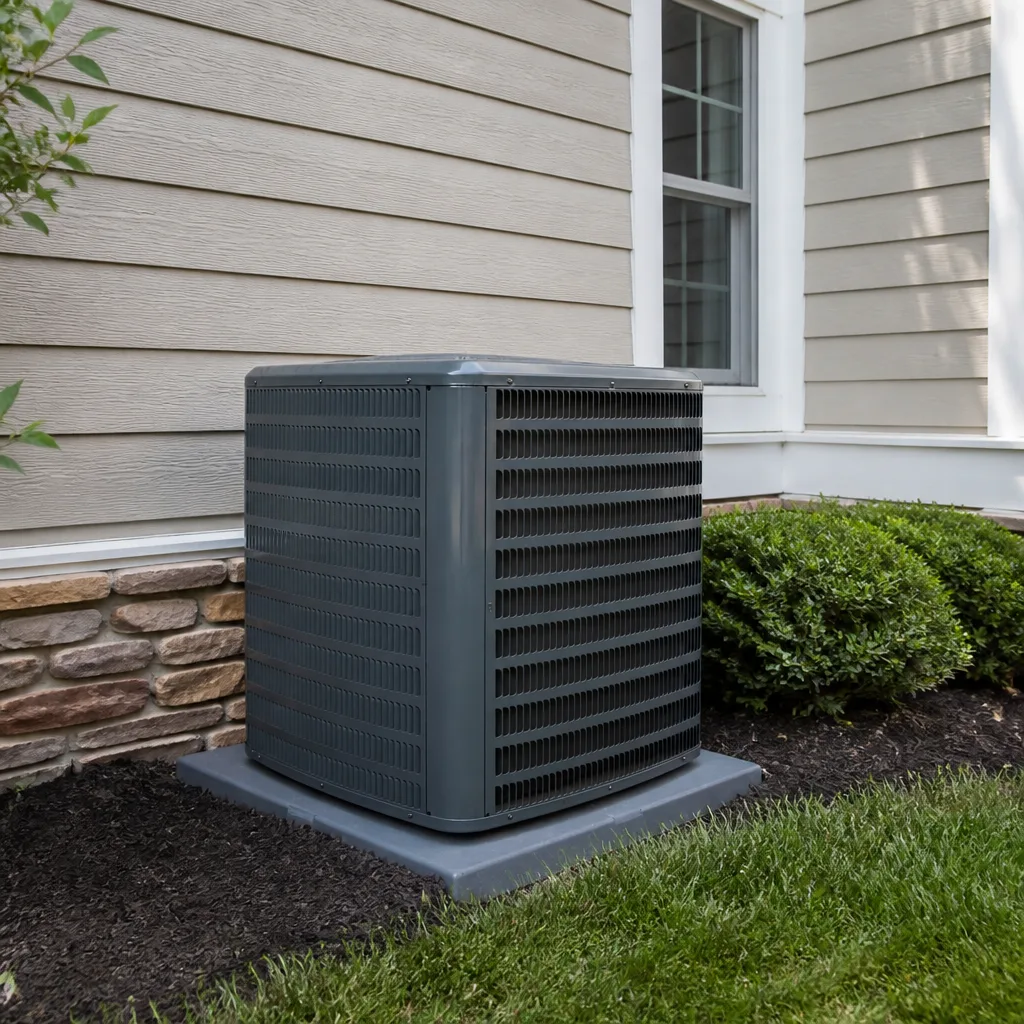 Goodman
Seasonal tune-up and full diagnostic on your Carrier, Trane, or Goodman system - readings shown to you before any repair is proposed
Diagnosis first, numbers second - you approve the repair price before a single part goes in.
Get your free estimateFast, Reliable AC Maintenance Across Austin
An AC tune-up in Austin typically costs $80 to $200, and most homes need it once a year before the triple-digit heat arrives. We schedule maintenance visits within days, not weeks, and every tech arrives in a marked vehicle with a badge, a background check on file, and a name you already know. If your system is already struggling, call (361) 326-1553 and a live person answers. No voicemail, no phone tree, no waiting on hold while your house heats up.
We work in Hyde Park, Travis Heights, Mueller, and every neighborhood between. Our AC Maintenance team knows what Austin summers do to a system: coils that cake with limestone dust, capacitors that bake on rooftops, and drain lines that clog with the kind of biological growth that thrives in our humidity. The point of maintenance isn’t just keeping the AC alive. It’s keeping it from quitting on the hottest Saturday in August, when every HVAC company in Travis County is booked out five days.
Why Brandt HVAC Co Austin Is Austin’s Preferred AC Maintenance Company
We’re part of the Threshold Group family, established in 2003, and the Austin location is independently owned and operated. That matters because local ownership means local accountability. When we tell you a tech will be there Tuesday at 9, the person making that promise works in the same metro you live in.
Trust runs on specifics, so here are ours. Every tech is background-checked and identity-verified under the Threshold Verified standard. Before the visit, you get the tech’s name and photo by text or email. At the door, they show a photo ID badge. If someone shows up who you weren’t told to expect, that visit is on us and we make it right. For homeowners who are alone during the day, parents with young kids, or older Austinites, that’s not a marketing gimmick. It’s the reason the door opens.
We also write the price before any work starts. Every job, no exceptions. And every maintenance visit includes a written report of what we found, what it means, and what it costs to fix, if anything. Devin Marlowe, who leads our Austin team, says it plainly: a homeowner should never sign a work order while standing in a hot hallway feeling rushed.
Styles & brands we work with
HVAC Maintenance in Austin
HVAC maintenance in Austin means more than changing a filter. A proper visit covers the condenser coil, evaporator coil, capacitor, contactor, condensate drain, refrigerant level, blower motor, thermostat calibration, electrical connections, and airflow readings. In a city where the AC can run 2,500 hours a year, small problems compound fast. A $150 capacitor replacement in April beats a $650 compressor failure in July.
Austin homeowners should schedule maintenance once a year, ideally in spring before the first 95-degree week. But if you missed spring, mid-summer maintenance is still worth doing. A system that’s running constantly in peak heat needs the attention more, not less. Our Austin crews run tune-ups from 7 a.m. to late evening June through September, and the live phone line is staffed 24/7, so if the AC quits at midnight, a person answers.
Maintenance that fits Austin’s housing stock
We don’t send a generic checklist to a 1962 bungalow and a 2022 tract house. The older homes need attention to return air, duct integrity, and electrical connections on original wiring. The newer builds need airflow verification, static pressure checks, and a hard look at whether the installed equipment is actually keeping up with the load. Both get the same written report, but the work itself changes based on what’s actually in the house.
Maintenance visit day
You’ll know who’s coming before they arrive. The tech works through a 20-point inspection, takes photos when something needs explanation, and walks you through findings in plain English, not trade shorthand. Refrigerant charge means the amount of fluid that moves heat out of your home. A weak capacitor is a $35 part that can take out a $1,200 compressor. You’ll know what we found and what it costs before anything gets approved.
AC Tune Up in Austin
An AC tune up in Austin runs $80 to $200 for most systems, and it’s the single best preventive step a homeowner can take before summer. The work includes coil cleaning, drain line clearing, electrical testing, refrigerant verification, thermostat calibration, and a capacitor test. We don’t rush the job. A real tune-up takes about an hour to ninety minutes, depending on what the system reveals.
In Austin’s climate, the capacitor is the part we watch most closely on original equipment. Heat degrades capacitors, and Austin heat is relentless. A weak capacitor may still start the fan or compressor for weeks, then fail outright on a 102-degree day when the system is working its hardest. That’s why we test every capacitor on every tune-up, not just when the homeowner reports the unit won’t start.
Rooftop and closet units, not just slab condensers
Central Austin’s dense infill puts a lot of equipment in places the manufacturer never loved. Rooftop package units on Travis Heights condos. Closet air handlers in Mueller townhomes with two feet of clearance and a filter slot that fight you every time. These installations need clearance verification, filtration review, and a drain line strategy, because a clogged condensate line in a third-floor closet doesn’t drip into the yard. It drips into the ceiling below.
Mini-split and heat pump tune-ups
Plenty of Austin homes run mini-splits, either as the primary system in an older bungalow or as a supplement in a converted garage or addition. A mini-split tune-up is different from a central system check. We clean the blower wheel, verify the line set, check the condensate pump, and test the inverter. These systems are efficient, but they’re not immune to Austin’s dust and pollen. A fouled blower wheel can cut airflow by 30% before you notice anything beyond a higher electric bill.
Trusted Brands We Service in Austin
We service and maintain Carrier, Trane, Lennox, Goodman, Rheem, York, Daikin, Bryant, and American Standard equipment. Austin’s housing stock runs the full range: original 1970s Lennox units in Allandale ranch homes, recent Trane heat pumps in Circle C, Daikin mini-splits in East Austin ADUs, and American Standard package units on commercial-flat-roof condos near downtown. Our techs carry common capacitors, contactors, thermostats, and drain line parts on the truck, so most tune-up findings get resolved same day, not after a parts order.
See the difference
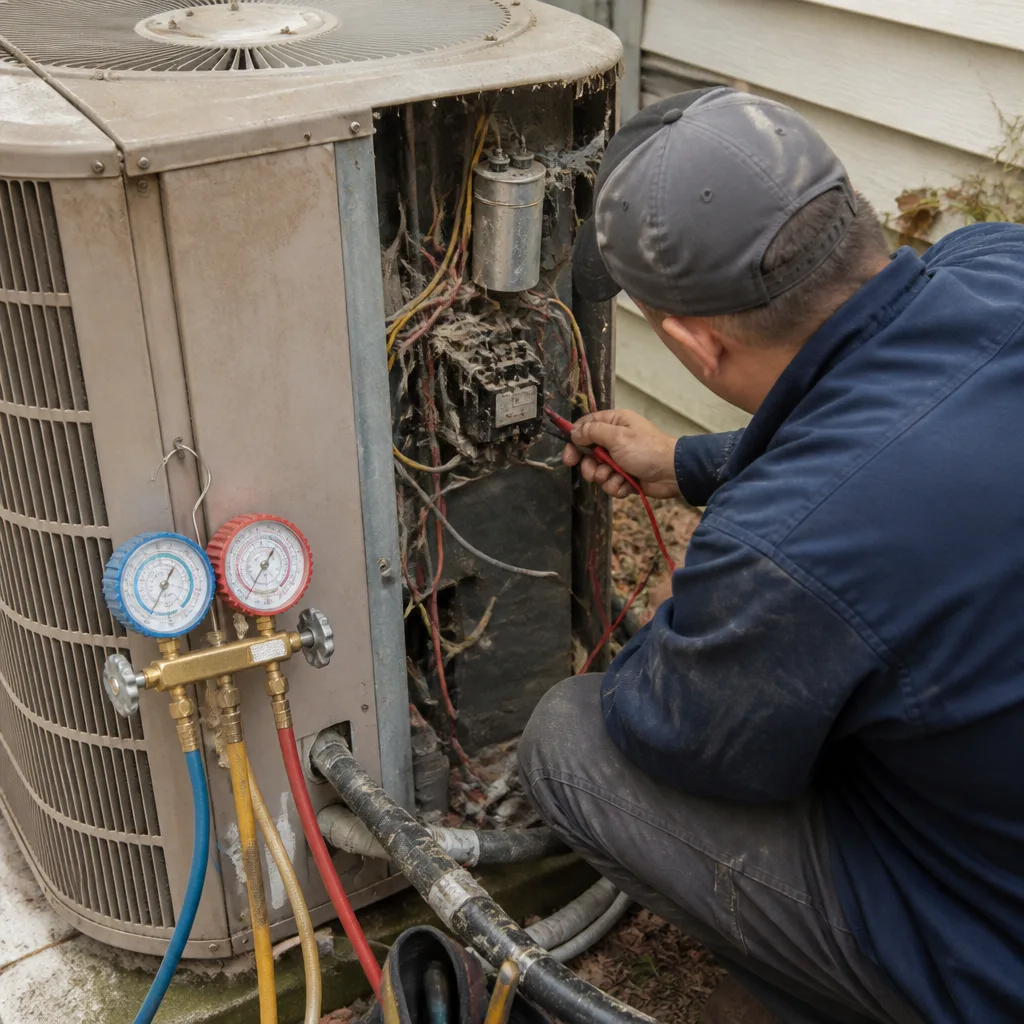 Before
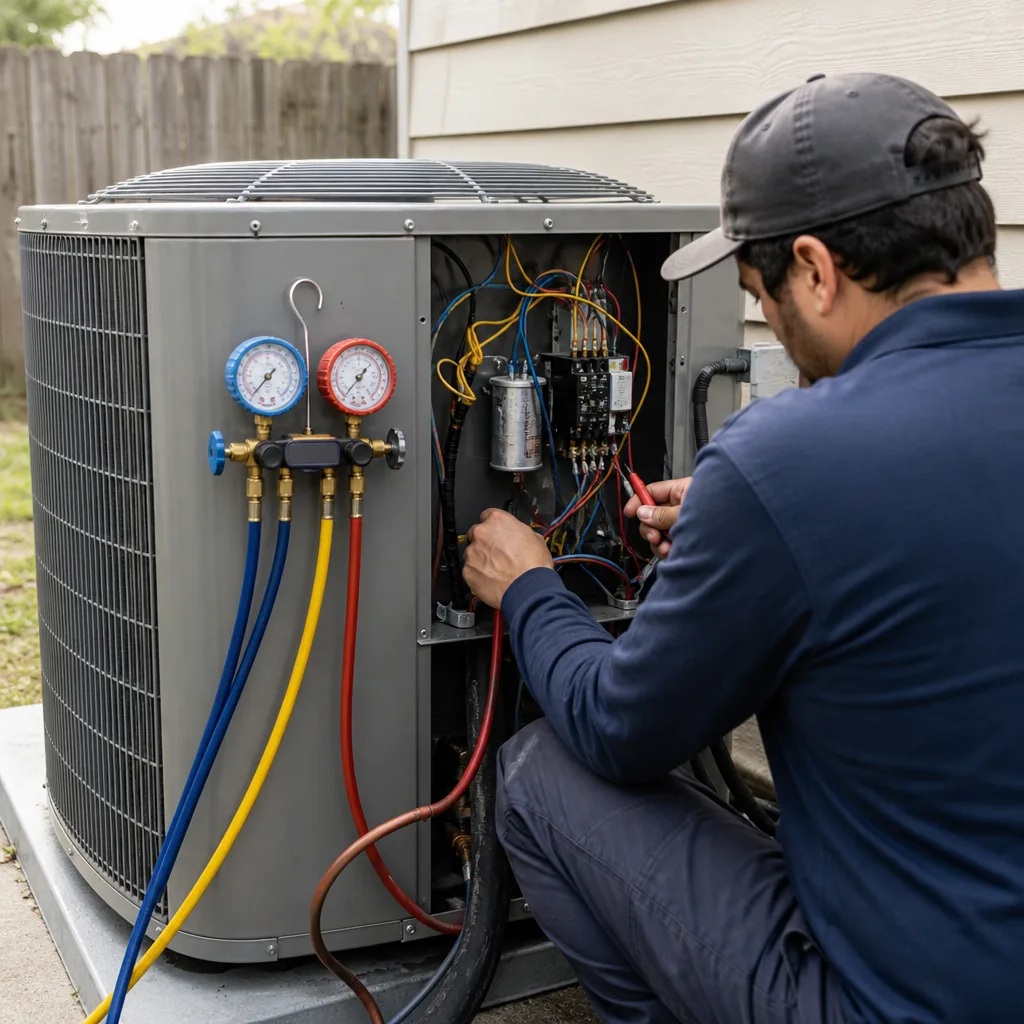 After
After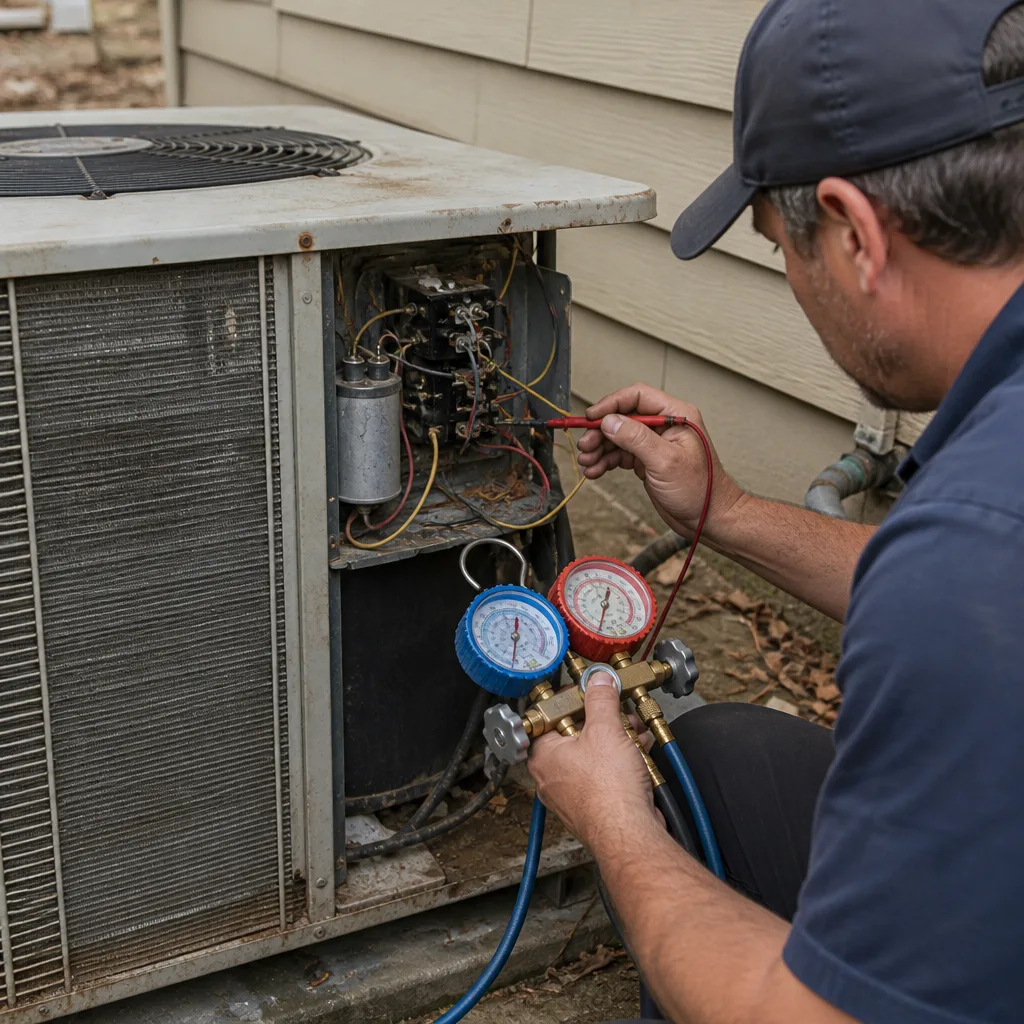 Before
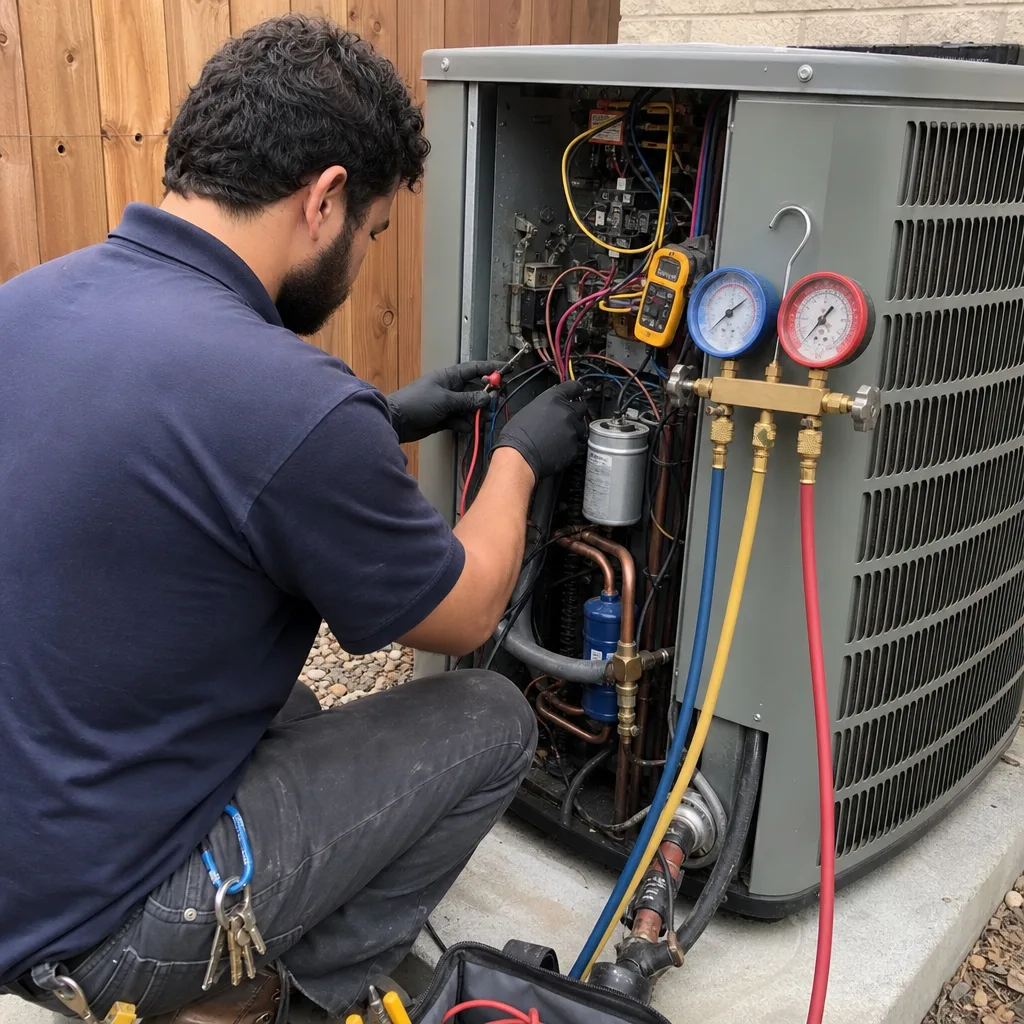 After
After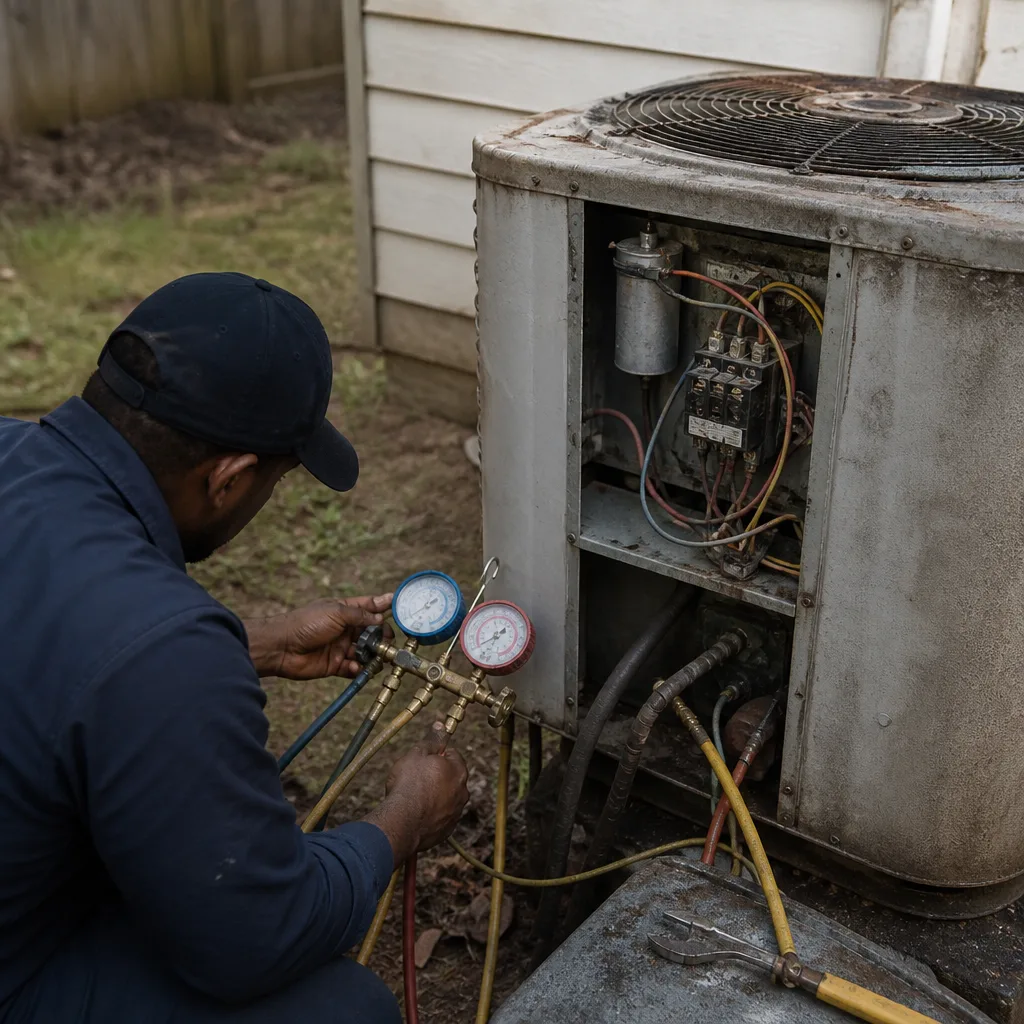 Before
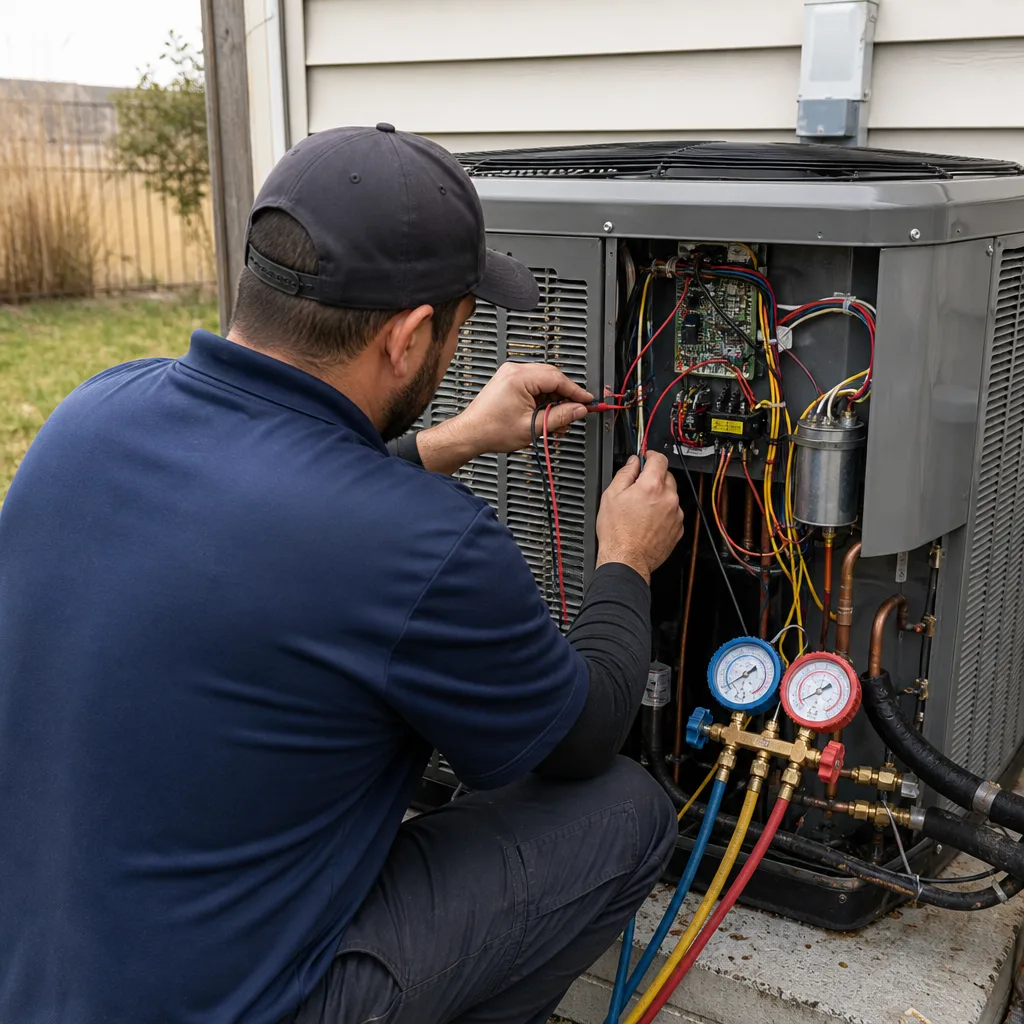 After
AfterCommon AC Maintenance Problems We See in Austin Homes
- Crawlspace humidity entering the return air path. In pier-and-beam homes across Hyde Park and Travis Heights, sagging floors pull return duct joints apart under the house. The AC then pulls humid crawlspace air into the system, which overloads the evaporator coil and drives indoor humidity to 65% or higher. A maintenance visit should include inspecting return plenums under the house, not just the equipment in the attic or closet.
- Capacitors failing on original systems in the summer heat. Austin’s summers bake rooftop condensers and slab units alike. A capacitor that reads borderline in April may be dead by August. Testing it during maintenance catches the failure before it strands a family in a 90-degree house while every HVAC company in town is booked solid.
- Condensate drain clogs from limestone dust and biological growth. Austin’s hard water, pollen, and humidity create a sludge that chokes drain lines faster than drier cities see. A clogged line trips the float switch or overflows into an attic, a closet, or a ceiling. Regular drain cleaning is cheap insurance against a water damage claim.
- Clearance and airflow problems on dense infill installations. Rooftop package units and closet air handlers in central Austin’s tight lots often sit with less clearance than the manufacturer specs require. That reduces airflow, shortens equipment life, and makes every repair harder. We flag these during maintenance and tell you what it means, even when there’s no repair to sell.
Pricing for AC Maintenance in Austin, TX
Maintenance pricing in Austin is straightforward, and it’s written before we start. Here’s what to expect:
| Service | Typical Austin Range |
|---|---|
| AC Tune Up | $80 – $200 |
| Capacitor Replacement | $150 – $450 |
| Condensate Drain Cleaning | $100 – $250 |
These are real ranges for the Austin market, not national averages. What moves a tune-up from the low end to the high end is system access (a rooftop unit takes longer than a slab unit), age (original 1970s wiring needs more testing), and whether we find something that needs a follow-up repair. You see the written price before we touch anything. Estimates are free. Call (361) 326-1553 and we’ll give you an exact number for your system.
Older systems may need more than a tune-up. If your AC is past 15 years, losing refrigerant, or running on R-22 that’s no longer manufactured, we’ll tell you straight: repair may not be the smartest money. Replacement in Austin runs $3,500 to $7,500 depending on the equipment, and we handle the paperwork, the permits, and the local codes. We’ll never push a replacement when a repair makes more sense, and we’ll never hide the replacement option when the numbers show repair is throwing good money after bad.
We Also Serve Cities Near Austin
Brandt HVAC Co Austin serves homeowners throughout Austin and the surrounding metro, including Cedar Park, Hutto, Bastrop, and San Marcos. If you’re in a suburb just outside the city, call us anyway. We’ll tell you straight whether we can get a tech to you, and we won’t waste your time with a waitlist. The live phone line is staffed around the clock.
Serving Austin, TX - Our Local Coverage Area
We’re based in the Austin area and know this community well. Use the map below to see our service coverage - if you’re nearby, we can almost certainly help.
FAQs About AC Maintenance in Austin
A maintenance visit on a pier-and-beam home should include pulling the return grille and checking the return air plenum under the house. In Hyde Park and Travis Heights, we regularly find return ducts that have separated at the boot where the floor has settled. That lets crawlspace humidity enter the system, which makes the AC work harder and keeps the house muggy even when the temperature reads normal. A newer slab home doesn’t have this failure mode, so a generic tune-up often misses it. We also check the register screws and the register-to-floor seal, because older cast-iron registers can sit loose and rattle or leak air. Call (361) 326-1553 for a tune-up that knows what your foundation is doing to your ducts.
Most central Austin rooftop units we service have a roof hatch or a permanent ladder, but not all of them do. When there’s no safe access, we tell you before the visit, not when the tech is standing in your parking lot. We’ll work with the building or the HOA to get access, and we’ll quote the job with any access costs included in the written price up front. In Travis Heights, our tech found a 1960s-era cast-iron floor register sitting loose above a crawlspace return plenum that had separated at the boot, pulling humid crawlspace air into a 3-ton Lennox system and driving indoor humidity above 65%. We resealed the plenum, replaced the rusty register screws, and added a condensate pan treatment – the owner’s Nest stopped running the AC nonstop within a day. That’s the level of detail Austin’s dense housing stock demands. Call (361) 326-1553 and we’ll sort out access before we ever show up.
If the outdoor unit is clean but the house won’t cool, the problem is usually airflow or refrigerant. Austin homes built in the 1950s through 1970s often have undersized returns, original galvanized ductwork, and attic insulation that’s long since settled. The AC may be producing cold air, but it can’t move enough of it through the house. We check return air volume, supply static pressure, and duct leakage during maintenance, and we’ll show you the numbers. It’s also common to find a system that was undersized when installed, especially in new tract houses built to code minimums that don’t account for Austin’s actual heat. Call (361) 326-1553 and we’ll measure, not guess.
Not necessarily. R-22 is no longer manufactured, which makes recharging an R-22 system expensive, but a system that holds its charge and cools well can still run for years. The decision should hinge on the system’s condition: leaks, compressor age, coil condition, and efficiency. We’ll test all of that during maintenance and give you a straight answer. If the system needs a recharge and it’s leaking, replacement often makes more sense than paying for R-22 that will just leak out again. Replacement in Austin runs $3,500 to $7,500, and we’ll write the number down so you can plan. Call (361) 326-1553 for an honest assessment, not a sales pitch.
You can absolutely get a tune-up in peak Austin heat, and it’s often the smartest time. A system that’s running 18 hours a day in hundred-degree weather reveals weaknesses that a spring tune-up wouldn’t catch. We run maintenance visits June through September, with early morning and evening slots available. The only real limitation is that a tune-up on a hot day still takes time, and if we find a failing part, we’ll show you the written price and fix it on the spot when possible. Don’t wait for fall in Austin, because fall here lasts about three weeks before the first sudden freeze. Call (361) 326-1553 and we’ll get on the schedule while your AC is still limping, not after it’s dead.
If your AC is struggling, making noise, or just running nonstop, call (361) 326-1553 today. A live person answers, day or night, and your estimate is free. We’ll tell you who’s coming, what it costs, and what we’ll do before anyone sets foot in your home.
Written by Devin Marlowe, Owner at Brandt HVAC Co Austin, serving Austin and the surrounding metro.