
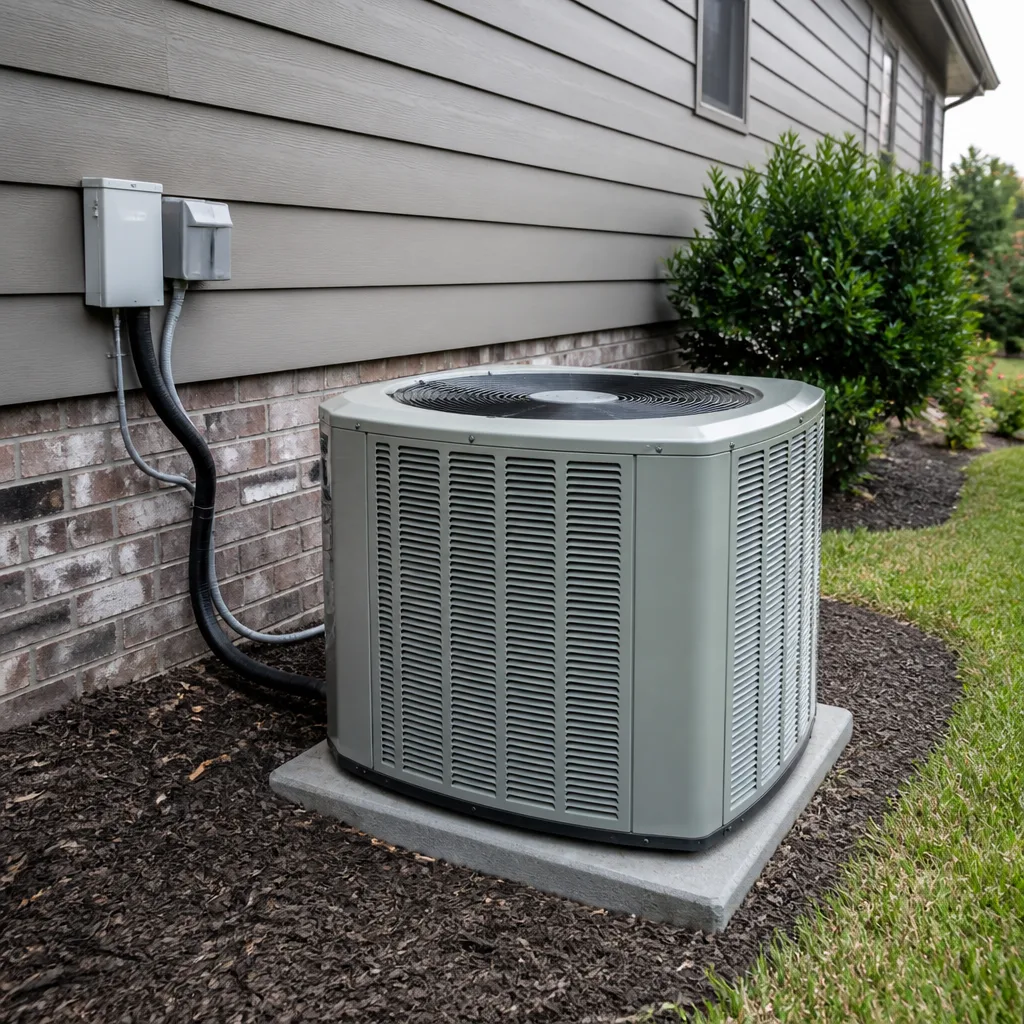
 AC repair
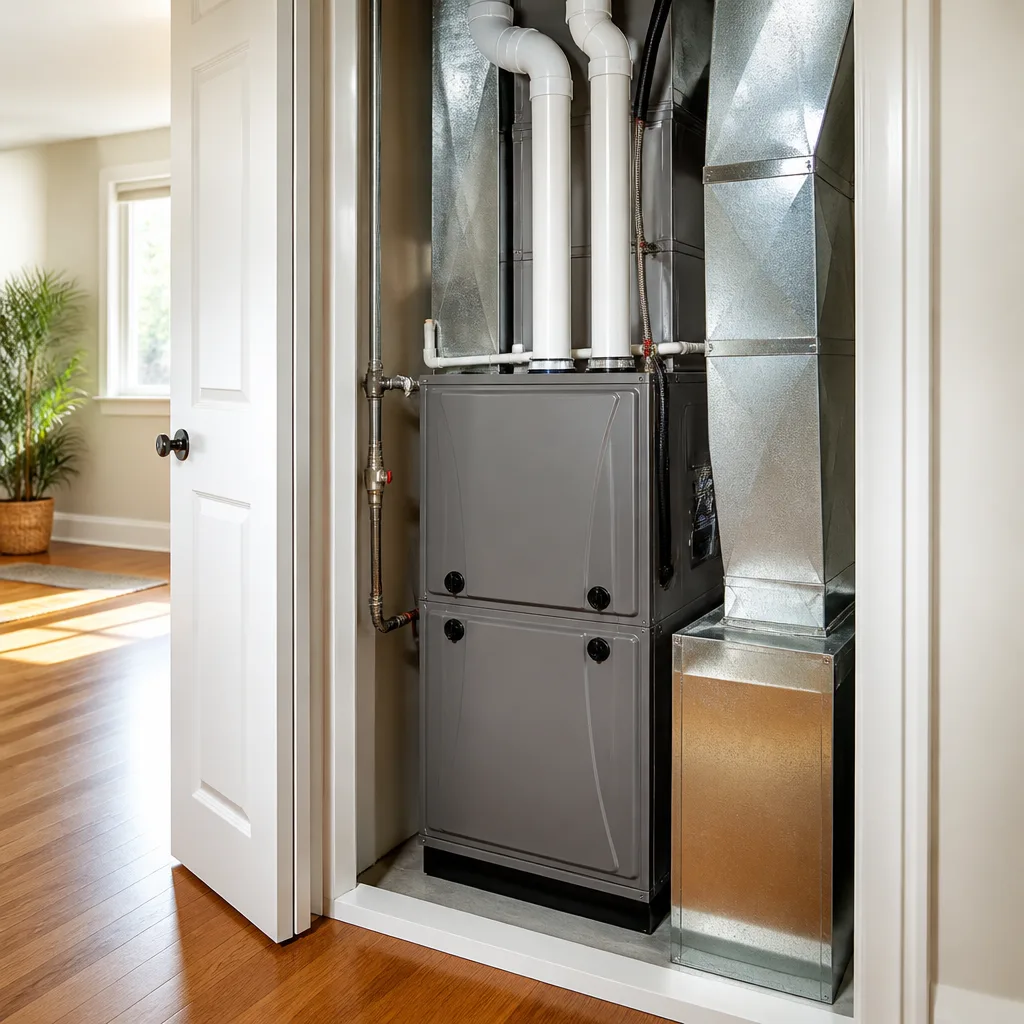 Furnace & heating
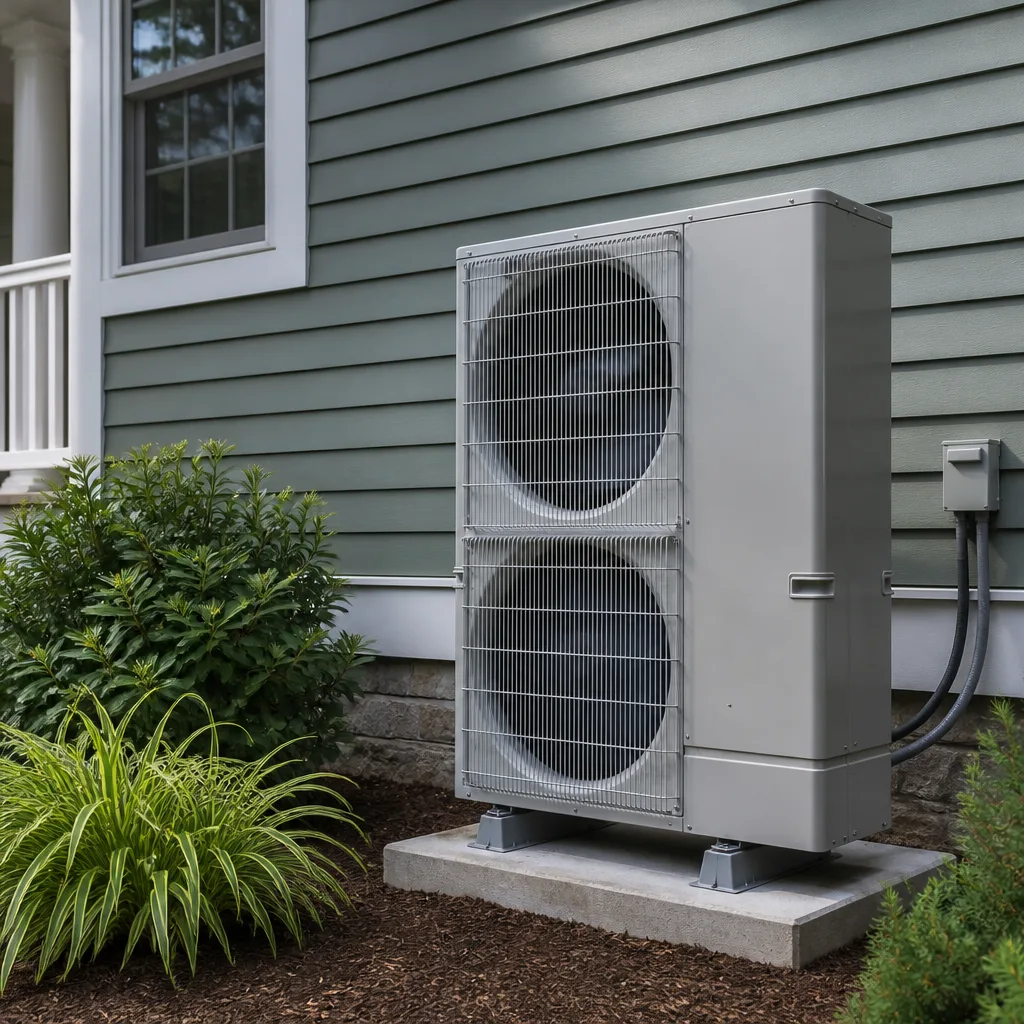 Heat pumps
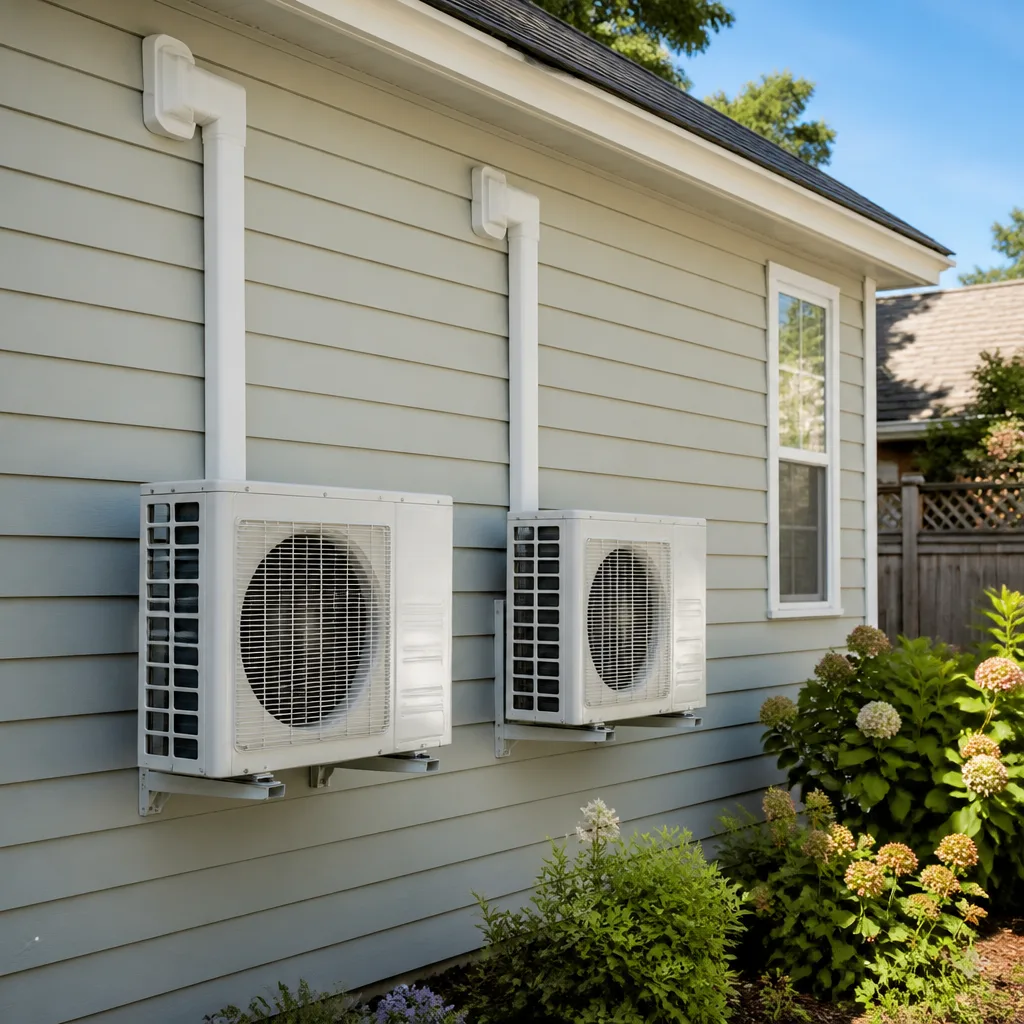 Ductless mini splits
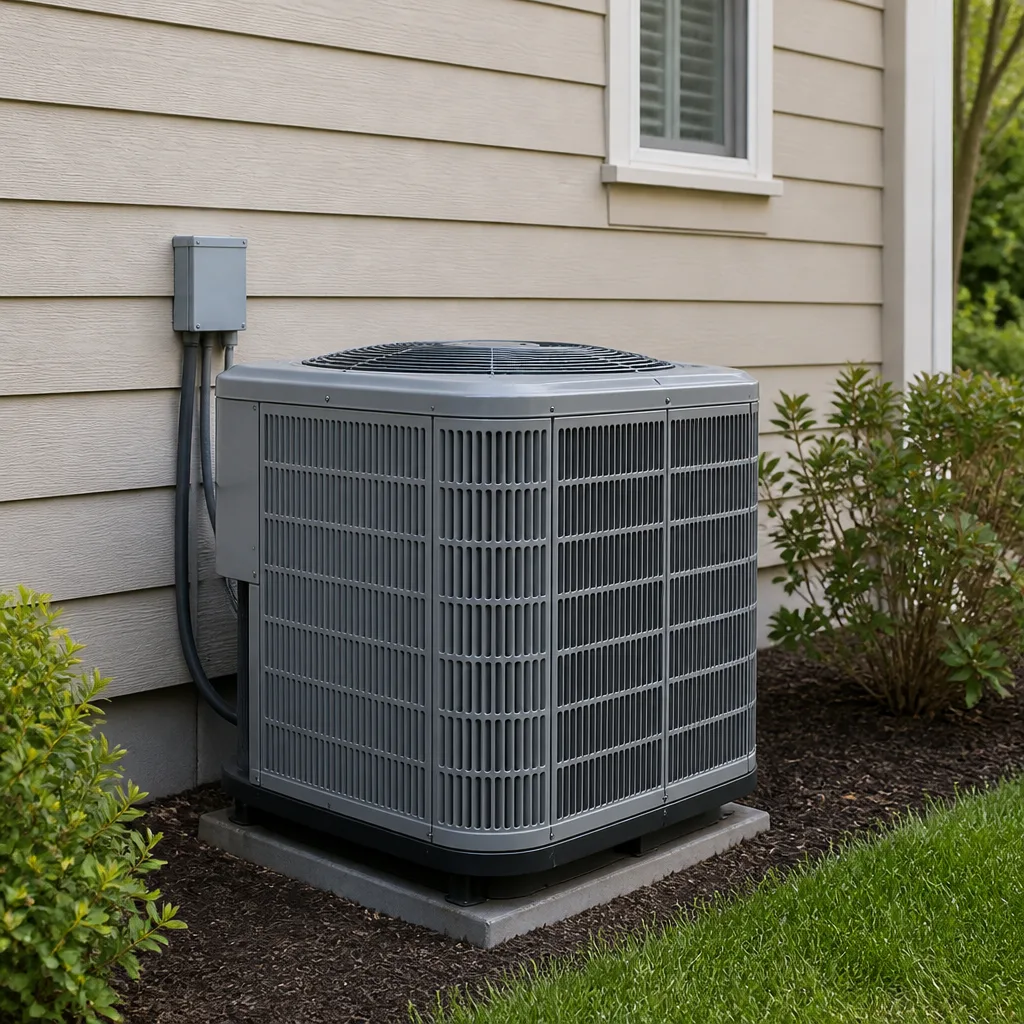 Carrier
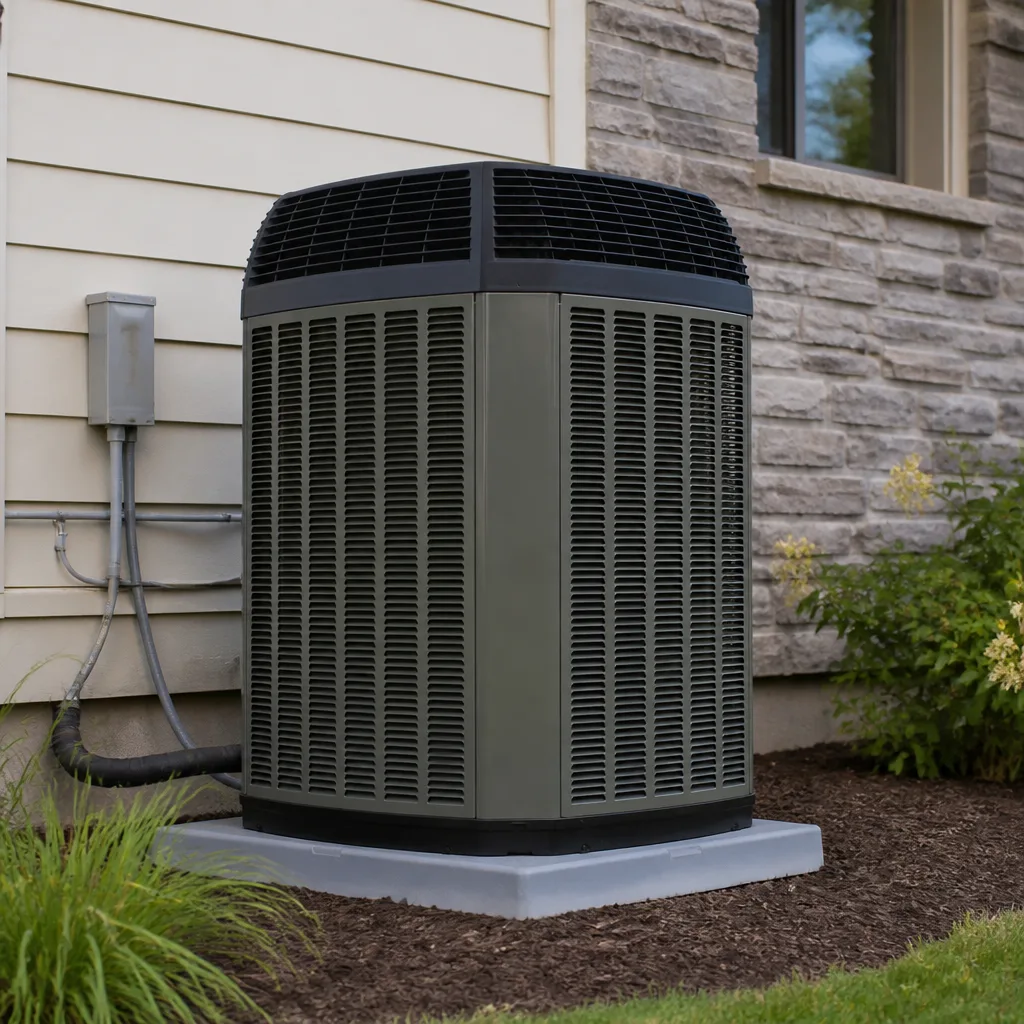 Trane
Trane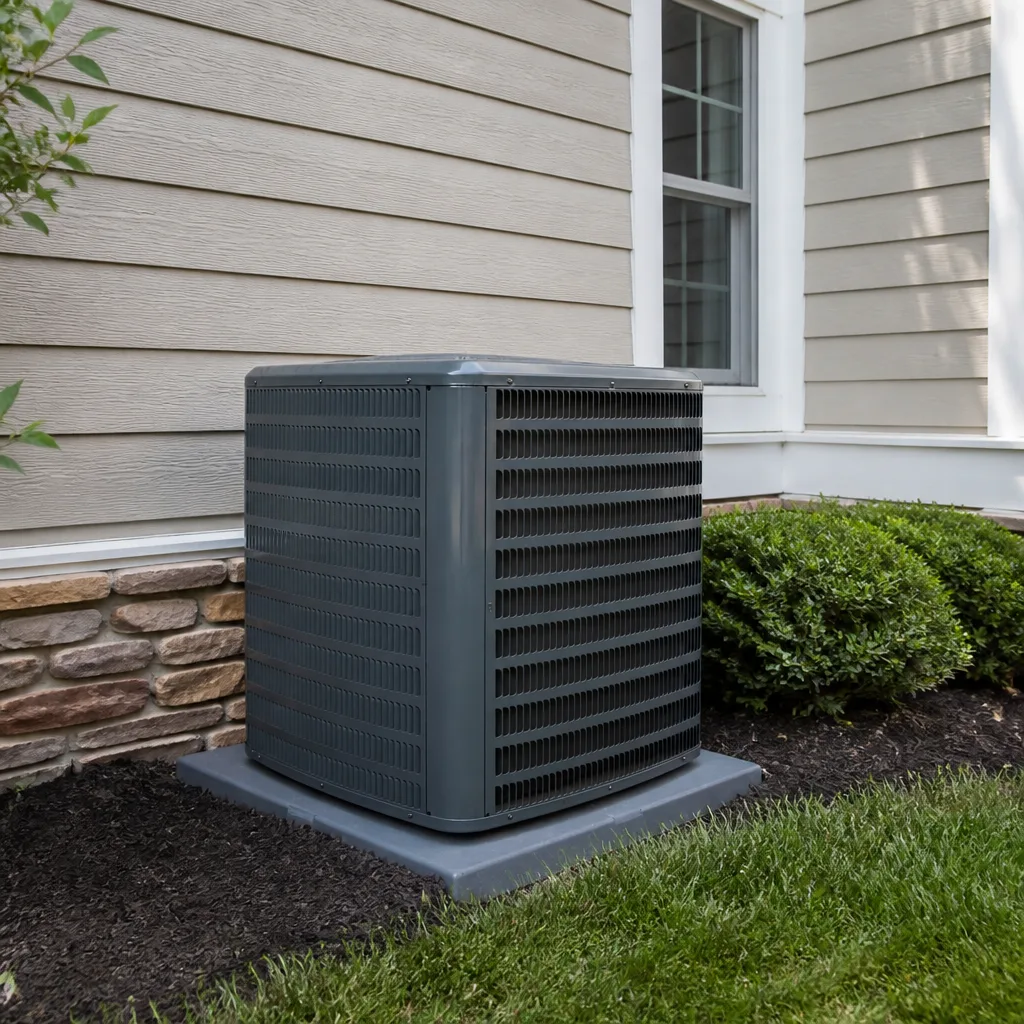 Goodman
Seasonal tune-up and full diagnostic on your Carrier, Trane, or Goodman system - readings shown to you before any repair is proposed
Diagnosis first, numbers second - you approve the repair price before a single part goes in.
Get your free estimateBryant Capacitor Replacement: The Austin Owner’s Guide
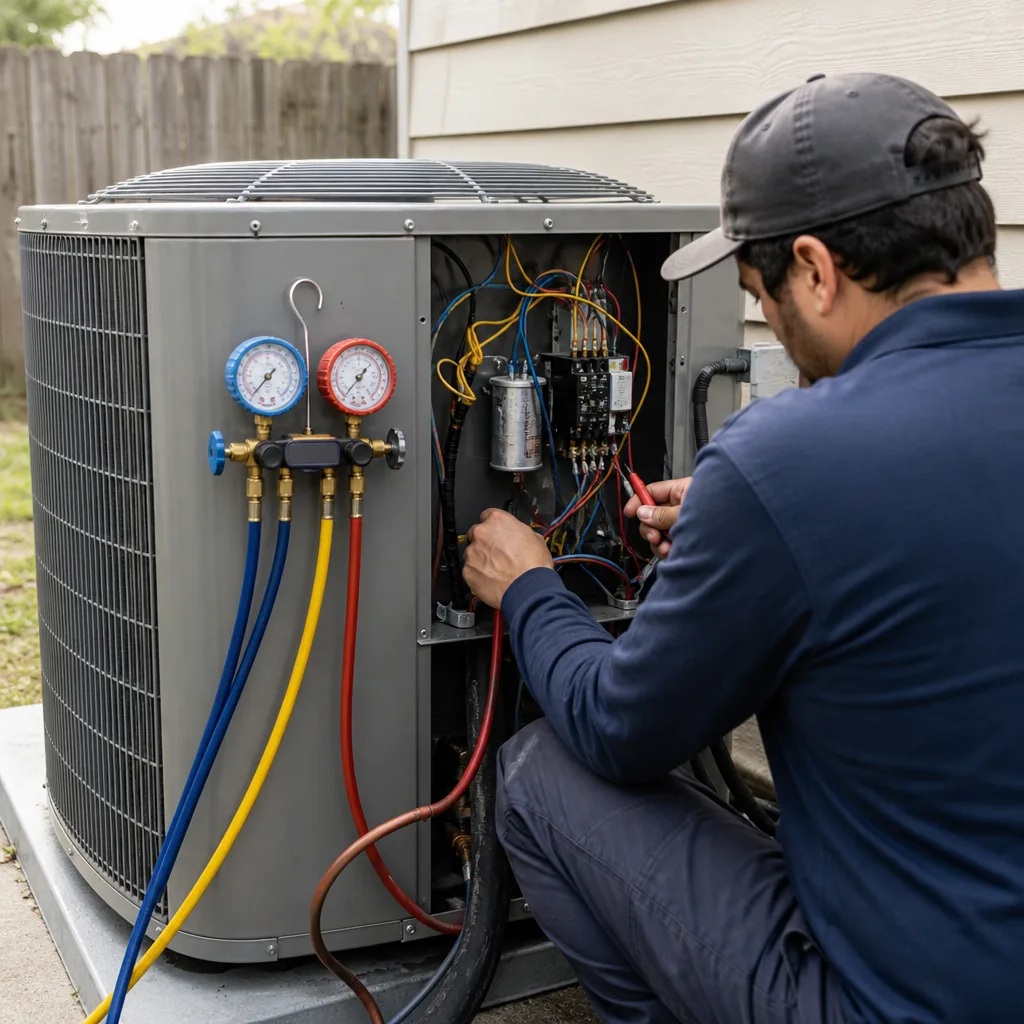
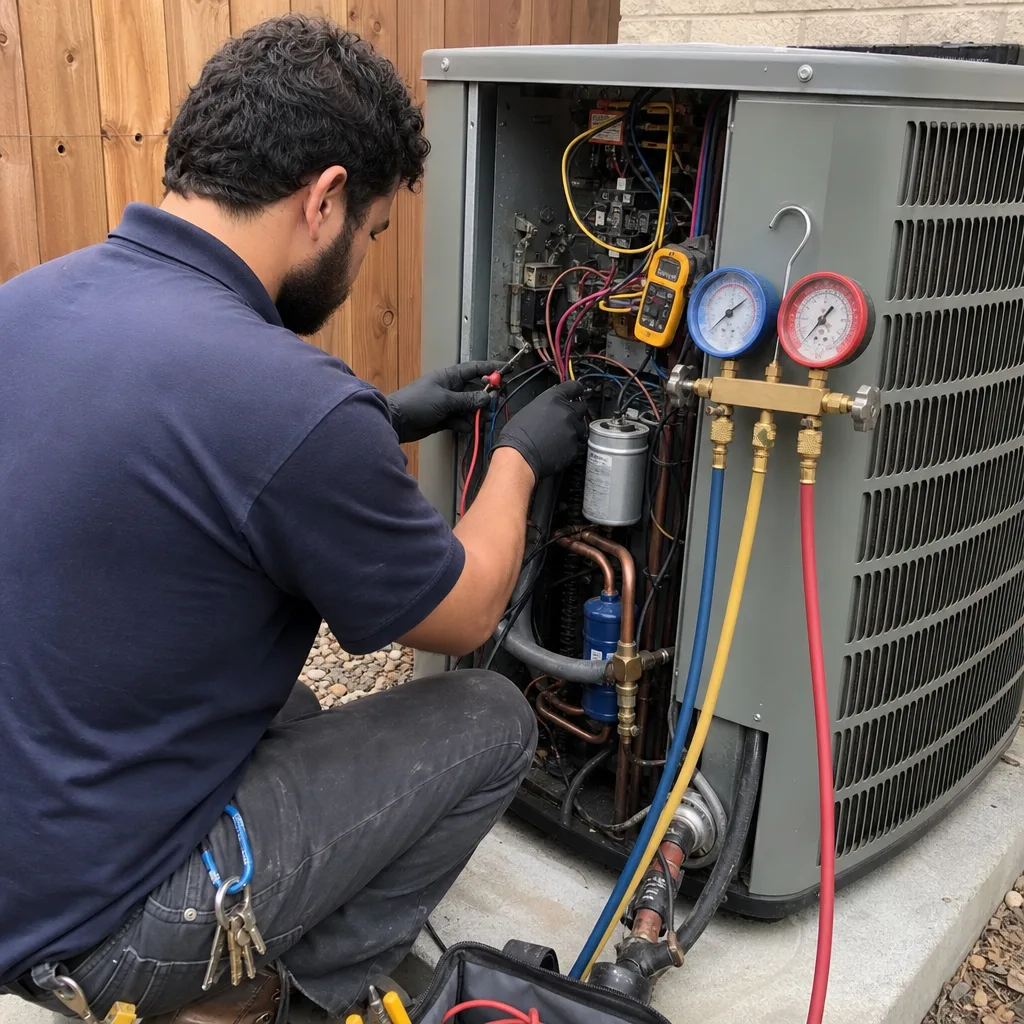
A Bryant capacitor replacement in Austin typically runs $150 – $350 installed, parts and labor included, and we carry Bryant-compatible run and start capacitors on our trucks for same-day swaps in most cases. The capacitor is the small cylinder inside your outdoor condenser or indoor air handler that gives the compressor and fan motors the electrical jolt they need to start spinning. When it fails, your Bryant unit either won’t start at all, hums without the fan turning, or runs but blows warm air. Central Texas heat kills capacitors faster than almost anything else in your system, and we replace more of them in Austin between June and September than any other single Bryant part.
Most homeowners discover this problem the same way: the thermostat is set to 72, the house is climbing past 80, and the outside unit sounds like it’s trying to start but can’t quite get there. Or the fan isn’t spinning at all. Either way, you now know exactly which part to ask about, and this page tells you what happens next.
Which Bryant Models This Applies To
Bryant uses round and oval capacitors across nearly every residential line, but the specific microfarad (µF) rating matters more than the model number. If you open the access panel on your condenser, the existing capacitor has a label printed with two numbers: the microfarad rating (usually 25 to 80 µF for run capacitors, sometimes with a second smaller rating for the fan) and a voltage rating (370V or 440V). The replacement must match the microfarad value within about 5%, and the voltage rating must equal or exceed the original. A Bryant Evolution Series unit takes a different capacitor than a Legacy Line or Preferred Series, but the label on the old part tells us exactly what to install, regardless of series.
One compatibility gotcha we see a lot in Austin: Bryant ships many units with dual-run capacitors, meaning one can services both the compressor and the condenser fan. An owner buys a single-run capacitor online that matches the compressor spec, swaps it in, and the fan still won’t turn because they replaced half of a two-in-one part. We match the full spec, not just the biggest number on the can. On the OEM versus aftermarket question: Bryant-branded capacitors are solid, but AmRad and Titan HD are the two aftermarket brands we stock because they hold up better in sustained 100°F-plus heat than the factory parts sometimes do. We’ll install whichever you prefer and price both honestly.
Styles & brands we work with
Signs Your Bryant Capacitor Replacement Is Failing
- The outside unit hums but the fan doesn’t spin. This is the classic dead run capacitor. The compressor is getting voltage but can’t start, and that humming sound is the motor locked in place. Shut the system off at the breaker if you hear this, because a stalled compressor draws heavy current and cooks itself fast.
- The fan spins slowly or starts with a push. A weakening capacitor delivers roughly 60 to 70 percent of normal starting torque. The fan might eventually get going, but it’s working against itself. In Austin heat, this half-dead state usually becomes fully dead within a couple of weeks.
- The unit short-cycles or kicks off during the hottest part of the afternoon. As the capacitor degrades, the compressor pulls more current to do the same work. The thermal overload trips, the unit shuts down, and your house warms up right when the Texas sun is doing its worst.
- Your electricity bill climbs with no change in usage. A weak capacitor makes the compressor run inefficiently. You won’t see this on a day-to-day basis, but a $40 or $60 spike in a month when you haven’t changed your habits is a signal worth investigating.
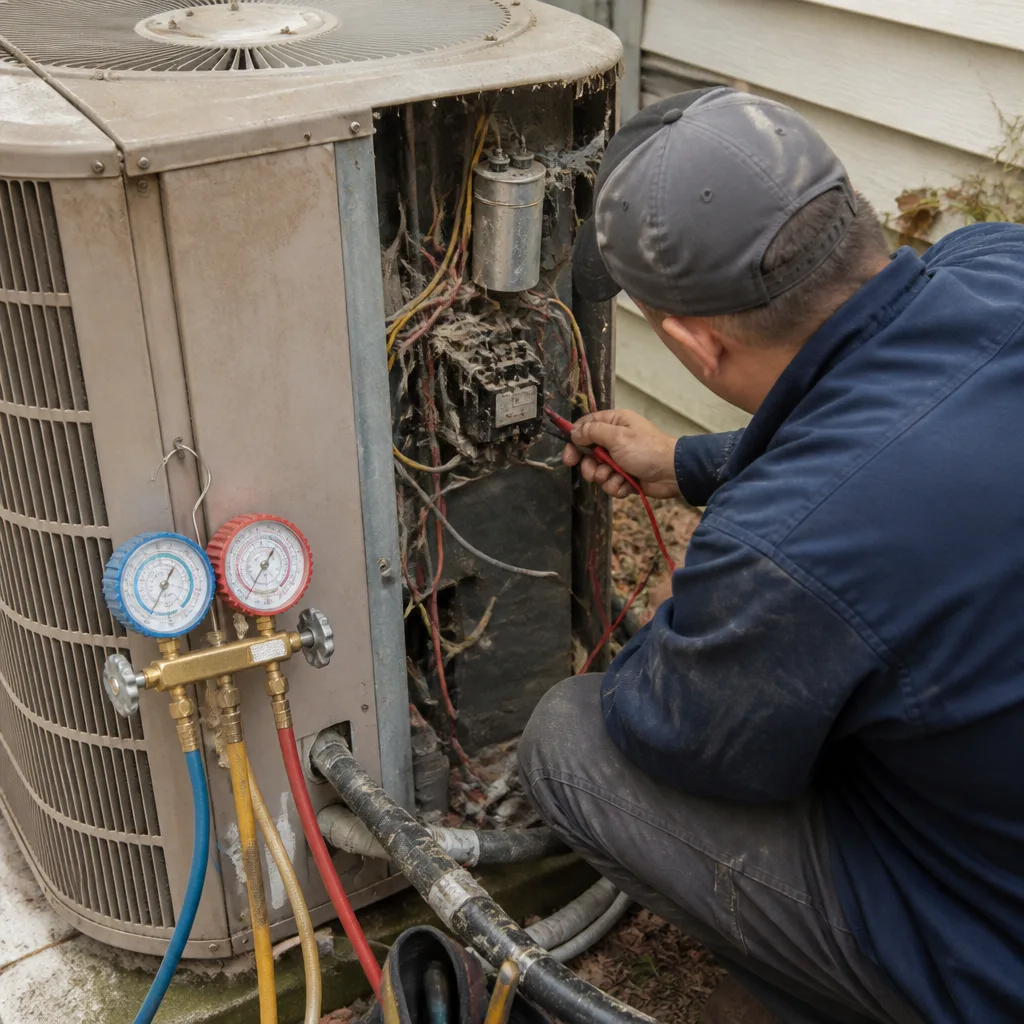
- The plastic top of the capacitor is swollen or split. Capacitors fail internally and build pressure as the dielectric breaks down. If it looks domed, cracked, or leaked a little oily residue down the side, it’s already gone. This is also the easiest failure to confirm visually with the power off.
Replacement Cost & What’s Included
A Bryant capacitor replacement in Austin usually lands between $150 and $350 installed. The part itself is inexpensive, typically $15 to $60 depending on the microfarad rating and whether it’s OEM Bryant or a premium aftermarket like AmRad. The bigger cost is the service call and labor: getting a trained tech to your home, confirming the capacitor is actually the problem and not a symptom of something else, installing the new part, and testing the system under load.
Our price includes the diagnostic confirmation, the capacitor, the installation, and a full test of the unit’s voltage and amp draw after the swap. We write the total down before we start work, so you know the exact number before we touch your system. If the new capacitor fails within 365 days, we return at no charge under our 365-Day Done Right Promise and replace it. Devin Marlowe’s rule on this is simple: we name the problem, name the price, and then we fix it, no surprises after the fact.
See the difference
 Before
 After
After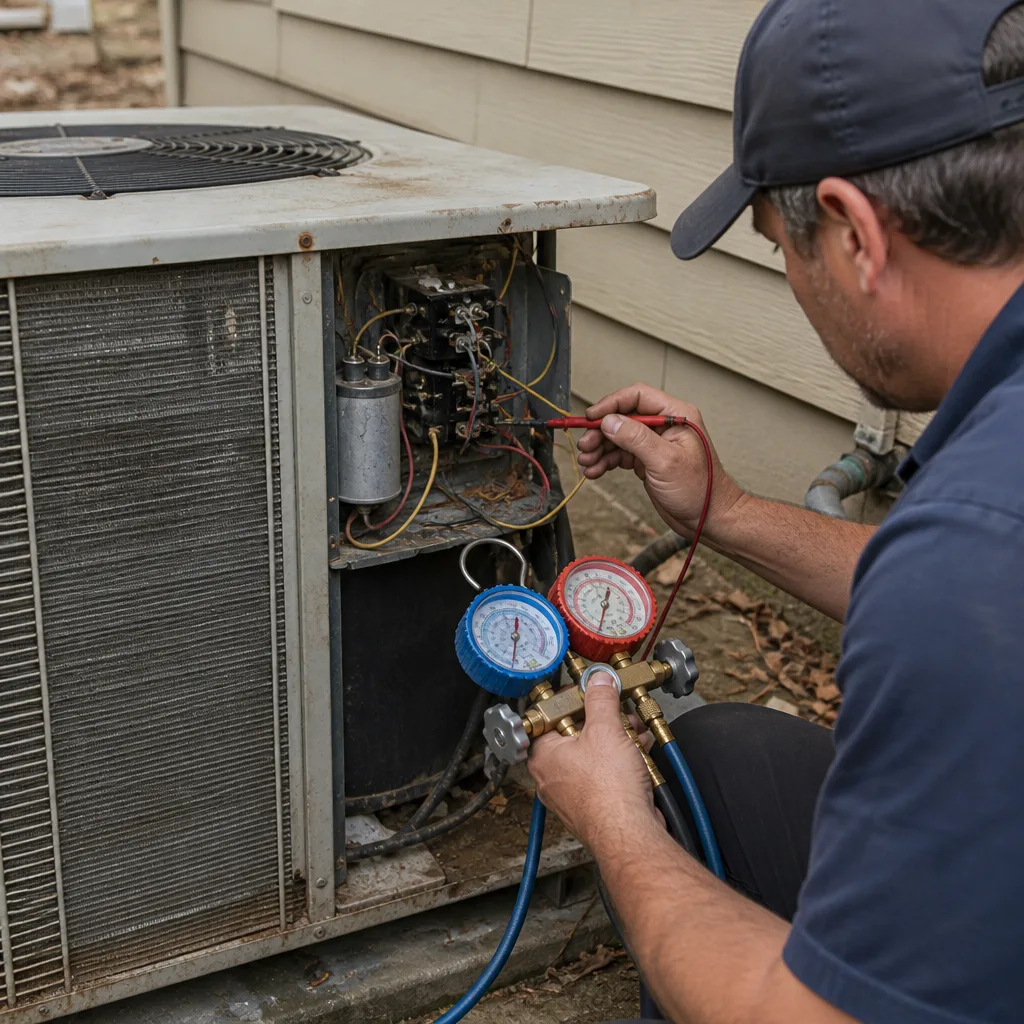 Before
 After
After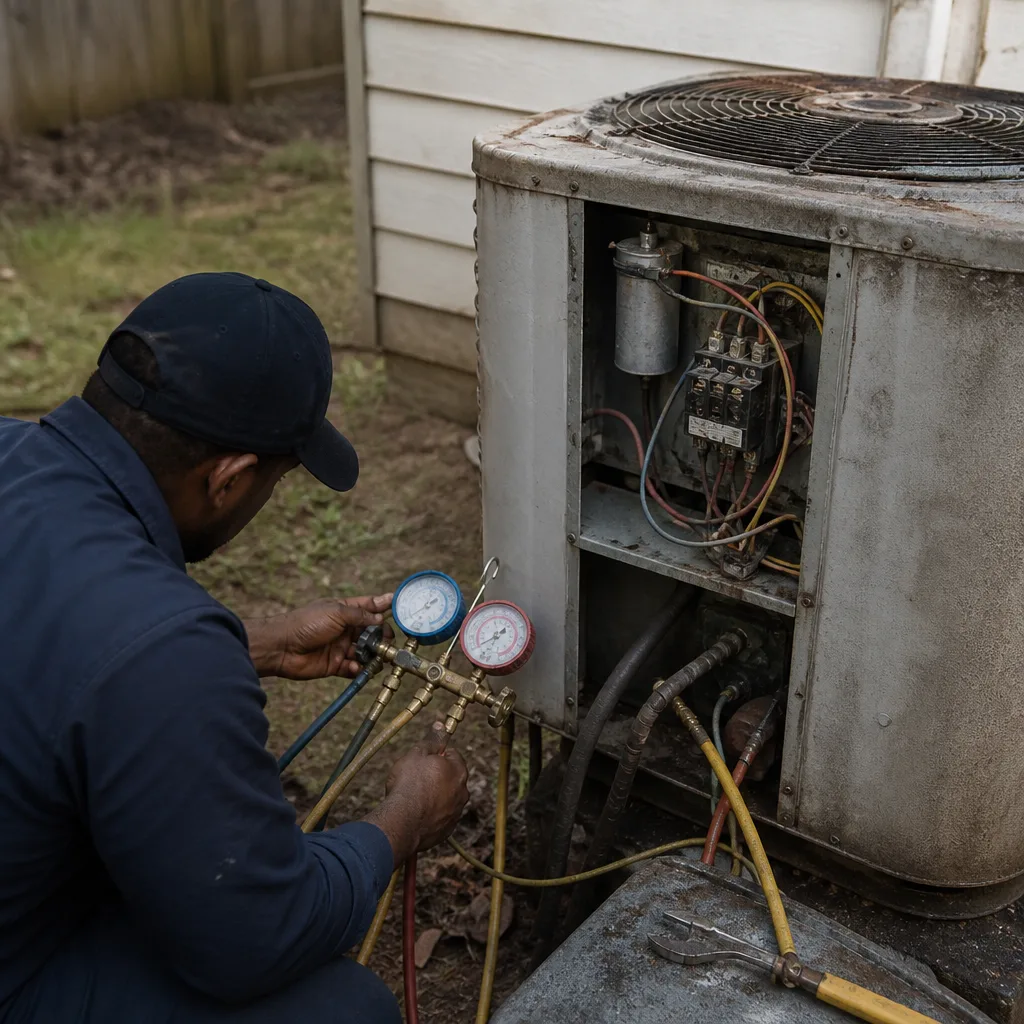 Before
 After
AfterDIY or Call Us?
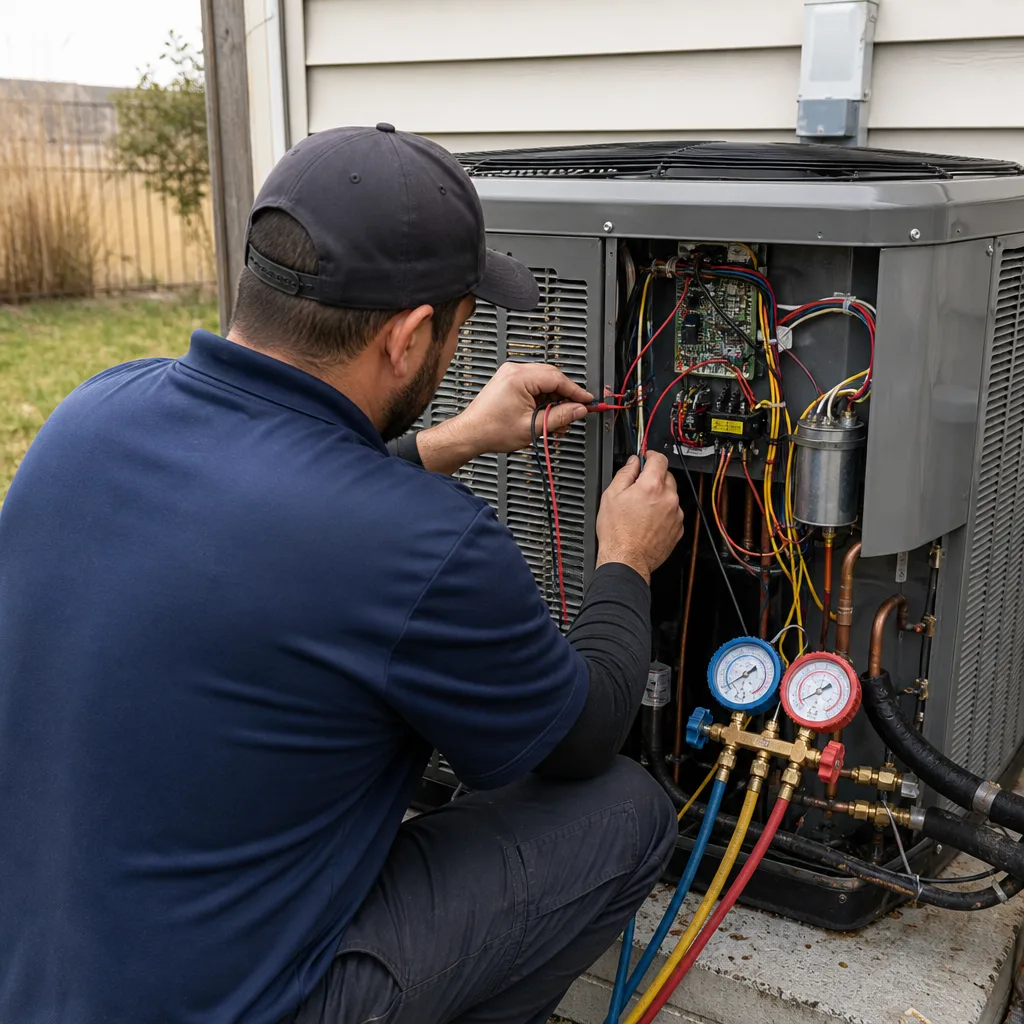
Here’s the honest split. You can safely check the capacitor’s condition yourself with the power fully off at the breaker and the disconnect pulled at the unit. Look for swelling, cracking, or oil residue. That’s a visual inspection, and it helps you understand what you’re dealing with.
What you should not do is replace the capacitor yourself. A capacitor stores and discharges hundreds of volts even when the system is powered down. If you touch the wrong two terminals, you get a shock that can stop your heart. That’s not scare talk, that’s the electrical reality of the part. Proper replacement requires discharging the old capacitor safely, reading the exact microfarad spec, and confirming the new part matches before the system runs again. If you’ve already looked at the part and confirmed it’s swollen or leaking, call us at (361) 326-1553 and we’ll handle the rest, safely and same-day in most Austin neighborhoods.
FAQs
In Central Texas heat, expect 5 to 8 years from a Bryant capacitor, though we replace plenty that die in 3 or 4. Sustained 100°F-plus ambient temperatures degrade the internal dielectric faster than the manufacturer’s design estimate. The capacitor is the second most common failure we see on Bryant units in Austin, right behind contactor failures.
No. A capacitor is a sealed component, and once the internal dielectric breaks down, there’s no rebuilding it. Replacement is the only repair. Anyone offering to “repair” a capacitor is not being straight with you. Call (361) 326-1553 for an honest quote on a replacement instead.
Most capacitor replacements take 30 to 45 minutes from arrival to finished test. That includes shutting the system down safely, discharging the old capacitor, installing and wiring the new one, and verifying voltage and amp draw under load. The part itself is a ten-minute job; the caution around high-voltage safety is what takes the extra time.
Yes. We carry a range of Bryant-compatible run, start, and dual-run capacitors on our trucks in common microfarad ratings from 25 µF to 80 µF, in both 370V and 440V. For rare or oversized ratings, we source same-day from HVAC supply houses around Austin. We also stock parts for Carrier, Trane, and Lennox systems for owners who have a mixed-brand home.
Call Brandt HVAC Co Austin for Bryant Capacitor Replacement
If your Bryant unit is humming, short-cycling, or just won’t start, call (361) 326-1553. We answer live, 24 hours a day, and we’ll give you a written price before any work begins. Every technician we send is background-checked, identity-verified, and introduced to you by name and photo before they arrive under our Threshold Verified standard. You’ll know exactly who’s walking through your door, what they’re going to do, and what it costs before they touch your system. That’s how we’ve run Bryant capacitor replacements in Austin, and it’s the only way Devin will have it done.
Written by Devin Marlowe, Owner, Brandt HVAC Co Austin at Brandt HVAC Co Austin, serving Austin and nearby areas.