
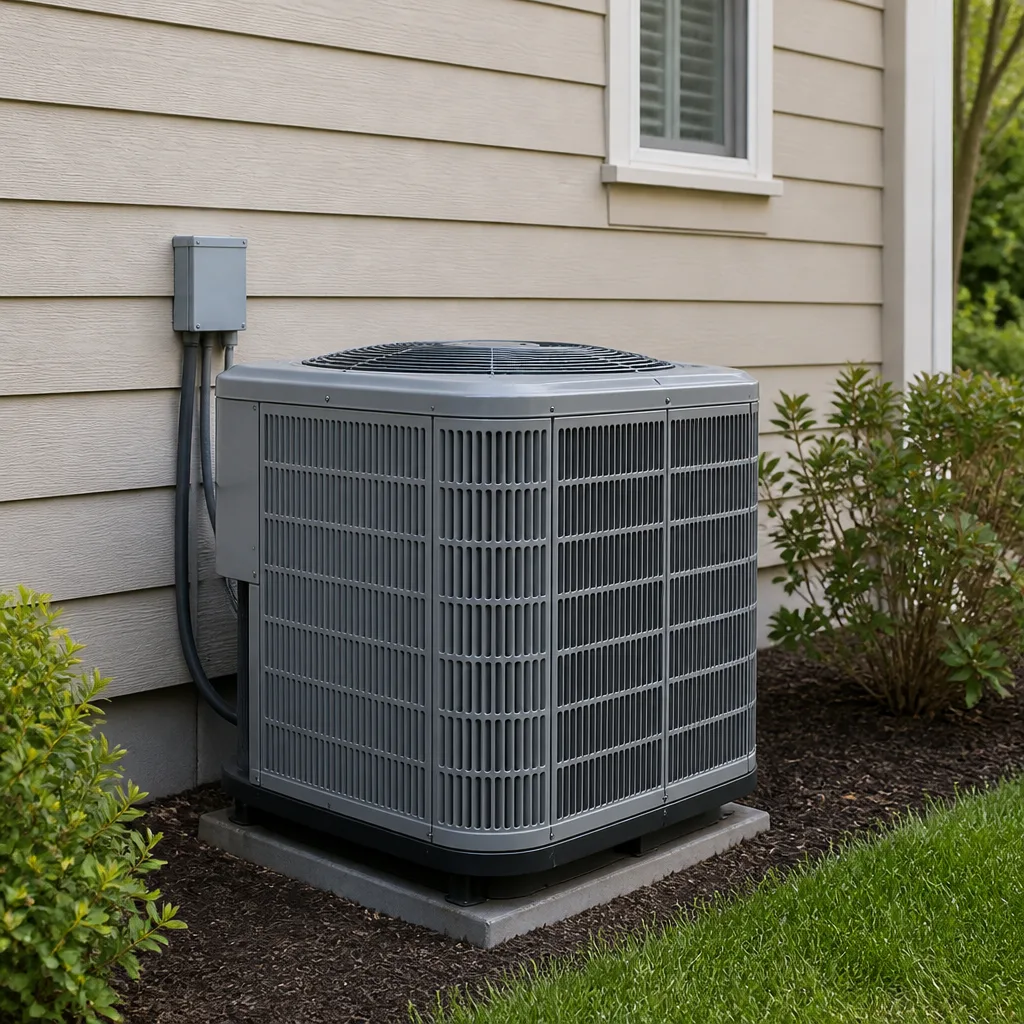
 Carrier
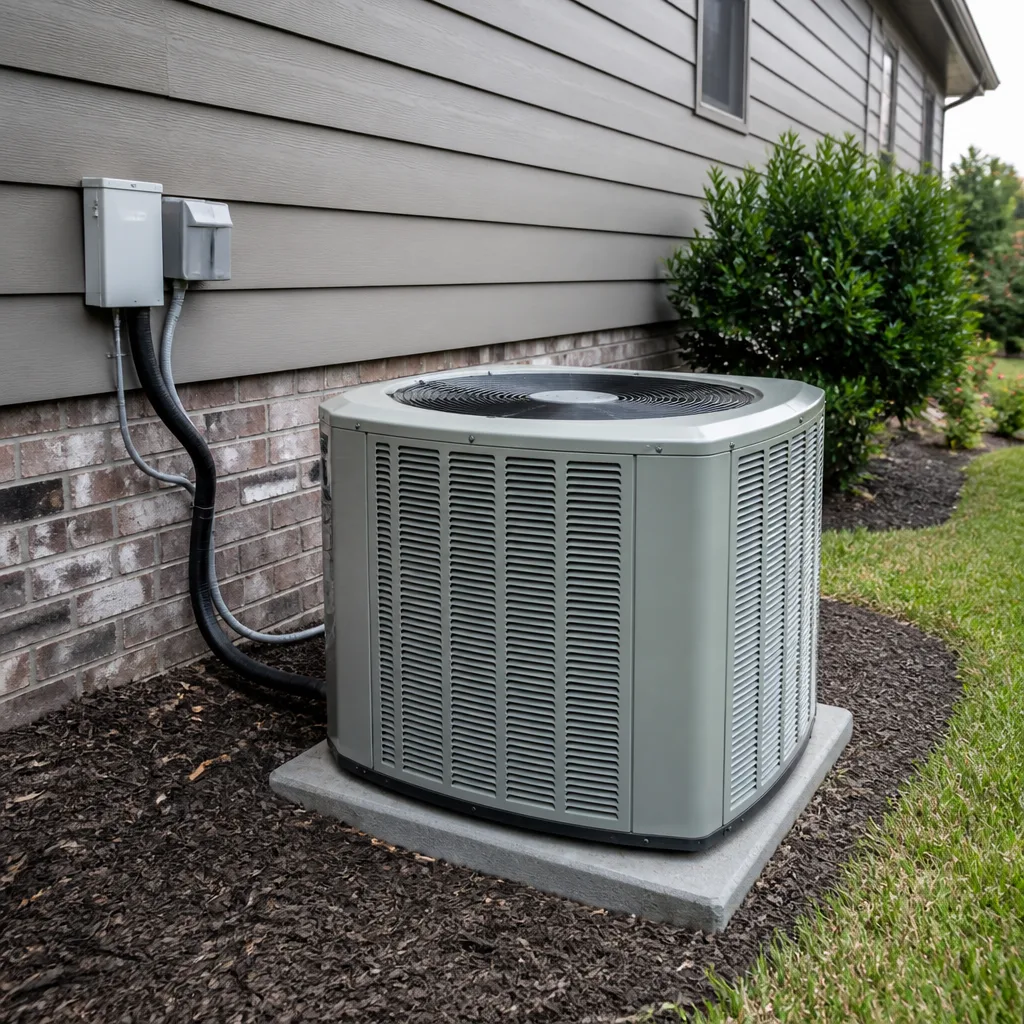 AC repair
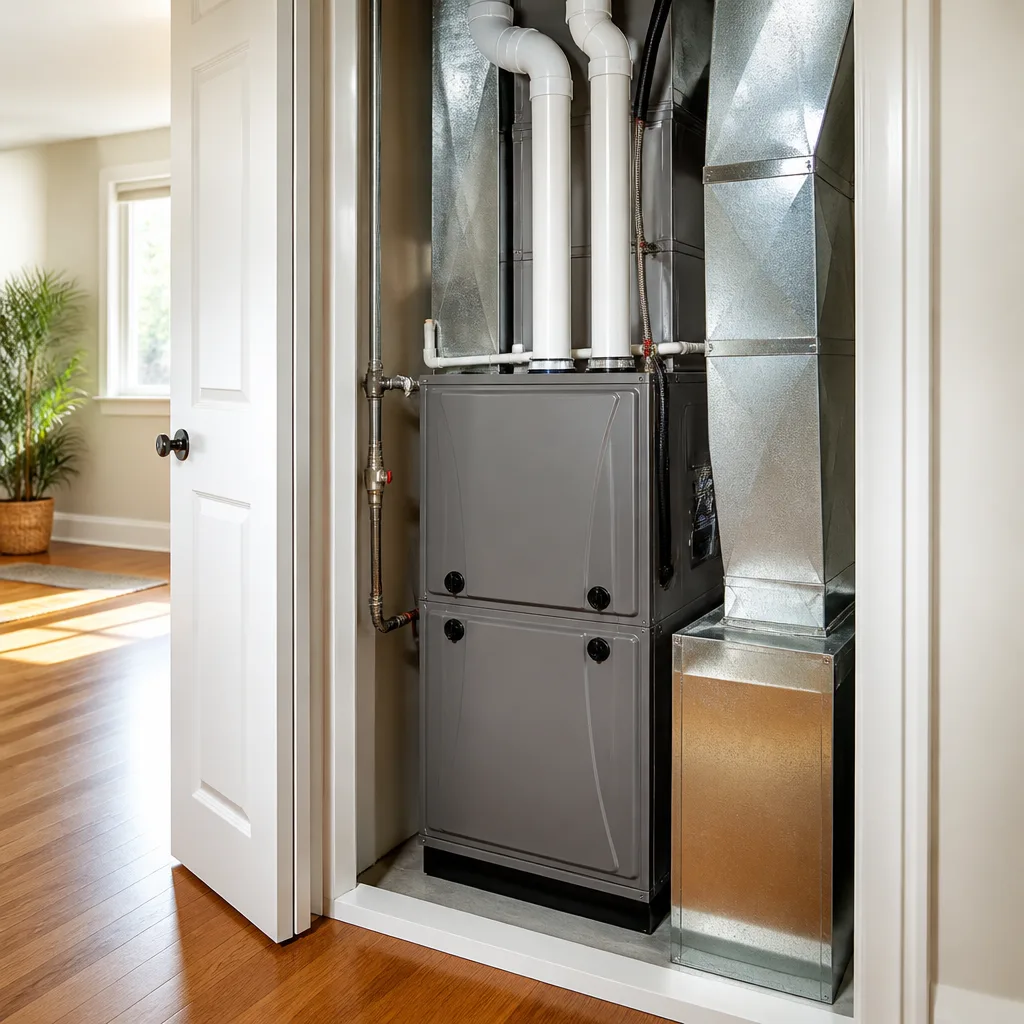 Furnace & heating
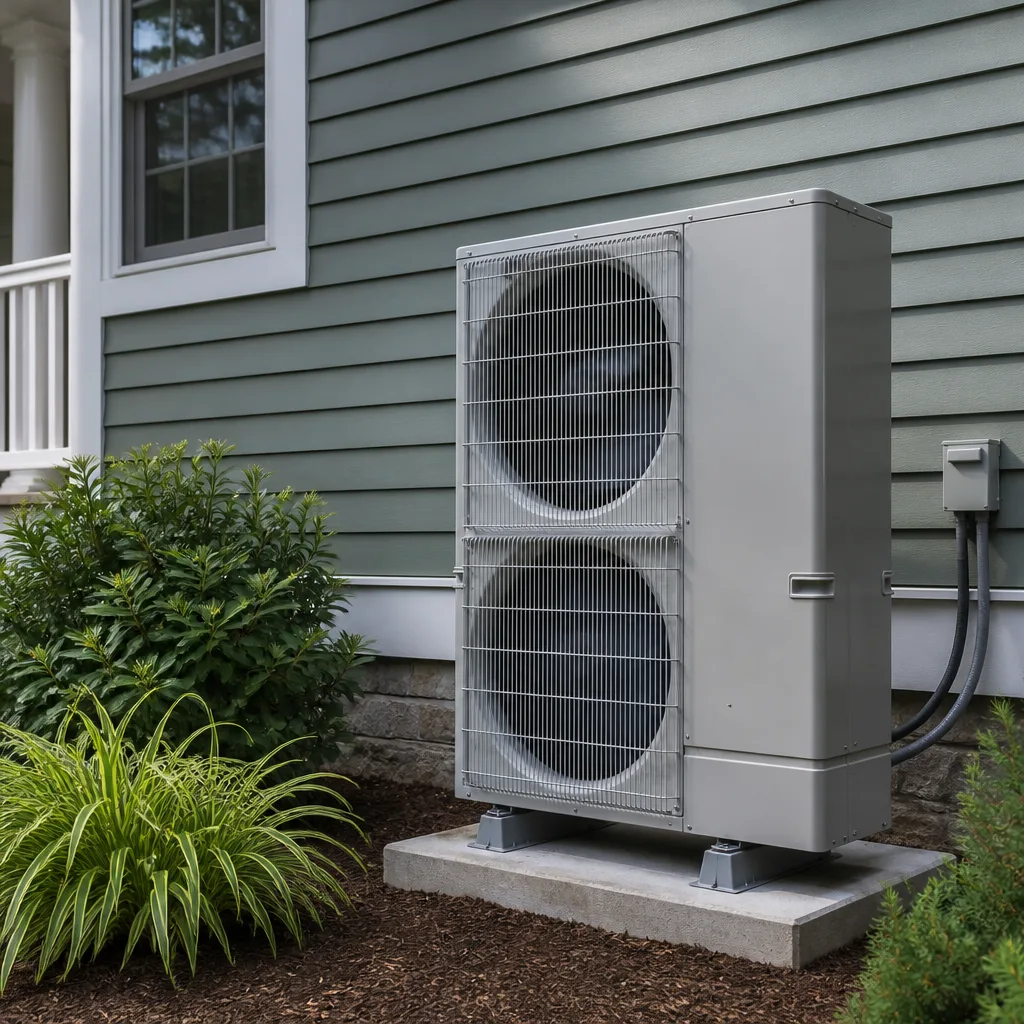 Heat pumps
 Ductless mini splits
 Trane
Trane Goodman
Seasonal tune-up and full diagnostic on your Carrier, Trane, or Goodman system - readings shown to you before any repair is proposed
Diagnosis first, numbers second - you approve the repair price before a single part goes in.
Get your free estimateCarrier Capacitor Replacement: The Austin Owner’s Guide
Most Carrier capacitor replacements in Austin run $150 to $325 installed, parts and labor included. We stock Carrier-compatible dual-run and start capacitors on our trucks, so in the majority of cases we can have your system running the same day you call. The part itself is usually $20 to $60; you’re paying for the diagnostic time, the swap, and a written guarantee on the work.
Here’s how most people find out their capacitor has failed: the outdoor unit hums but the fan never spins, or the compressor tries to start and then clicks off a few seconds later. Sometimes the system runs, but weakly, and your house never quite cools to the thermostat setting. In Austin, this often shows up in late afternoon when the unit has been working hardest and the ambient heat pushes an aging capacitor over the edge. We get these calls constantly from May through October.
One thing to know up front: we’re an independent service provider, not affiliated with Carrier. That actually works in your favor on parts, because we can pull from Carrier OEM stock or quality aftermarket equivalents and tell you honestly which one makes sense for your budget.
Which Carrier Models This Applies To
Carrier has used capacitors across nearly every residential line for decades. If you have a Comfort series, Performance series, Infinity series, a Bryant-badged cousin (same parent company, same part families), or older legacy models from the 38CKC or 38BR condenser lines, your system almost certainly runs on one or two capacitors.
Capacitors aren’t universal, and Carrier systems use a few gotchas that trip up homeowners ordering parts online. First, you need the microfarad (µF) rating stamped on the side of your existing capacitor. Common Carrier ratings are 35/5 µF, 40/5 µF, 45/5 µF, and 50/5 µF for dual-run capacitors that serve both the compressor and the fan motor. The voltage rating also matters: most Carrier residential units spec 370V or 440V. You can substitute a 440V-rated capacitor for a 370V one (the voltage rating is a ceiling, not a requirement), but you should never install a lower-voltage capacitor than the system calls for.
The second gotcha: physical dimensions. Some Carrier condensers have a tight mounting bracket, and aftermarket capacitors can be taller or wider than the OEM part. We regularly see homeowners buy the right microfarad rating online and then find it won’t fit the bracket without modification. That’s the kind of thing that’s easy to get right when you have the part in your hand and the old one sitting next to it.
OEM Carrier-branded capacitors are made to spec, but we’re honest with customers that the aftermarket brands we carry, including Titan HD and AmRad, often outlast the factory part, especially in Central Texas heat. The difference is build quality and heat tolerance. For a capacitor, we’ll only recommend aftermarket if it’s a known good brand we’d put in our own equipment. Never buy the cheapest no-name capacitor on Amazon.
Styles & brands we work with
Signs Your Carrier Capacitor Replacement Is Failing
- The outside unit hums but the fan doesn’t spin. This is the classic dead capacitor symptom. The motor is getting voltage but can’t build the phase shift to start turning. If you hear this, shut the system off at the thermostat and the breaker, because the motor can overheat and burn out if it keeps trying to start.
- The compressor tries to start, then clicks off. A capacitor that’s lost its ability to hold a charge (electricians call it “open” or “out of spec”) won’t give the compressor the starting torque it needs. The system’s overload protection trips, and you get that click-off pattern. Repeated short-cycling like this shortens compressor life.
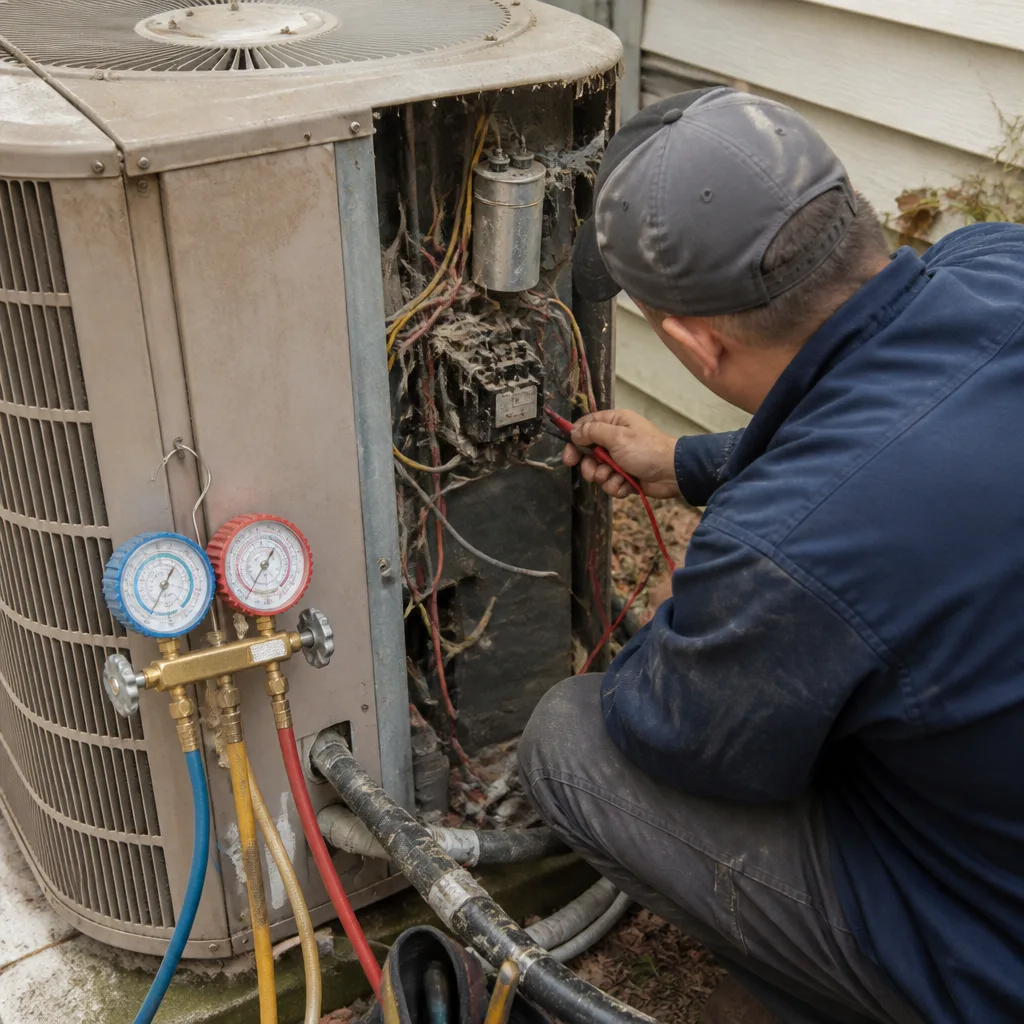
- The top of the capacitor is bulging or dome-shaped. That’s internal gas buildup from heat damage. A flat-topped capacitor is what you want to see; a rounded top means it’s already failed or about to. We check this visually on every capacitor-related call.
- Your AC runs but doesn’t cool like it used to. A weak capacitor lets the compressor run, but not at full capacity. In Austin, where a properly functioning system still struggles in August, this shows up as a house that holds 78 degrees instead of 74, even though the system never shuts off.
- The system won’t start on the hottest days but works fine at night. Capacitors degrade with temperature. Heat increases internal resistance, and a part that’s borderline at 80 degrees fails outright at 102. We see this pattern a lot in neighborhoods like Mueller and Allandale: the AC dies every afternoon during heat spikes, then works again after sundown.
See the difference
 Before
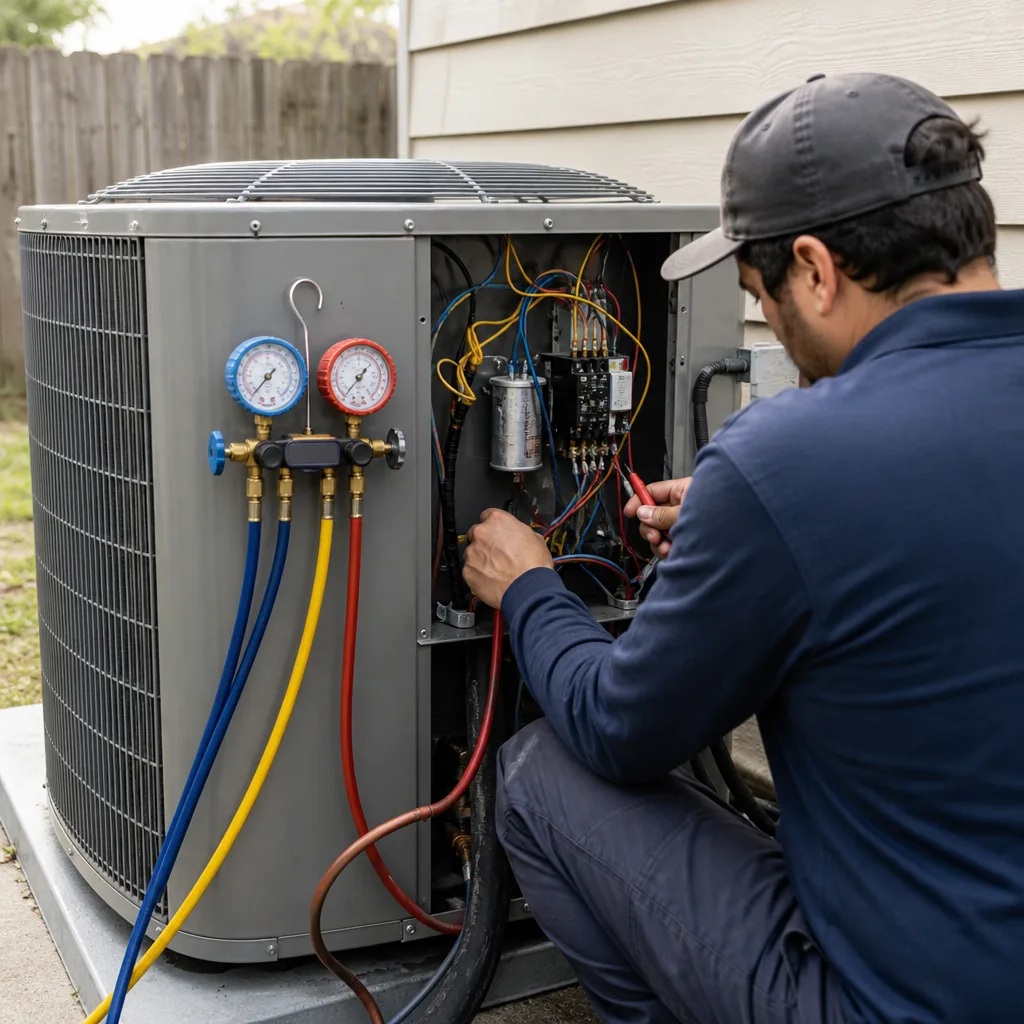 After
After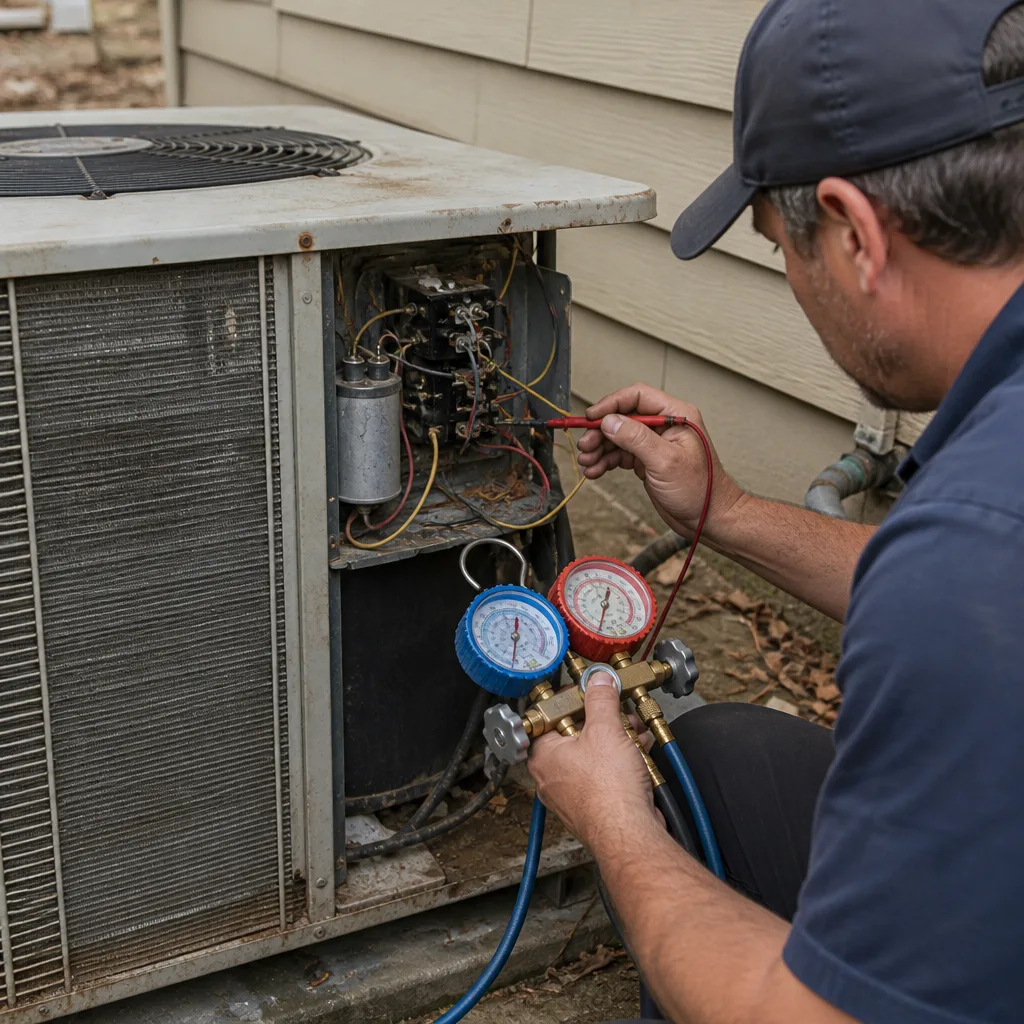 Before
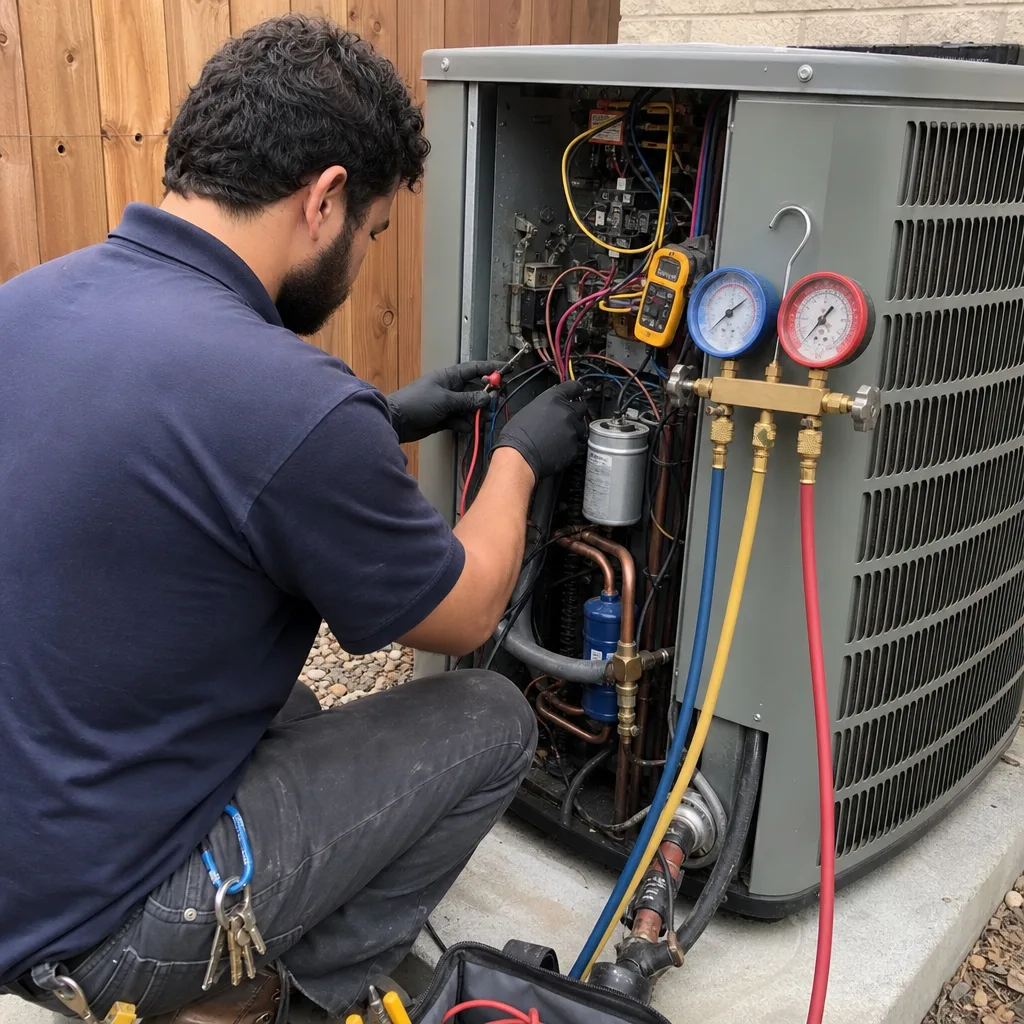 After
After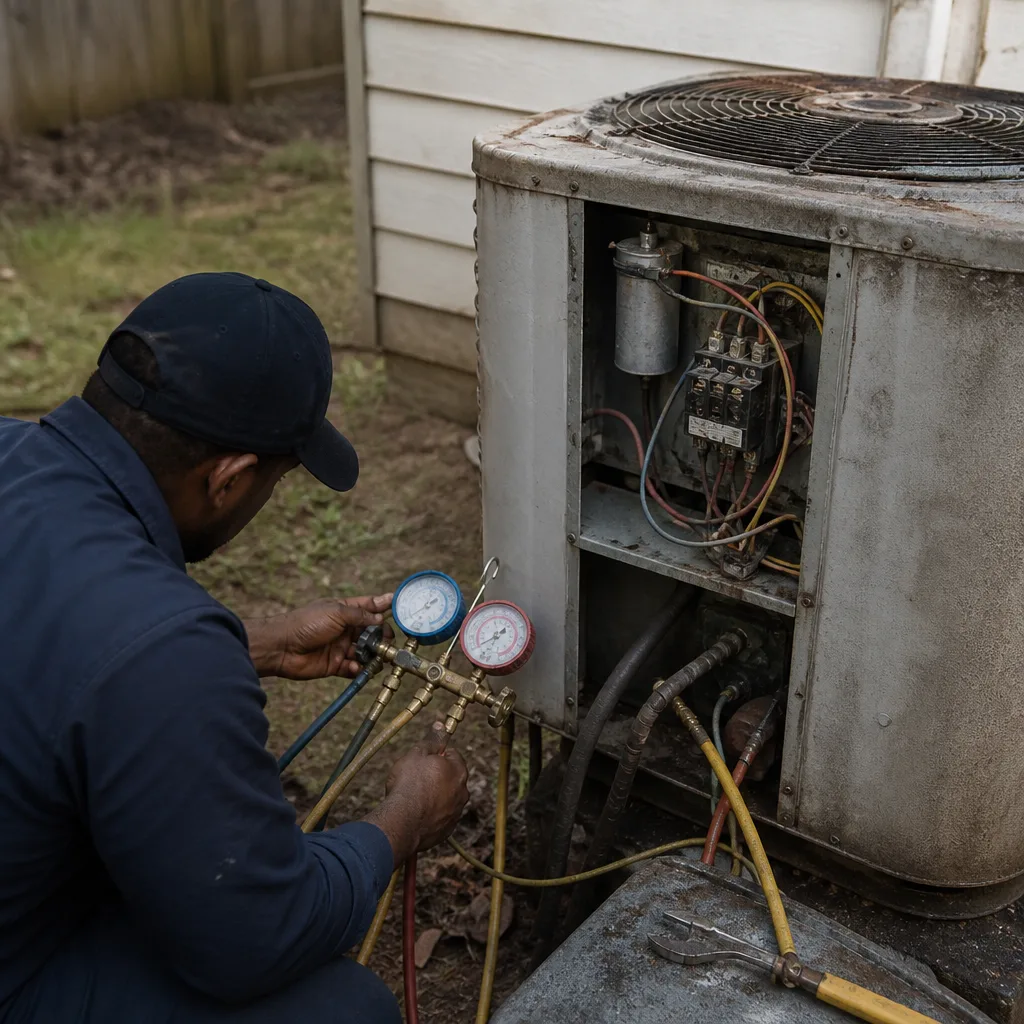 Before
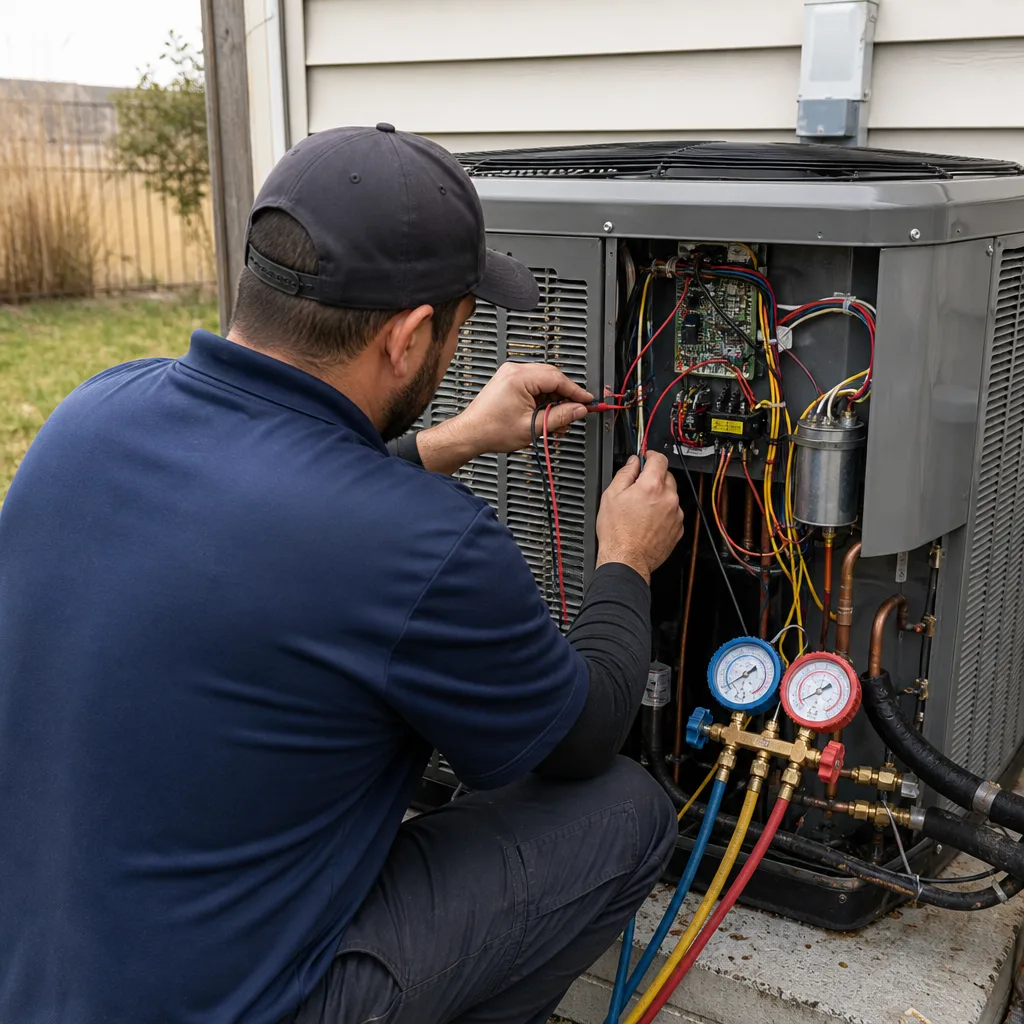 After
AfterReplacement Cost & What’s Included
In Austin, you should expect to pay $150 to $325 for a Carrier capacitor replacement, including the part, the service call, labor, and testing. Here’s what that range covers:
- Single capacitor replacement: $150 – $225. One capacitor, straight swap, system tested afterward.
- Dual capacitor replacement: $180 – $275. More labor and a slightly more expensive part. Most common scenario.
- Capacitor plus a hard start kit: $275 – $325. We add a hard start kit (a secondary capacitor that gives the compressor extra starting torque) if your system is aging and we want to extend compressor life through future Texas summers.
You’ll see the written price before we touch anything. Every capacitor replacement we do includes a written guarantee: if the capacitor fails within 365 days, we come back and replace it at no charge, covered by our 365-Day Done Right Promise. That’s not a pro-rated warranty, it’s a straight replacement.
One more transparency note: if you only need a capacitor, we’ll only sell you a capacitor. We don’t pad tickets with tune-ups you didn’t ask for or “recommended” parts that aren’t necessary. Devin Marlowe built this company on naming the problem and naming the price, and that doesn’t change when it’s a $200 job.
DIY or Call Us?
Honest answer: capacitors store electrical charge even when the power is off, and they can deliver a shock if mishandled. This is genuinely one of the more dangerous small parts in your HVAC system, right up there with contactors and high-voltage wiring. If you don’t have a multimeter and experience discharging capacitors safely, the risk isn’t worth the $60 you’d save on the part.
What you can safely do: check the capacitor visually. With the power off at the breaker, you can look at the top of the capacitor through the condenser’s service panel (or remove the panel if you’re comfortable doing so). If it’s bulged, you know the diagnosis. You can also note the microfarad and voltage ratings so you know what we’re talking about when you call.
Beyond that, call us. Every Brandt HVAC Co technician arrives at your door with a photo ID badge, and you’ll get the tech’s name and photo before arrival, sent to your phone via our Threshold Verified standard. Background-checked, uniformed, and identified. If the person at your door isn’t who we said it would be, that visit is on us.
If your Carrier is humming instead of running, call (361) 326-1553. We’ll walk you through what you’re hearing, tell you the likely fix, and give you a written price before any work starts.
FAQs
In Austin, expect 5 to 8 years from an original Carrier capacitor, and often less if the unit sits in direct afternoon sun with poor airflow around the condenser. Central Texas heat cycles kill capacitors faster than the national average. We name the problem, name the price, and then we fix it – no surprises after the fact.
No. A failing capacitor can’t be rebuilt or recharged safely, and every extra week it stays in the system increases the load on your compressor and fan motor. Replacement is the repair. Give us a call at (361) 326-1553 and we’ll verify the diagnosis before recommending anything.
Most capacitor replacements take 30 to 60 minutes from arrival to testing the system. If we need to add a hard start kit or address a wiring issue we find during the swap, figure on closer to 90 minutes. We’ll tell you the time before we start.
Yes, we keep common Carrier ratings in stock (35/5, 40/5, 45/5, and 50/5 µF dual-run capacitors plus single-run options), along with quality aftermarket equivalents from Titan HD and AmRad. If your system needs an uncommon rating, we can typically source it the same day from a local Austin supply house. Call (361) 326-1553 and we’ll confirm what we have before you schedule.
Written by Devin Marlowe, Owner, Brandt HVAC Co Austin at Brandt HVAC Co Austin, serving Austin and nearby areas.