
 Goodman
 AC repair
 Furnace & heating
 Heat pumps
 Ductless mini splits
 Carrier
 Trane
TraneSeasonal tune-up and full diagnostic on your Carrier, Trane, or Goodman system - readings shown to you before any repair is proposed
Diagnosis first, numbers second - you approve the repair price before a single part goes in.
Get your free estimateGoodman Capacitor Replacement: The Austin Owner’s Guide
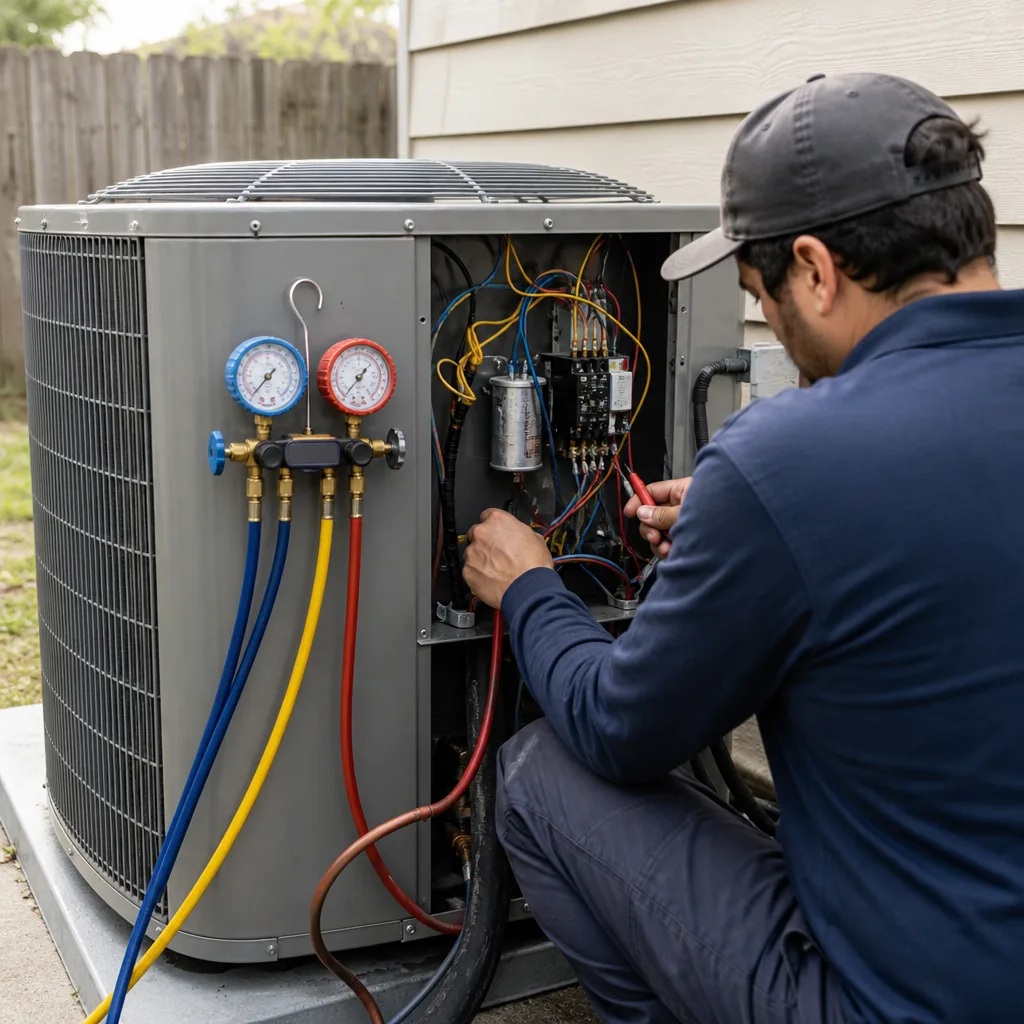
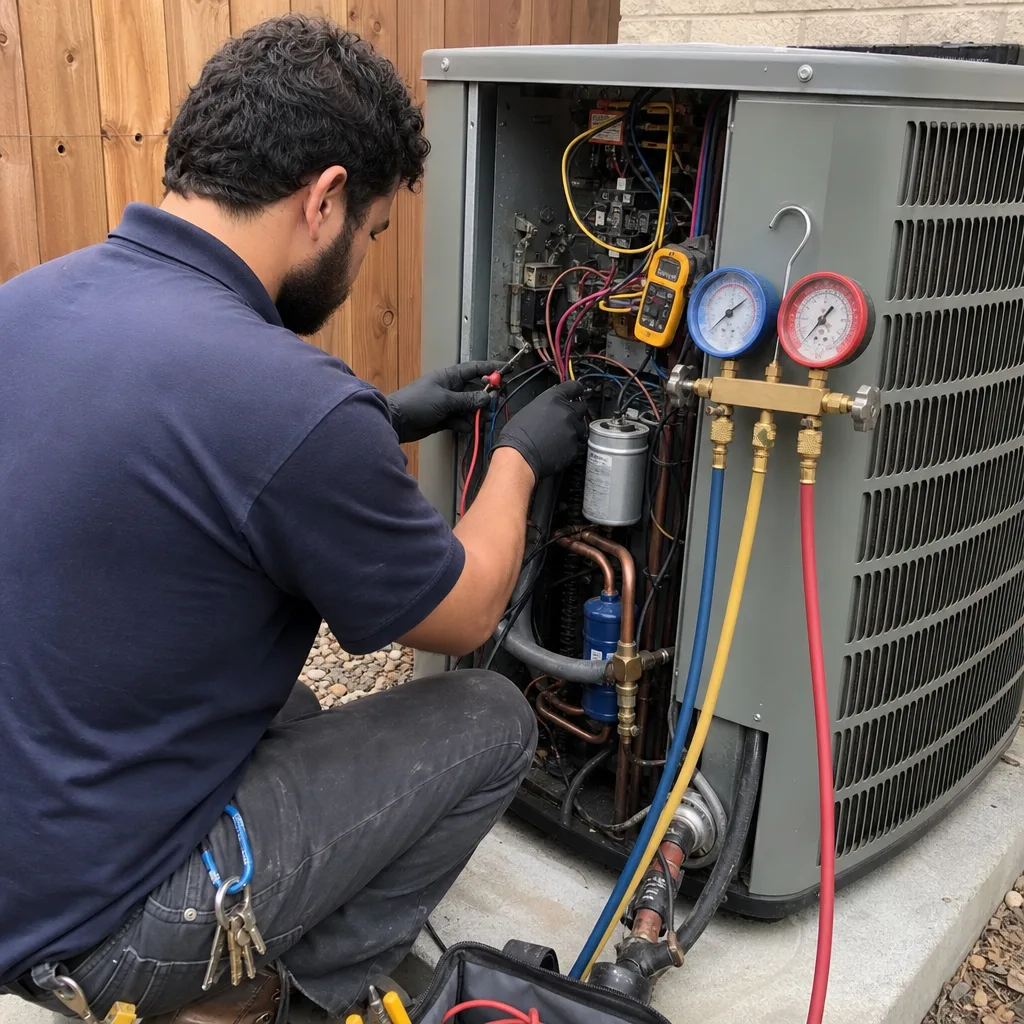
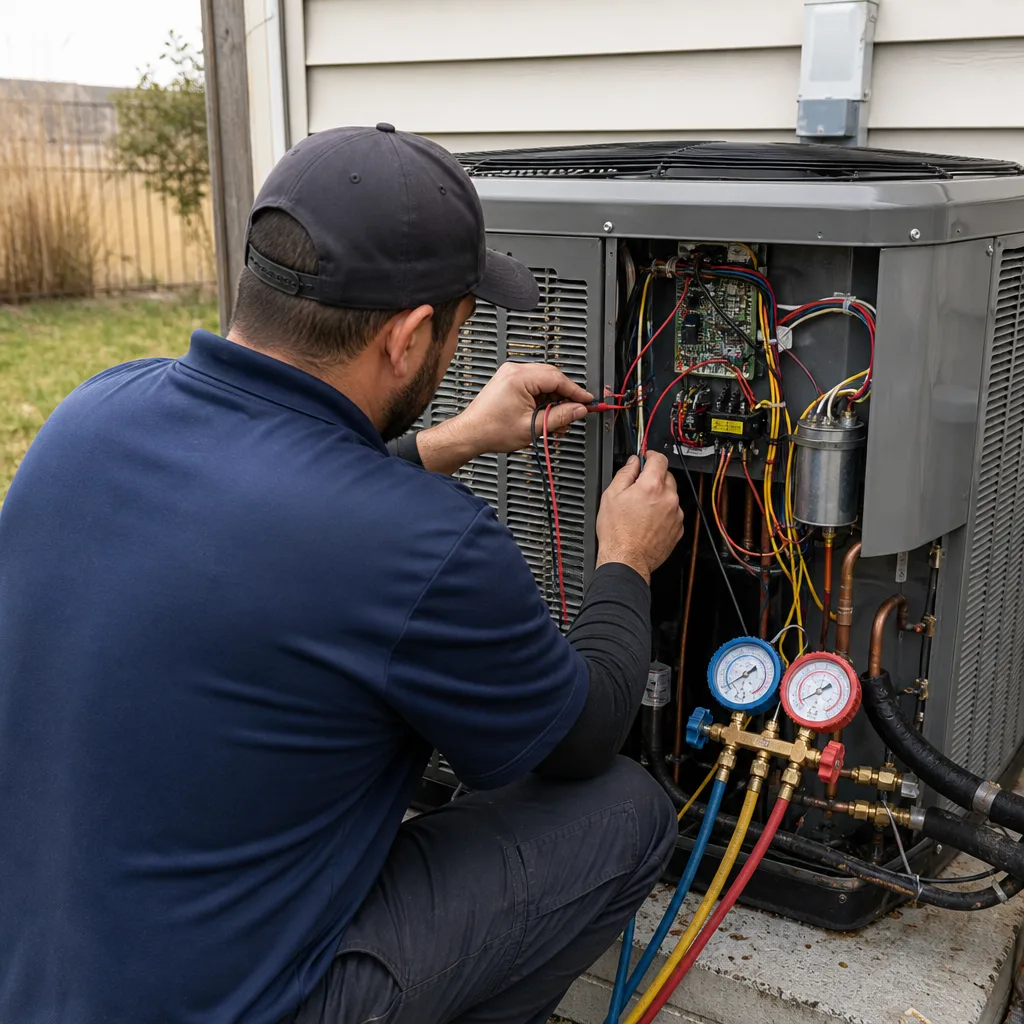
Goodman capacitor replacement in Austin typically runs $150 – $300 installed, parts and labor included, and we carry compatible capacitors on our trucks for same-day service in most cases. A capacitor is the small cylinder inside your outdoor condenser or air handler that gives the compressor and fan motor the electrical jolt they need to start and keep running. When it fails, your Goodman unit usually hums but won’t kick on, or the fan spins slowly while the compressor struggles. In Austin’s summer heat, a failing capacitor is one of the most common reasons a Goodman system dies on a 102-degree afternoon. We replace them fast, with a written price before we touch a thing, and we stand behind the part and the labor for a full year.
Key Takeaways:
- Installed Goodman capacitor replacement in Austin: $150 – $300
- Same-day service is usually available; we keep dual-run and single-run capacitors stocked
- The repair is straightforward, but the capacitor holds a stored electrical charge and should not be handled by a homeowner
- Written price, written guarantee, and a technician you know by name and photo before we arrive
- We’re an independent Austin-based HVAC company, not affiliated with Goodman, but we work on Goodman systems constantly
Which Goodman Models This Applies To
This covers the vast majority of Goodman central air conditioners and heat pumps installed in Austin over the past twenty-plus years, including the GSX, GSZ, SSZ, and older CK and CLK series lines. Goodman units typically use either a dual-run capacitor (one cylinder that serves both the compressor and the condenser fan) or separate single-run capacitors for each. The most common Goodman capacitor in the Austin market is a dual-run rated at 35/5 or 40/5 microfarads (µF), with a voltage rating of 370 or 440 volts. Here’s the compatibility gotcha: the voltage rating on the replacement must meet or exceed the old one, but the microfarad rating has to match within about five percent. Too far off, and the compressor runs hot and dies early. We read the faded label on your old capacitor with a meter if needed, match the numbers exactly, and show you what we’re installing before it goes in. For Goodman specifically, we prefer OEM or American-made equivalents like AmRad or Titan HD. Many universal aftermarket capacitors work fine, but some cheap imports run slightly under spec and fail inside one Austin summer. We don’t install those. If you have a Carrier, Trane, or Lennox system, we stock compatible capacitors for those brands, too.
Styles & brands we work with
Signs Your Goodman Capacitor Replacement Is Failing
- The unit hums but the fan doesn’t spin. This is the classic call we get from South Congress to Round Rock. The capacitor has lost enough of its charge that the motor can’t get the starting torque it needs. The compressor or fan sits there buzzing until the thermal overload shuts it down to prevent a fire.
- The AC runs but blows warm air. If the condenser fan capacitor has failed while the compressor capacitor still works, the compressor runs without airflow across the coil. That’s a fast way to overheat and destroy a compressor, and it’s a repair that turns a $200 visit into a $2,500 one if it’s ignored.
- The fan spins slowly or needs a push to get going. A weak capacitor can still deliver some current, just not enough for a clean start. We’ve seen homeowners spin the fan blade by hand with a stick to get the unit running. That’s a temporary fix that masks the real problem and strains the motor every single time.
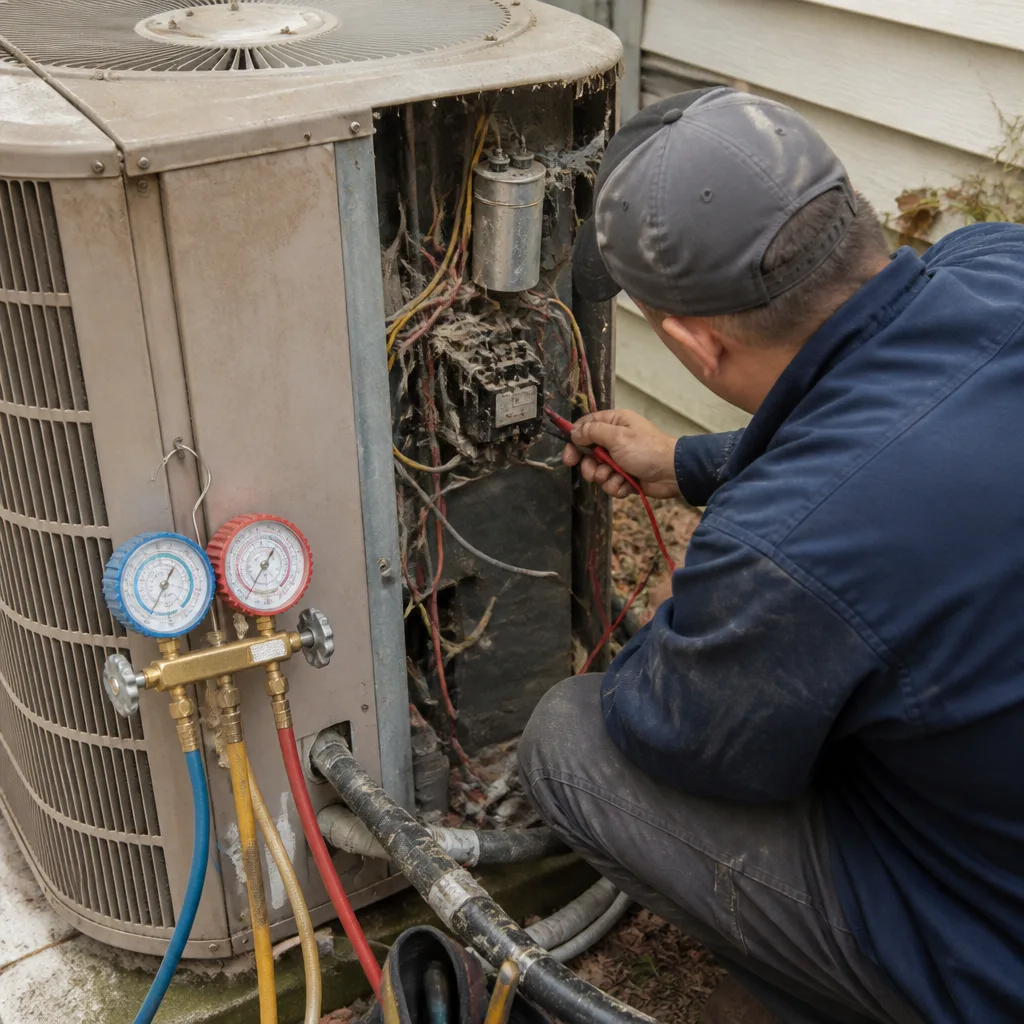
- The capacitor case is swollen, leaking, or smells burnt. When a capacitor’s internal dielectric breaks down, it bulges at the top or sides, sometimes leaking an oily residue. That’s a clear visual failure. If you see it, stop running the system and call us.
- The compressor short-cycles or trips the breaker. A failing capacitor draws excessive current, which trips breakers and causes the compressor to start and stop repeatedly. Every short cycle adds wear to a compressor that’s already running hot in Austin’s climate.
See the difference
 Before
 After
After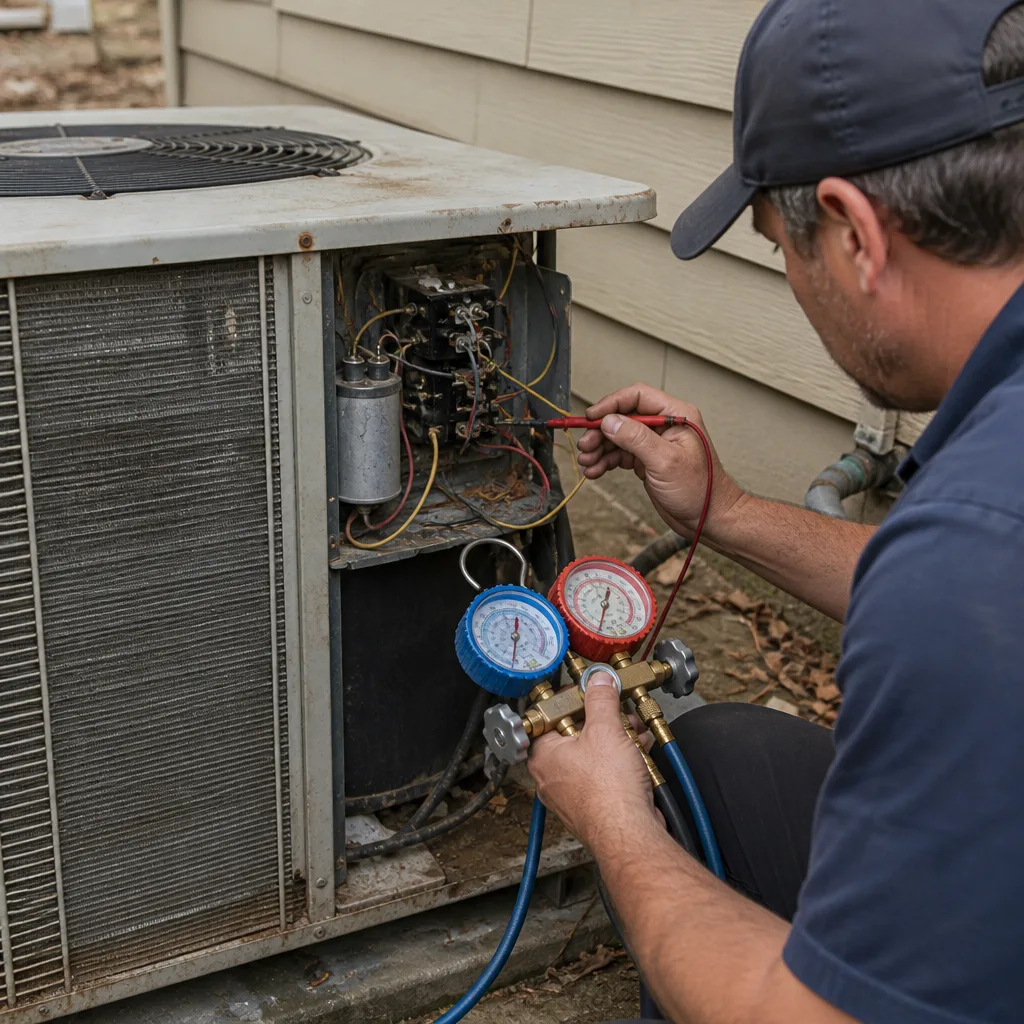 Before
 After
After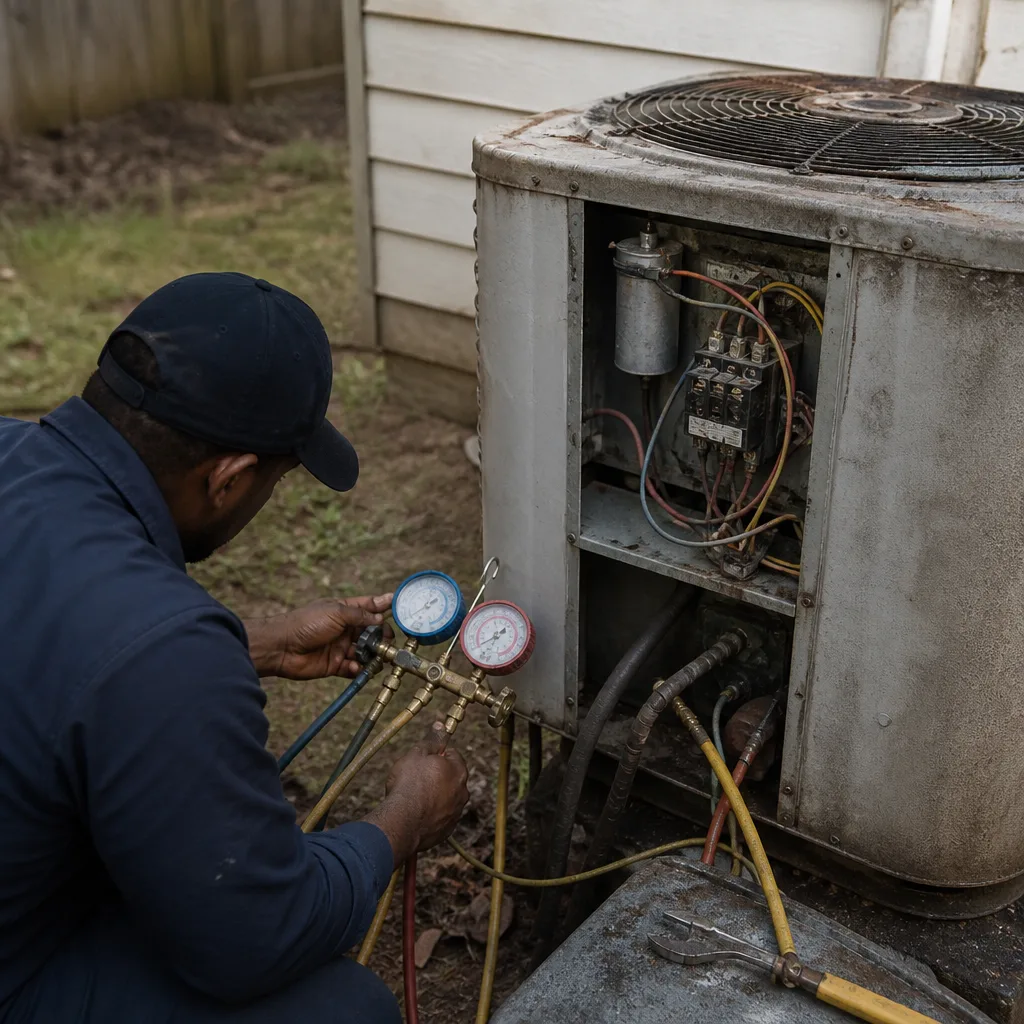 Before
 After
AfterReplacement Cost & What’s Included
In Austin, you should expect a Goodman capacitor replacement to cost between $150 and $300 installed. That includes the capacitor itself (dual-run typically runs $35 – $60 wholesale for a quality part), the service diagnostic visit, the labor to remove and replace, and verification that the new capacitor is delivering the right microfarad reading under load. We don’t charge extra for the diagnostic if we do the repair. The price range reflects whether it’s a single-run or dual-run capacitor and whether the unit is on the ground, on a roof, or in an attic that requires more time to access.
| Goodman Capacitor Replacement in Austin | Typical Installed Price |
|---|---|
| Dual-run capacitor (35/5 or 40/5 µF) | $180 – $260 |
| Single-run capacitor (compressor) | $150 – $220 |
| Capacitor plus hard-start kit (for aging compressors) | $250 – $300 |
| Diagnostic only (if the capacitor tests good) | $89 – $129 |
The part and our labor are covered by the 365-Day Done Right Promise. If that capacitor fails within the year, we come back and replace it at no charge. You get the written price before we start, and the written guarantee before we leave. No exceptions.
DIY or Call Us?
Here’s the honest answer: a capacitor is one of the cheapest parts on a Goodman system, and it’s also one of the most dangerous to touch. Even with the power off and the breaker pulled, a capacitor stores a charge strong enough to knock a person across a garage slab. It has to be discharged properly with an insulated tool, and then the right replacement has to be matched to spec. Get the microfarad rating wrong, and you shorten the life of a compressor that’s often the single most expensive component in the system. We all like saving money, but this is one repair where a shortcut can cost much more than the $150 – $300 the job actually runs. What you can safely do: check that the breaker is on, look at the capacitor for bulging or leakage without touching it, and keep the unit off until we get there. Call (361) 326-1553 and we’ll give you an honest same-day answer on when we can have someone to your door. We name the problem, name the price, and then we fix it – no surprises after the fact.
FAQs
In Austin’s heat, a Goodman capacitor typically lasts five to seven years before it starts to degrade. The sustained high temperatures we see through July and August cook the dielectric material inside the capacitor, which is why Austin systems fail capacitors faster than the same unit would in a cooler climate. If your system is six years old or older and has never had a capacitor replaced, it’s on borrowed time.
No. A capacitor is a sealed component, and once it’s failed or swollen, there’s no internal repair. It gets replaced, not refurbished. The good news is that it’s one of the least expensive parts on your Goodman system, and the replacement is quick and reliable.
Most capacitor replacements take 30 to 45 minutes once our technician is at the unit. That includes the discharge, removal, installation, testing under load, and a quick check of the rest of the electrical connections in the condenser. If the system needs a hard-start kit or other work, we’ll tell you before we do it and hand you a written price first.
Yes. Our technicians carry the most common dual-run capacitors in 35/5, 40/5, 45/5, and a range of single-run sizes, along with hard-start kits for aging compressors. If you have an unusual model that needs a specific capacitor we don’t have on hand, we’ll source it and have you back up and running, with a clear answer on timing before you commit to anything. Call (361) 326-1553 and we’ll tell you what we have available for your unit today.
Written by Devin Marlowe, Owner, Brandt HVAC Co Austin at Brandt HVAC Co Austin, serving Austin and nearby areas.