
 Heat pumps
 AC repair
 Furnace & heating
 Ductless mini splits
 Carrier
 Trane
Trane Goodman
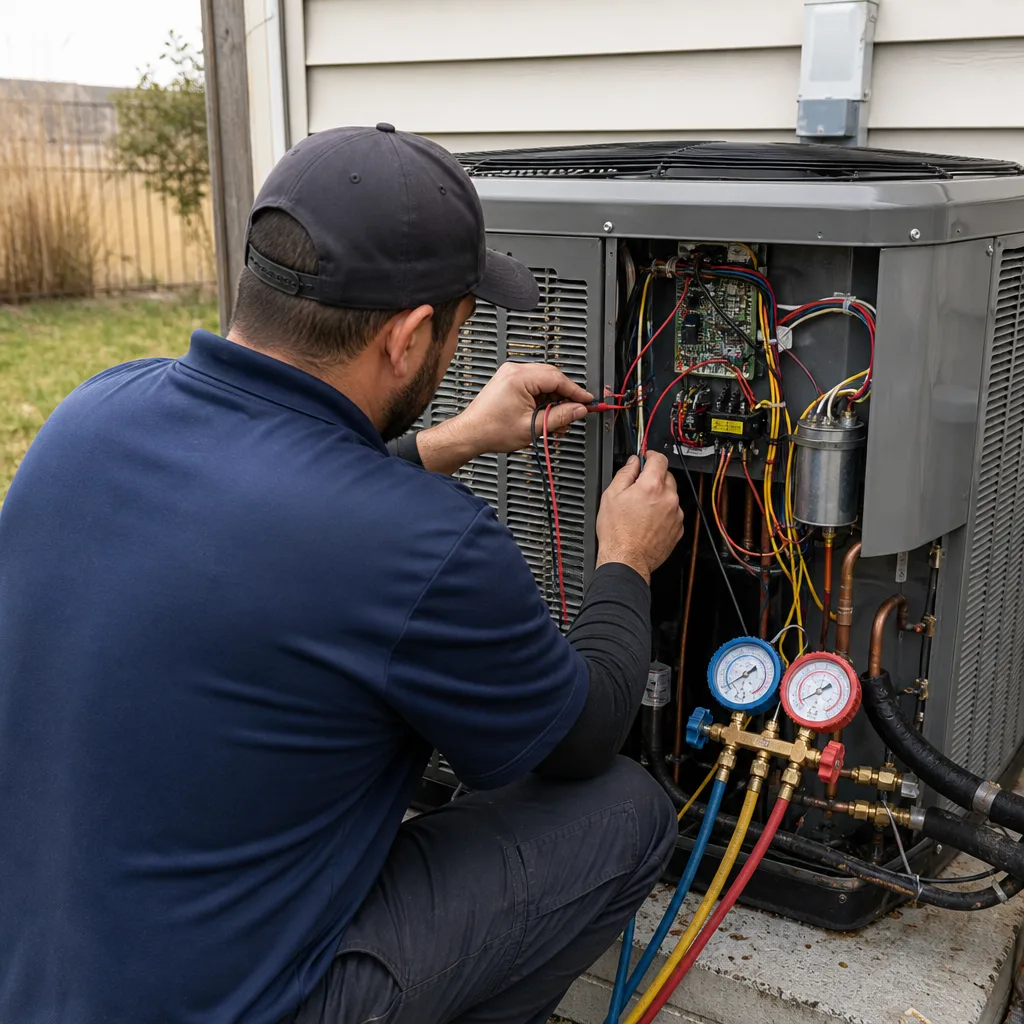
Seasonal tune-up and full diagnostic on your Carrier, Trane, or Goodman system - readings shown to you before any repair is proposed
Diagnosis first, numbers second - you approve the repair price before a single part goes in.
Get your free estimateGoodman Heat Pump Service: The Austin Owner’s Guide
Goodman heat pump service in Austin typically runs $150 – $650 installed, depending on which part failed and how deep into the system it sits. We stock the most common Goodman-compatible parts on our trucks, so a same-day fix is the norm rather than the exception for things like capacitors, contactors, defrost boards, and fan motors. Most Austin homeowners discover a failing part the hard way: the system runs but won’t cool in July, or it ices over on a mild December morning and starts blowing lukewarm air. By the time you notice, that part has usually been limping along for weeks.
Brandt HVAC Co Austin is an independent service provider, not affiliated with Goodman. That means we’re free to tell you exactly which parts are worth buying as OEM and which aftermarket replacements will hold up just as well for less money. Devin Marlowe has spent enough summers in Austin attics and on South Congress rooftops to know what Goodman equipment does when Central Texas heat and humidity push it past its limits.
Which Goodman Models This Applies To
Goodman splits its heat pumps into a few clear lines, and the parts compatibility is not always forgiving across them. The GSZ and GSX series (14 SEER entry-level units) share many components, but the newer GSZC and GSZH variable-speed and high-efficiency models use proprietary inverter boards and ECM motors that do not interchange with the older equipment. If you’re looking at the model plate on the side of your outdoor unit, the first four characters tell you the series. That plate also carries the full model number and serial number, which is how we confirm the exact part before ordering or installing anything.
The OEM-vs-aftermarket decision for Goodman is different than it is for Carrier or Trane. Goodman’s own replacement parts are priced in the middle of the pack, which means aftermarket savings are often small enough to skip, especially on controls. For wear items like capacitors and contactors, a quality aftermarket part from a name-brand supplier (Amrad, Mars, Titan) is frequently the better value and carries the same real-world lifespan. For anything involving the reversing valve, defrost control board, or variable-speed inverter, we recommend OEM. Those parts are matched to the unit’s refrigerant charge and control logic, and an aftermarket substitute that is “close enough” on paper can create nuisance lockouts that waste multiple service calls.
One compatibility gotcha we see regularly in Austin: Goodman units built before roughly 2015 in our market were commonly paired with non-Goodman indoor coils during DIY or low-bid installs. That mismatch changes which expansion device and refrigerant charge the system needs, and it matters when we’re replacing a compressor or reversing valve. Tell us if your system had a mixed-brand history that you know of. It saves us diagnostic time and saves you money.
Styles & brands we work with
Signs Your Goodman Heat Pump Service Is Failing
Heat pumps fail in stages, and most of the early stages are quiet. Here are the five symptoms we hear most often from Austin Goodman owners, and what they actually mean:
- The outdoor unit runs, but the air inside never gets cold. This usually points to a failed run capacitor or a compressor that is starting but not pumping. Both are repairable, but a compressor that has been struggling for weeks often takes the capacitor with it, so replacing one without checking the other is false economy.
- The outdoor coil ices over in cooling mode, or the whole unit frosts up in heating mode. That points to a defrost board failure, a failing defrost thermostat, or low refrigerant. In Austin’s humid spring and fall, a defrost problem shows up as a unit that looks like a snowball while still blowing air.
- The system trips its breaker more than once. A heat pump that kicks a breaker occasionally in August is telling you the compressor or fan motor is drawing more current than the circuit can safely deliver. Ignore this one long enough and the breaker becomes the only thing standing between you and a shorted compressor.
- The thermostat clicks, the outdoor unit hums for a few seconds, then shuts off. That hum is the compressor trying to start against a dead capacitor. Every time it tries and fails, the windings get hotter. The longer that symptom goes unaddressed, the higher the chance that a $150 – $300 capacitor replacement becomes a $1,500+ compressor replacement.
- The system blows air, but it’s the wrong temperature for the season. A heat pump that cools fine but won’t heat, or heats but won’t cool, often has a stuck reversing valve. The reversing valve is what switches the system between modes. When it sticks, the unit does exactly half of its job and nothing more.
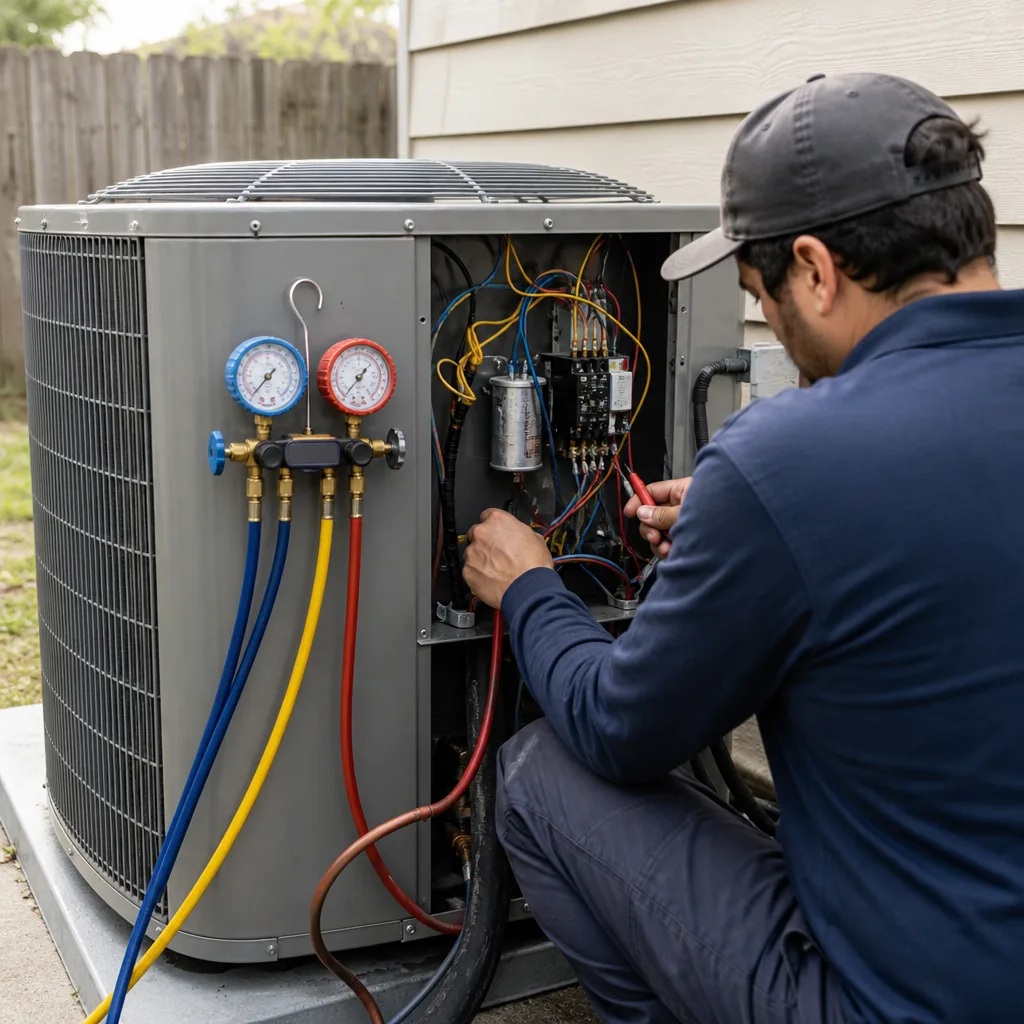
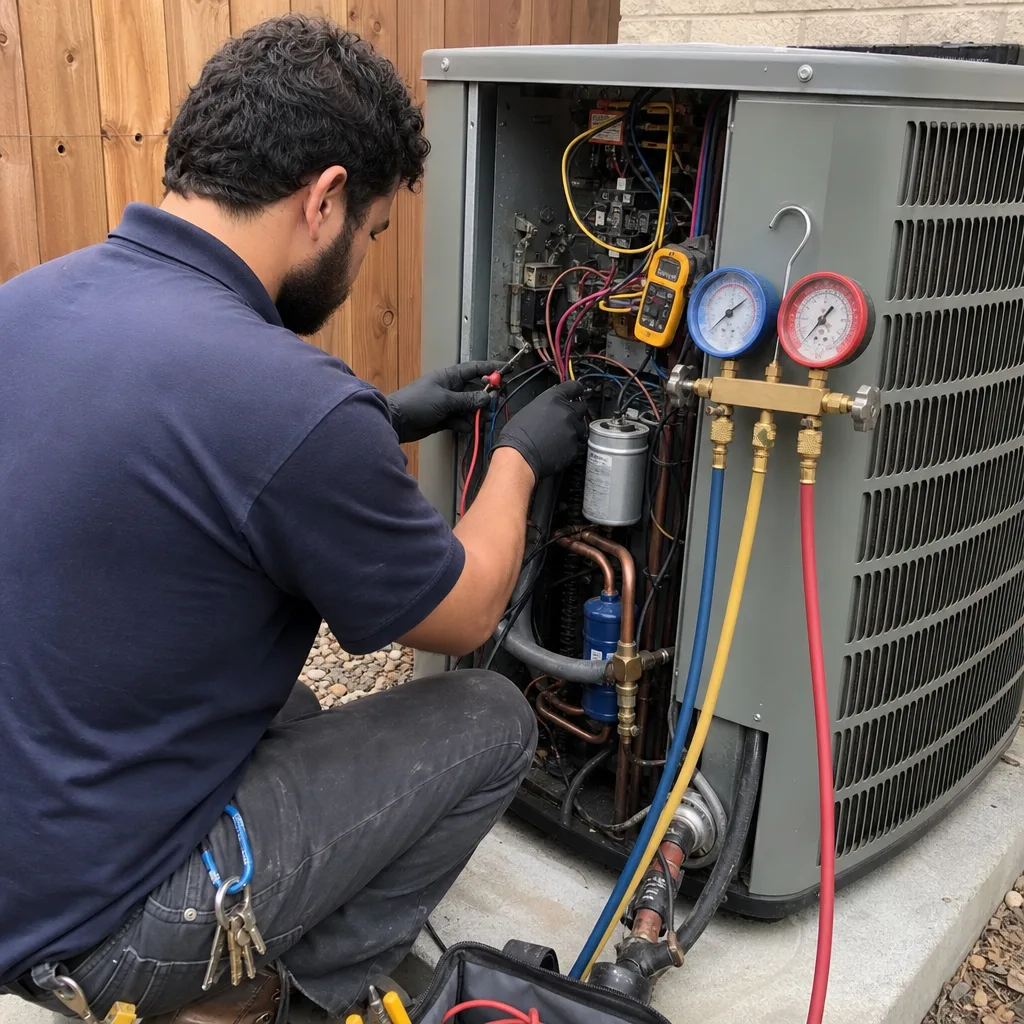
See the difference
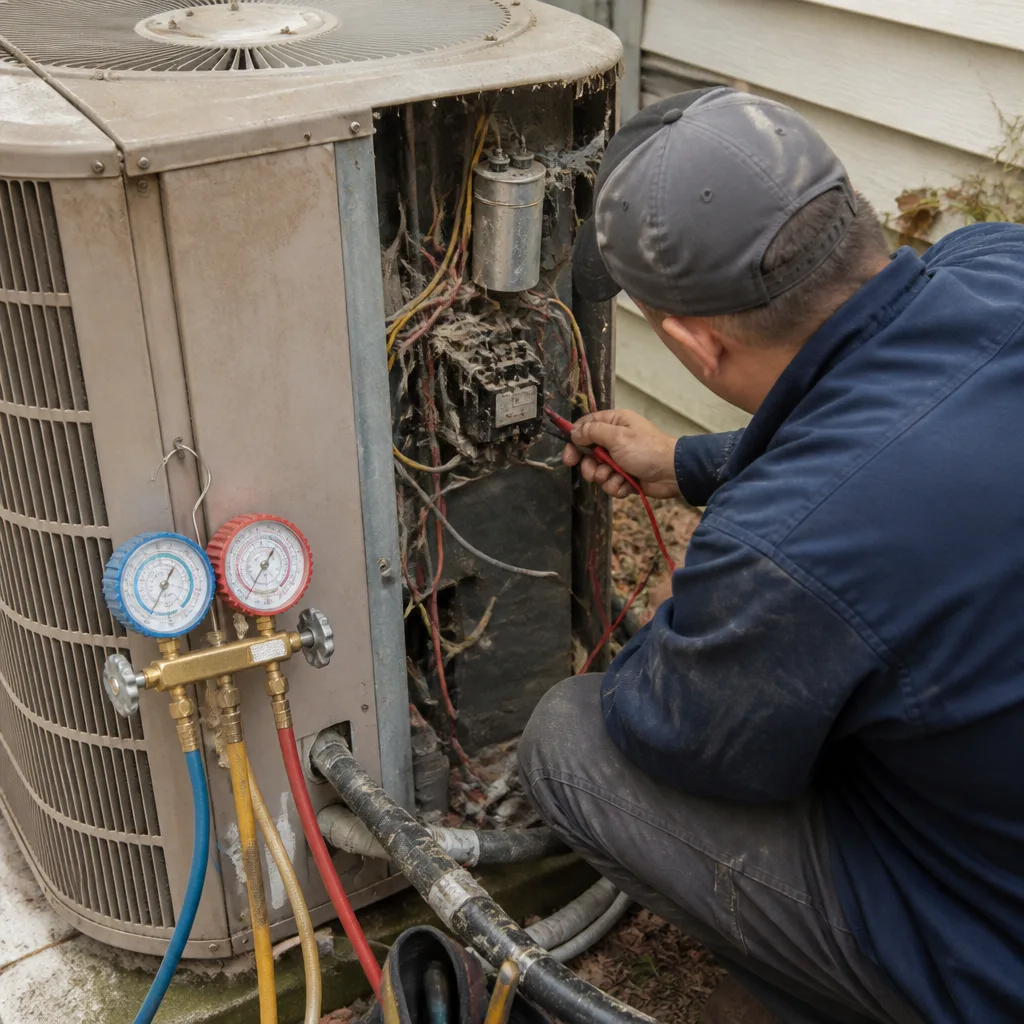 Before
 After
After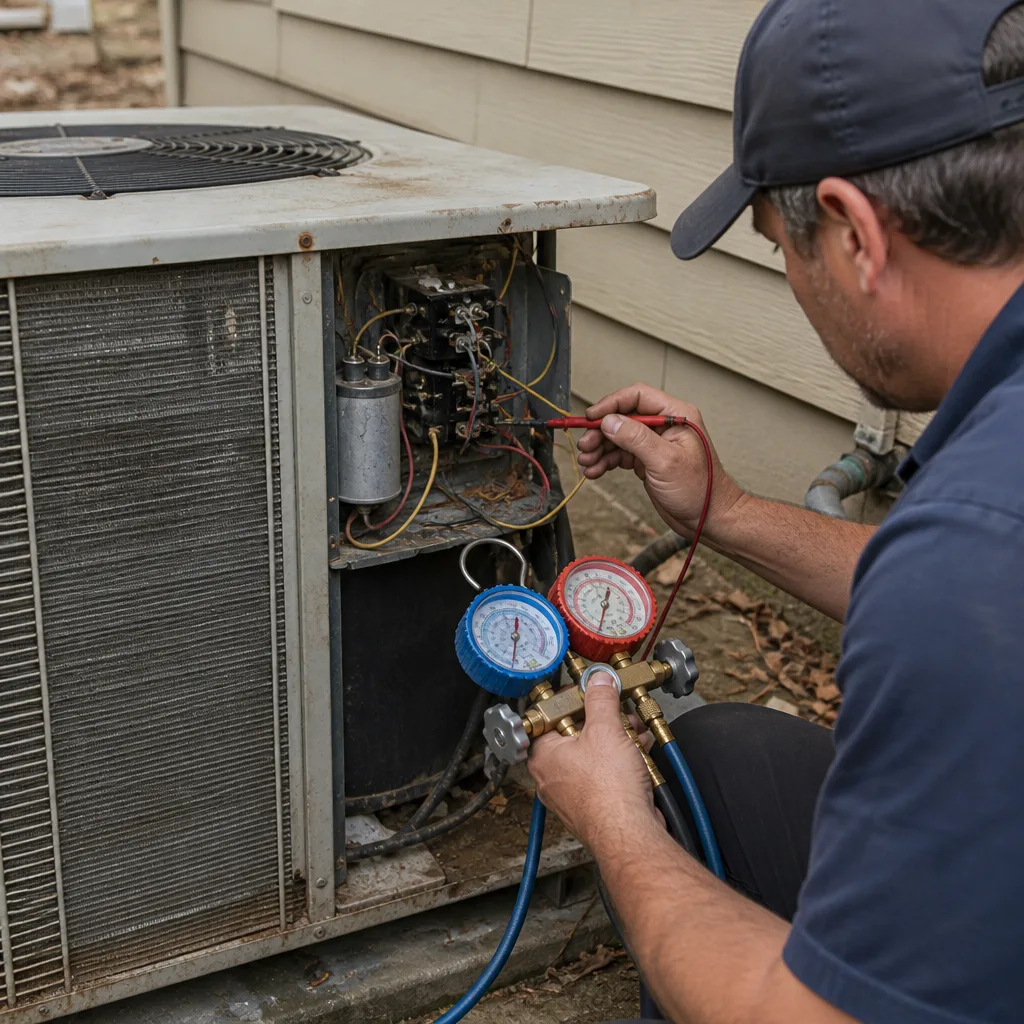 Before
 After
After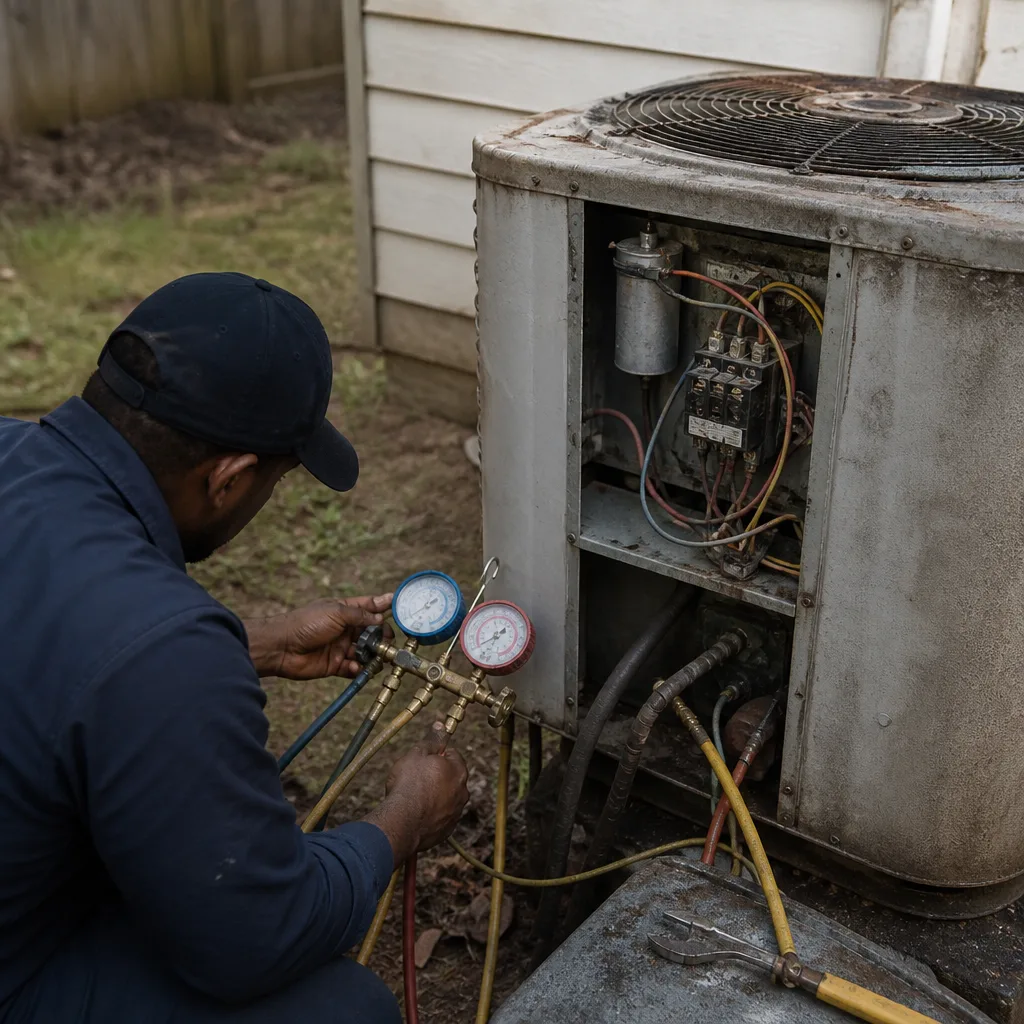 Before
 After
AfterReplacement Cost & What’s Included
The installed price for Goodman heat pump service in Austin depends on which component failed. Here is the range we quote on the parts we replace most often, with parts and labor included:
- Run capacitor replacement: $150 – $300
- Contactor replacement: $150 – $300
- Defrost control board: $250 – $500
- Condenser fan motor: $300 – $550
- Reversing valve: $400 – $650, including refrigerant recovery and recharging
- Compressor replacement: $500 – $650 in labor, plus the compressor itself, which typically runs $800 – $1,800 depending on the model
Every repair starts with a written price before any work begins. No exceptions. What drives the range is access: a capacitor on a ground-level unit in Round Rock is a twenty-minute job; the same part on a rooftop-converted closet unit in a South Congress bungalow takes longer because of the access work. Goodman parts themselves are generally less expensive than Carrier or Trane equivalents, which keeps most repairs in the lower half of those ranges.
Every repair we make is covered by a written guarantee, and the 365-Day Done Right Promise means if that repair fails within the guarantee period, we return and make it right at no charge. No argument, no second invoice.
DIY or Call Us?
There are a few things any Austin homeowner can safely check before calling us. Confirm the thermostat is set correctly and the breaker is in the ON position. Check that the outdoor unit is not buried in leaves or blocked by a fence panel the last storm pushed against it. Wash the outdoor coil gently with a garden hose if it’s coated in cottonwood or pollen, which Austin has in abundance every spring. Those are safe checks.
What you should not do is open the unit and start testing electrical parts. Heat pumps run on 240 volts in most Austin homes, and the capacitor inside the outdoor unit stores enough charge to stop a heart even after the breaker is off. The defrost board and contactor are live electrical components. The reversing valve work involves refrigerant, which requires an EPA license to handle. This is not a weekend project, and we’re not going to pretend otherwise. If you’ve checked the simple things and the system still isn’t right, call us at (361) 326-1553. We’ll name the problem, name the price, and then we fix it, no surprises after the fact.
FAQs
Most Goodman heat pump components last 10 – 15 years in Austin’s climate, but capacitors and contactors routinely fail in 5 – 8 years because Austin summers run the system hard for months at a time. In Central Texas heat, a Goodman capacitor doing the work of a 10-year part in 7 years is normal, not a defect.
No. The parts we’re describing here, capacitors, contactors, defrost boards, fan motors, and reversing valves, are sealed or wear-based components. They are replaced, not rebuilt. The only exception is a compressor, which can sometimes be saved with a hard-start kit, but a hard-start kit is a bridge to replacement, not a fix. Call (361) 326-1553 and we’ll tell you straight which category yours falls into.
Most Goodman heat pump service takes 45 minutes to 2 hours once our technician is on site. A capacitor or contactor is under an hour. A defrost board is usually 60 to 90 minutes. A reversing valve or compressor is a half-day job because it involves recovering and recharging refrigerant. We’ll give you a time window before we start, and the written price covers the full job, not an hourly meter.
Yes. We carry common Goodman capacitors, contactors, defrost thermostats, and fan motors on our trucks, and we also stock parts for Carrier, Trane, and Lennox systems for the mixed-brand homes around Austin. If your unit needs a model-specific control board or inverter component, we order it from our Goodman supplier and usually have it within a day or two. We’ll tell you before we leave whether the part is on the truck or on order.
If your Goodman heat pump is acting up, call (361) 326-1553. A live person answers, 24 hours a day. You’ll get a written price before any work starts, and the technician who shows up will be background-checked, in uniform, and sent to you by name and photo before the visit. That’s the Threshold Verified standard, and it’s how we’ve worked since we started.
Written by Devin Marlowe, Owner, Brandt HVAC Co Austin at Brandt HVAC Co Austin, serving Austin and nearby areas.