
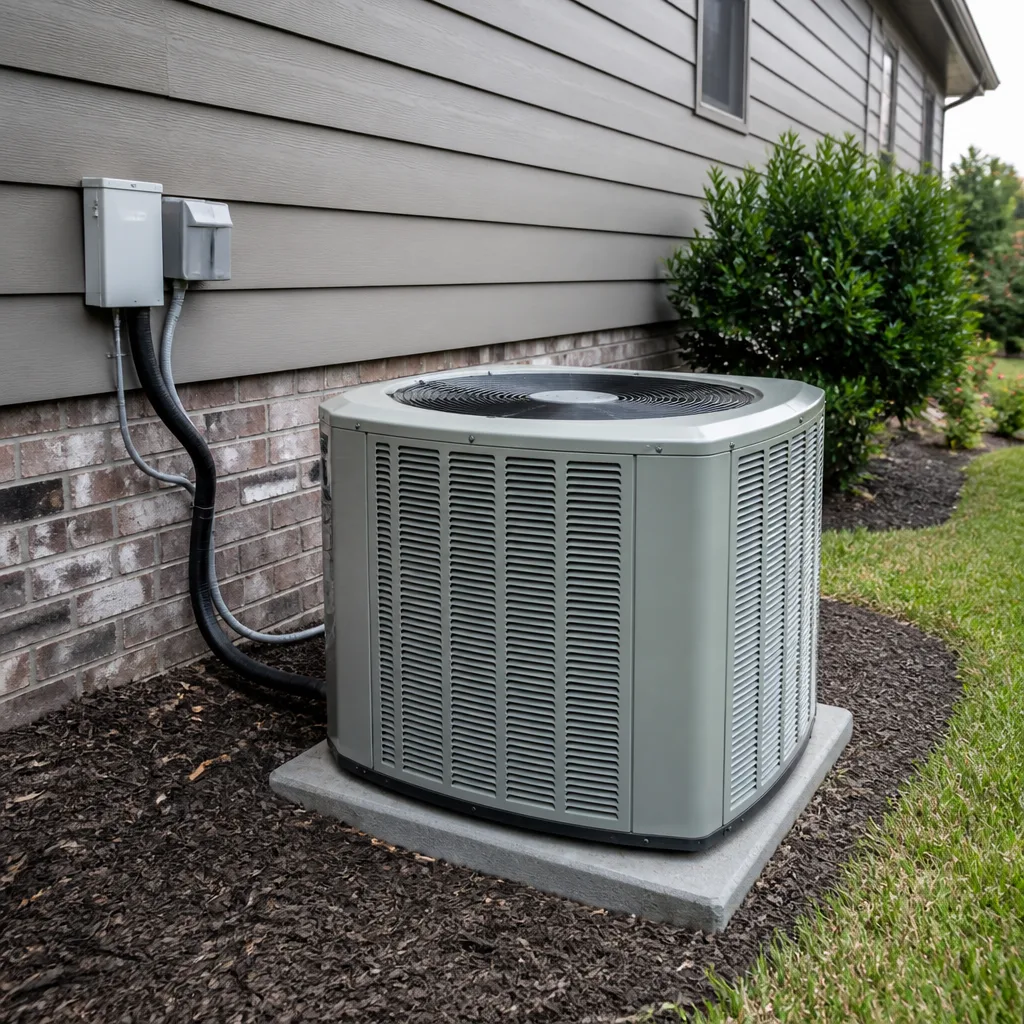
 AC repair
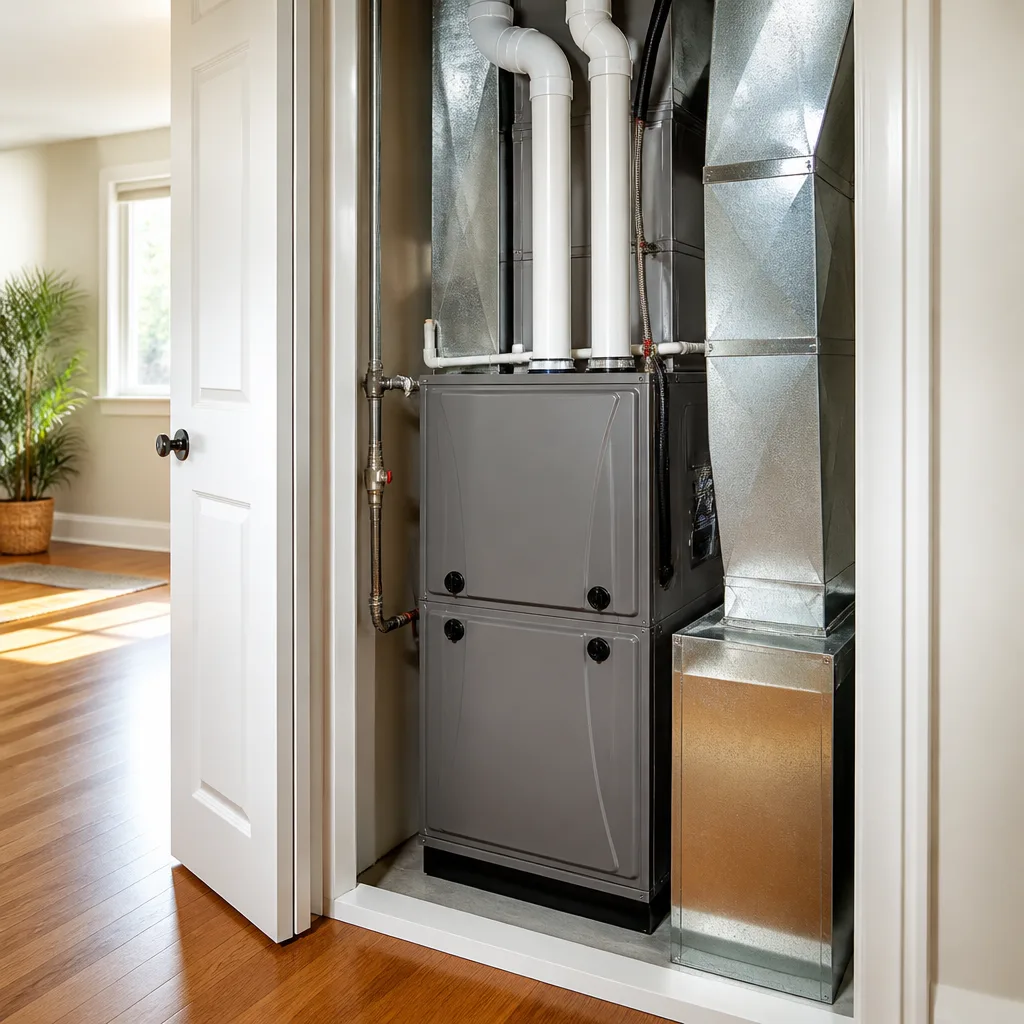 Furnace & heating
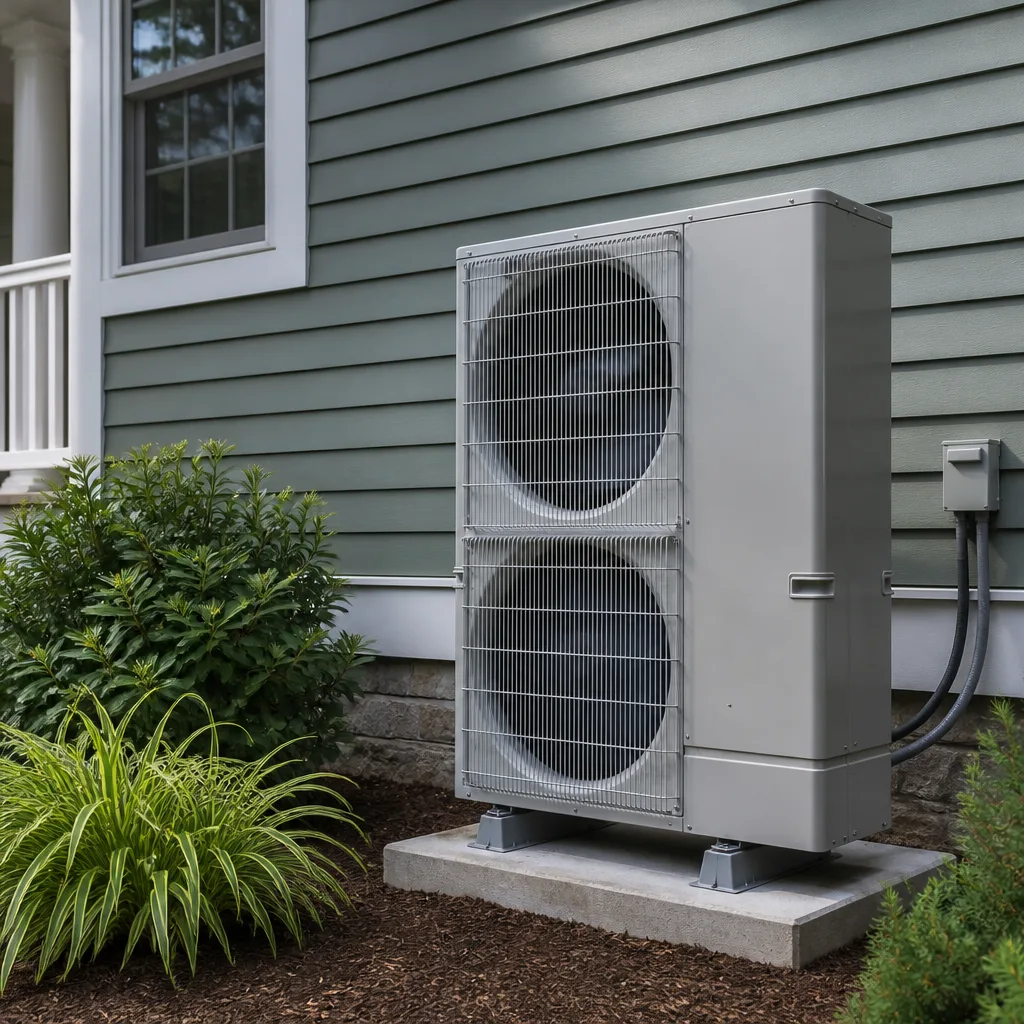 Heat pumps
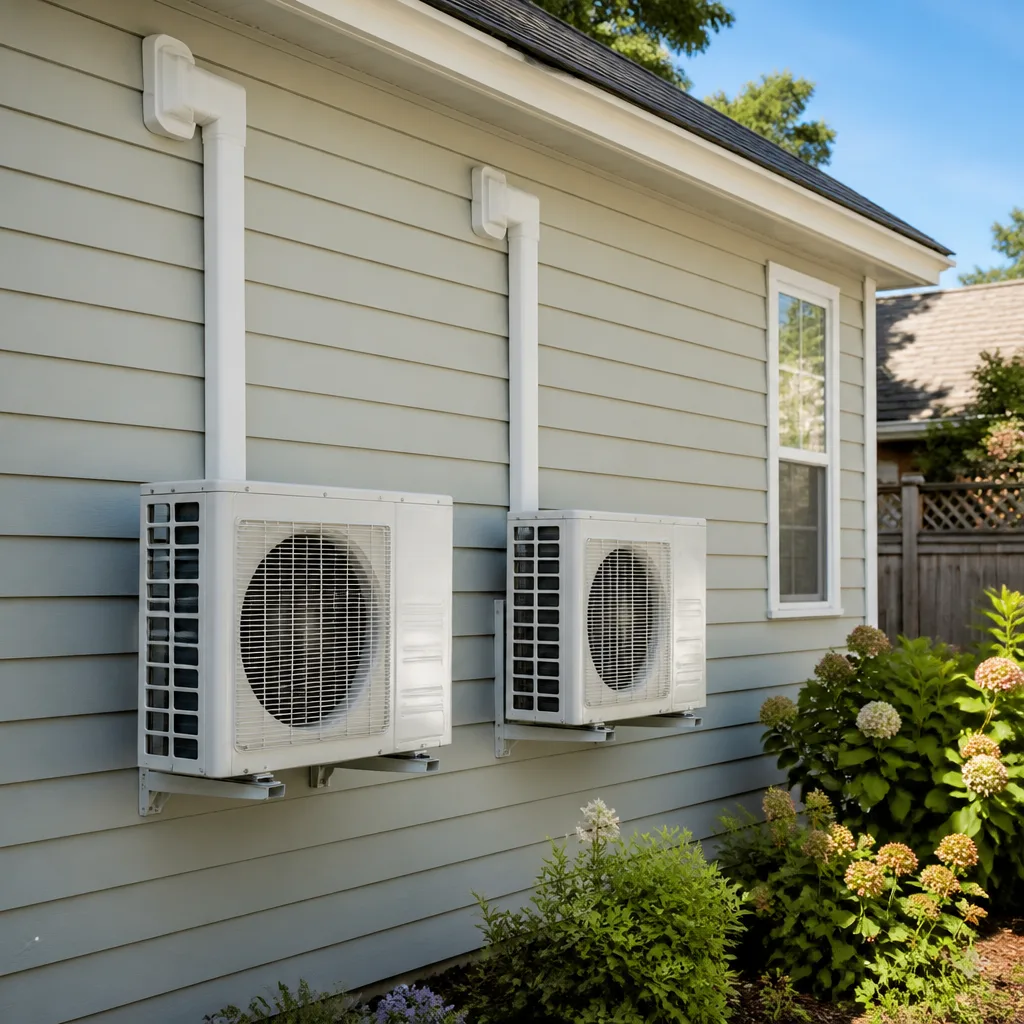 Ductless mini splits
 Carrier
 Trane
Trane Goodman
Seasonal tune-up and full diagnostic on your Carrier, Trane, or Goodman system - readings shown to you before any repair is proposed
Diagnosis first, numbers second - you approve the repair price before a single part goes in.
Get your free estimateRheem Capacitor Replacement: The Austin Owner’s Guide
We replace Rheem capacitors in Austin homes every week during cooling season, and the typical installed cost runs $150 to $300, parts and labor included. We stock Rheem-compatible dual-run and start capacitors on our trucks, so most replacements happen the same day you call. If your condenser unit outside is humming but the fan isn’t spinning, or your compressor clicks and then goes silent, there’s a strong chance the capacitor is the culprit.
Rheem builds solid equipment, but capacitors are a wear item on every brand. In Austin’s heat, they fail faster than the national average because a capacitor works harder when your system runs longer cycles. The good news: it’s one of the least expensive AC repairs, and when we replace it, you get a written price before we touch a single wire.
Which Rheem Models This Applies To
This page covers capacitor replacement for Rheem residential condensing units and heat pumps, including the Classic, Prestige, and Endeavor series. Most Rheem units built in the last 15 years use either a dual-run capacitor (one cylinder that powers both the fan motor and compressor) or a combination of a run capacitor plus a start capacitor on higher-efficiency models. You’ll find the capacitor mounted inside the outdoor unit’s electrical panel, and the label on the old part tells you everything: microfarad rating (typically 35/5, 40/5, 45/5, or 50/5 for dual-run), voltage (usually 370V or 440V), and shape (round or oval).
Here’s a compatibility gotcha most homeowners don’t know: a 440V capacitor is a perfectly fine replacement for a 370V original, but not the other way around. The voltage rating is a ceiling, not a requirement. Some Austin techs will install whatever is on the truck; we match the microfarad rating exactly within 5% tolerance and never step down on voltage. As for OEM versus aftermarket, Rheem doesn’t manufacture capacitors; they source them from the same suppliers we use (AmRad, Titan, Genteq). A quality aftermarket capacitor from those brands performs identically to the Rheem-labeled part, usually costs less, and carries the same or better reliability record. We stock both and will show you the label before we install it.
Styles & brands we work with
Signs Your Rheem Capacitor Replacement Is Failing
- Humming outdoor unit, fan not spinning. The capacitor provides the starting jolt the fan motor needs. A dead capacitor leaves the motor humming but unable to turn. This is the most common presentation we see in South Austin neighborhoods like Travis Heights and Barton Hills.
- AC blowing warm air while the indoor blower runs. If the compressor can’t start because its capacitor legs are dead, the indoor fan keeps circulating but there’s no cooling. The system looks awake, but it’s not doing the job.
- Clicks and brief buzzing at the outdoor unit. That’s the compressor trying to start without enough stored energy. It will cycle off on thermal overload, then try again. Each failed start builds heat inside the compressor shell, which is exactly what shortens compressor life.
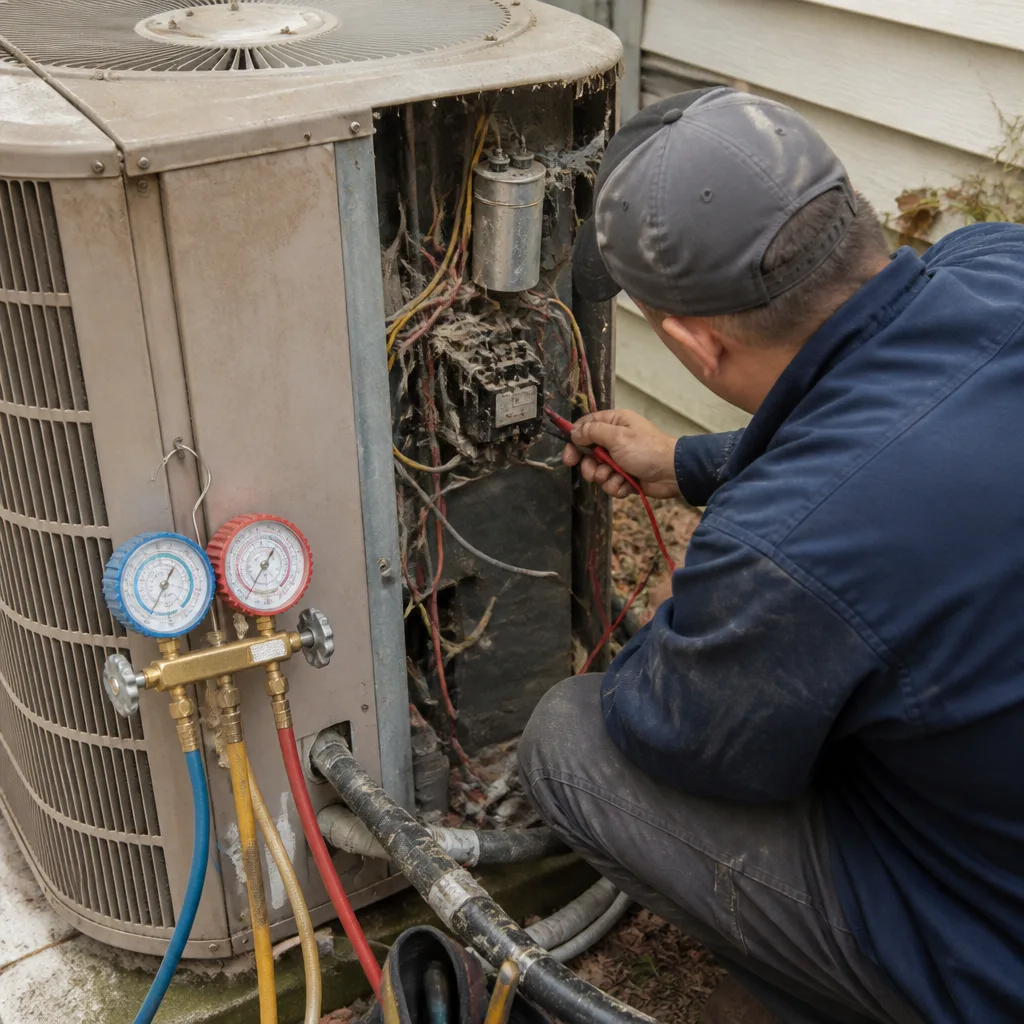
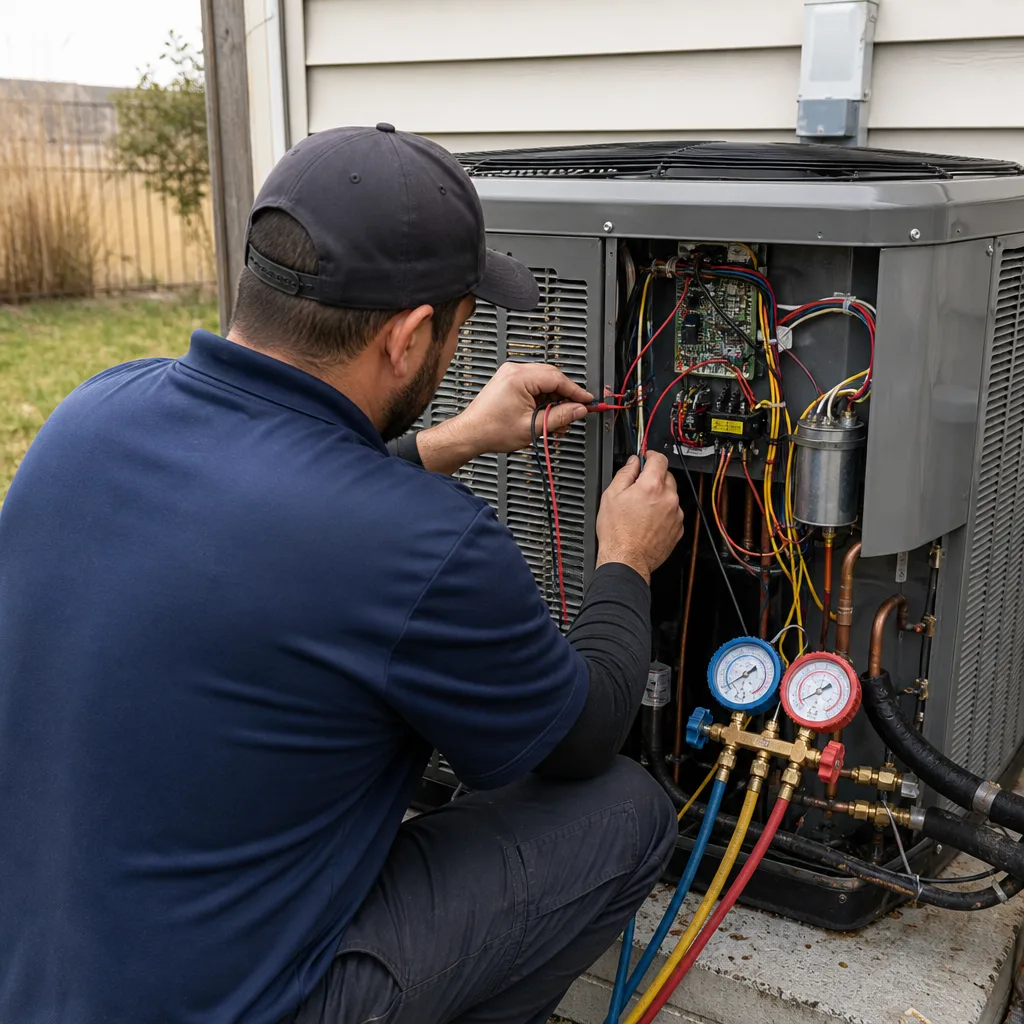
- Visible bulging or leaking from the capacitor case. Capacitors are sealed metal cylinders. When the dielectric fluid inside breaks down from heat and age, the top domes or the sides bulge and sometimes leak oil. If you open the panel and see a rounded top where it should be flat, that part is done.
- Intermittent starting, especially on hot afternoons. A weak capacitor might have just enough capacity to start the compressor on a mild morning and lose that ability when ambient temperature climbs past 95 degrees. In Round Rock and Pflugerville, we get calls around 4 p.m. exactly for this reason.
See the difference
 Before
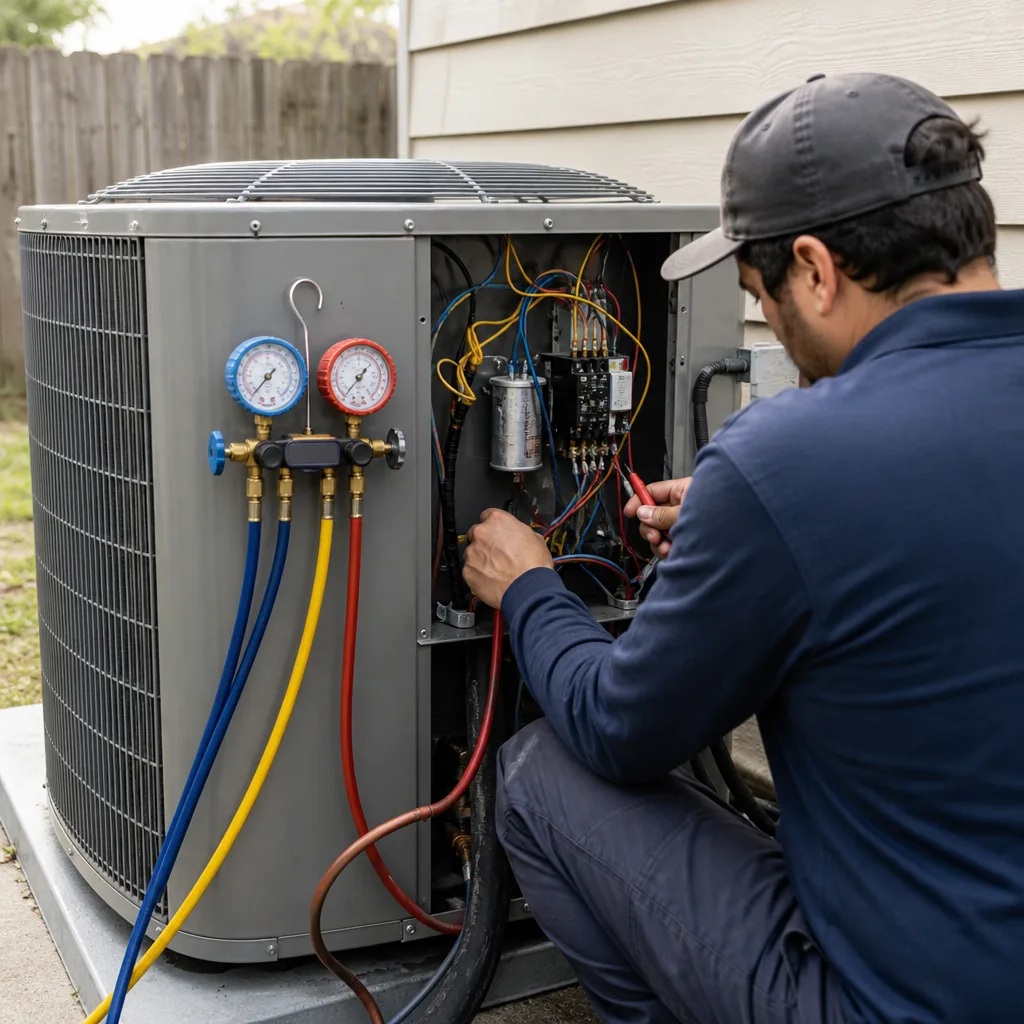 After
After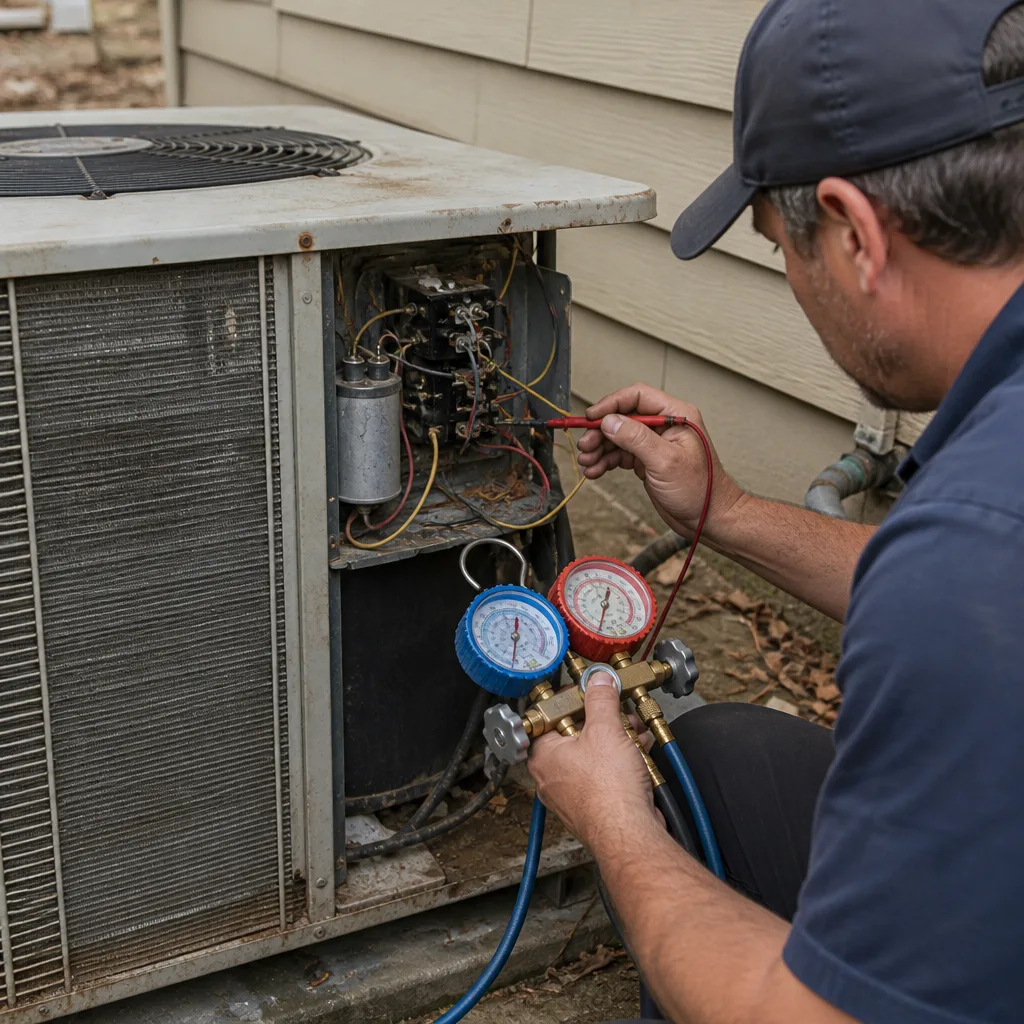 Before
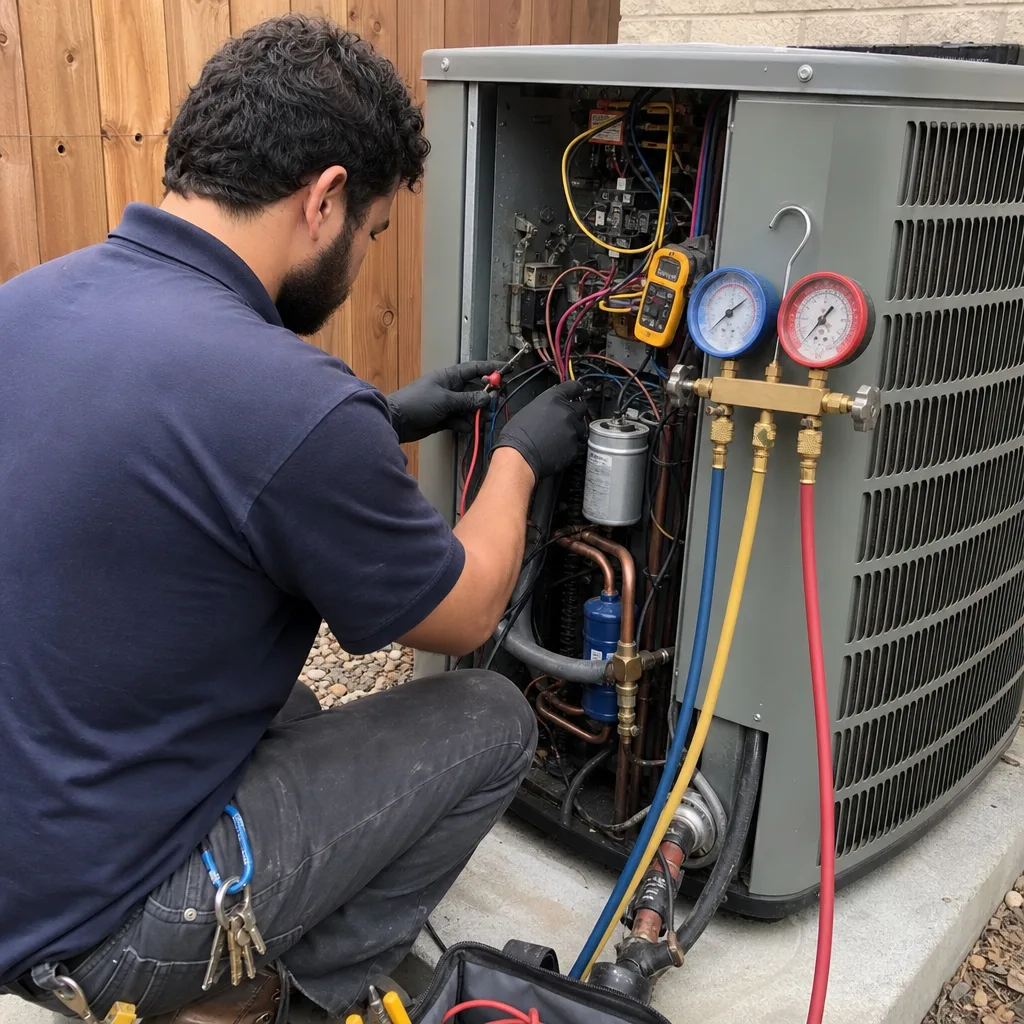 After
After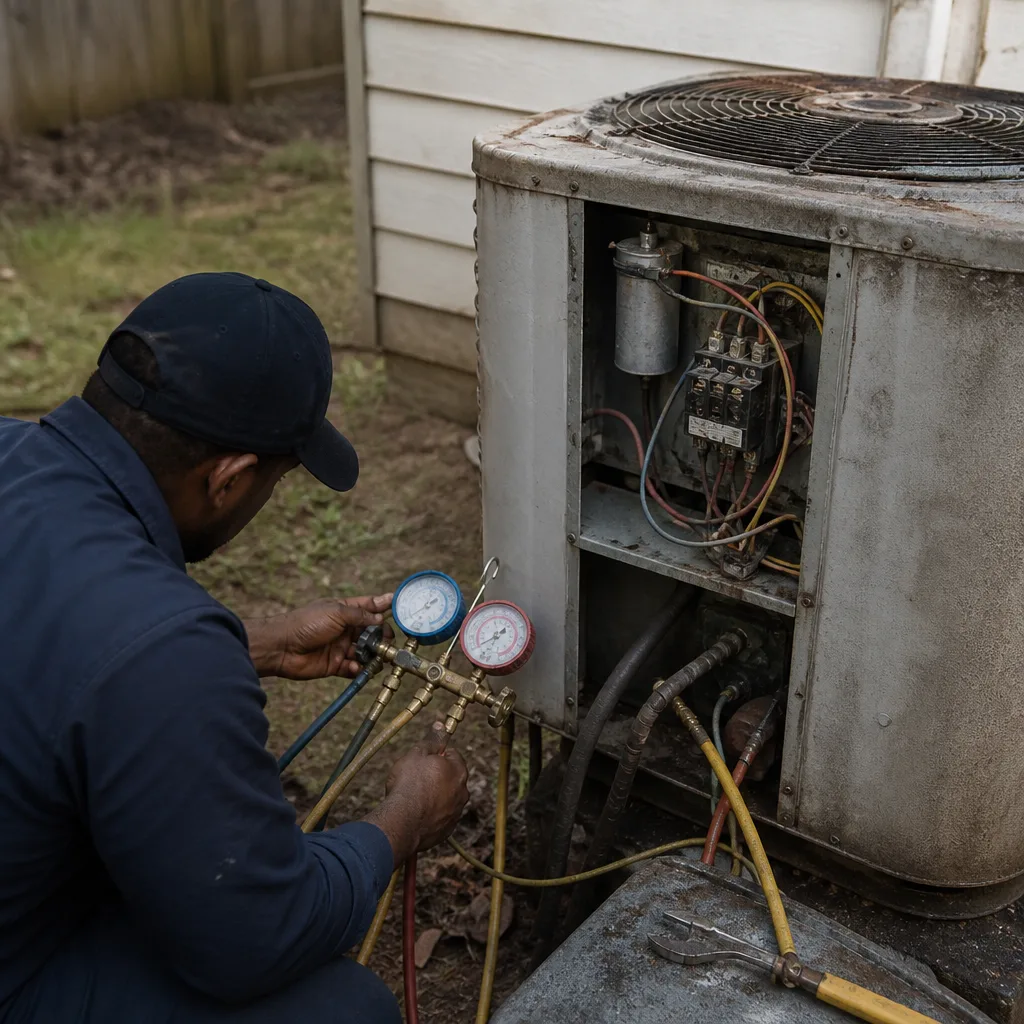 Before
 After
AfterReplacement Cost & What’s Included
In Austin, Rheem capacitor replacement runs $150 to $300 installed, which is the low end of the $150 to $650 range for AC repairs overall. The part itself is typically $20 to $60 depending on the rating and whether it’s a dual-run or start capacitor. The rest is labor, the diagnostic time to confirm the capacitor is actually the failed component, and testing the fan motor and compressor after installation to make sure the capacitor didn’t fail because something upstream is wrong.
A capacitor that fails prematurely is often a symptom, not the root problem. Low refrigerant, a failing fan motor drawing too many amps, or a compressor nearing end of life can all stress a new capacitor. That’s why every replacement we do includes a written report of line voltage and amp draw readings before we consider the job finished. The repair is guaranteed for 365 days under our Done Right Promise; if the new capacitor fails within that window, we return free of charge.
DIY or Call Us?
We’ll be direct: a capacitor stores enough electrical charge to stop your heart, even after the breaker is off. The terminals can hold voltage for hours or days after power is disconnected, and the discharge procedure requires a resistor and a careful hand. If you know what you’re doing and you’re comfortable with a multimeter, replacing a capacitor is a 20-minute job. If you’re not certain of every step, this is not the place to learn by trial.
What an owner can safely do: check the breaker, confirm the thermostat is calling for cooling, and visibly inspect the outdoor unit for a bulging capacitor if you’re comfortable opening the panel with the breaker OFF. What we’d rather you not do: attempt the swap based on a video without verifying the microfarad match and discharging the old part properly. Call us at (361) 326-1553 and we’ll have a background-checked, uniformed technician at your door with the right part, a written price, and a photo sent beforehand so you know exactly who’s arriving.
FAQs
A Rheem capacitor typically lasts 5 to 10 years, but in Austin’s climate we see failures starting around year 4 or 5 because sustained high-heat operation breaks down the internal dielectric faster. If your system is over 8 years old and the original capacitor just failed, expect reasonable service life from the replacement, not a second decade.
No. Capacitors are sealed, non-serviceable components with no repairable internal parts. When they fail, the only fix is replacement, and we’ll show you the bulged or leaking old part before we dispose of it.
From arrival to a running system, a capacitor replacement takes 30 to 60 minutes, including verifying the new part matches the old one, installing it, testing amp draw, and confirming the unit starts and stops normally. We carry common Rheem ratings on the truck, so we rarely need a second trip.
Yes. We stock 35/5, 40/5, 45/5, and 50/5 dual-run capacitors at both 370V and 440V ratings, plus common start capacitors, plus compatible capacitors for Carrier, Trane, and Lennox systems. If you have an unusual model that requires a special order, we’ll tell you the day and have it in hand before we schedule the work. Call (361) 326-1553 for a free estimate and a confirmed same-day appointment.
Written by Devin Marlowe, Owner, Brandt HVAC Co Austin at Brandt HVAC Co Austin, serving Austin and nearby areas.