
 Trane
Trane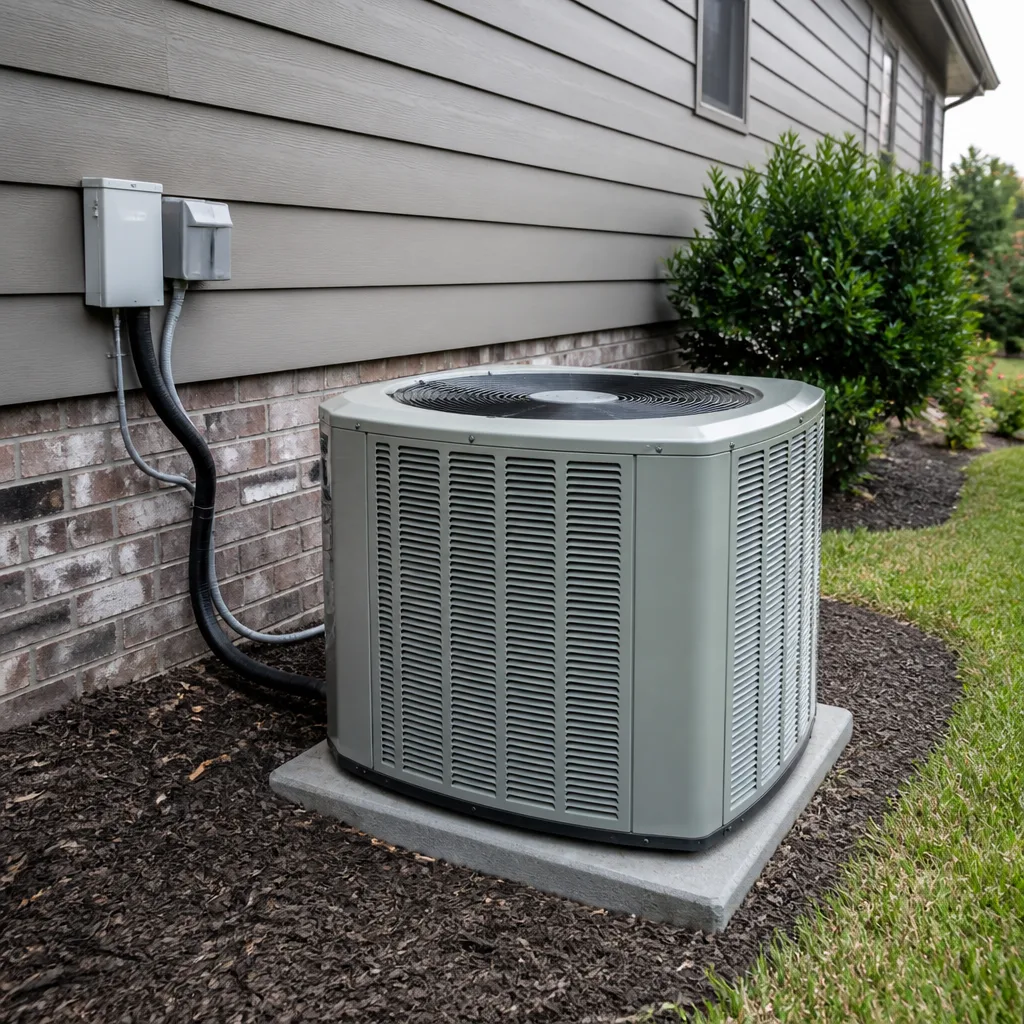 AC repair
 Furnace & heating
 Heat pumps
 Ductless mini splits
 Carrier
 Goodman
Seasonal tune-up and full diagnostic on your Carrier, Trane, or Goodman system - readings shown to you before any repair is proposed
Diagnosis first, numbers second - you approve the repair price before a single part goes in.
Get your free estimateTrane Capacitor Replacement: The Austin Owner’s Guide
We replace Trane capacitors in Austin homes most weeks of the year, and the installed price for the work typically runs $150 to $350, parts and labor included. Most Trane capacitor replacements happen same day because we stock common Trane-compatible capacitors on the truck. The usual tipoff is an air conditioner that hums but won’t start, or a compressor that kicks off after a few seconds even though the thermostat is calling for cool.
Here’s what’s happening: the capacitor stores and releases the electrical jolt that gets your compressor and outdoor fan motor spinning. When it weakens or fails, the motor can’t get started on its own. In a Central Texas summer, that part doesn’t fail quietly. It fails on a Sunday afternoon in July when the attic is already 115 degrees and the unit has been running hard since breakfast. Devin Marlowe has pulled enough bulged, leaking Trane capacitors out of Austin condensers to know exactly what that failure looks like, and he’s built Brandt HVAC Co on telling you straight what’s wrong before any work starts.
One thing to know before we go further: Brandt HVAC Co Austin is an independent service provider. We’re not affiliated with Trane or any other manufacturer. That matters because you get honest advice on whether an OEM Trane capacitor or a quality aftermarket equivalent makes more sense for your system, not a parts counter pushing one brand.
Which Trane Models This Applies To
We work on the full range of Trane residential equipment. That includes XL series condensers (like the XL14i, XL15i, XL16i, and XL18i), XR series units (XR13, XR14, XR15, XR16), XB series systems, and the newer XV and XV18i variable-speed models. The capacitor replacement process differs depending on whether we’re working with a single-stage, two-stage, or variable-speed compressor, so we verify the exact model before quoting a price.
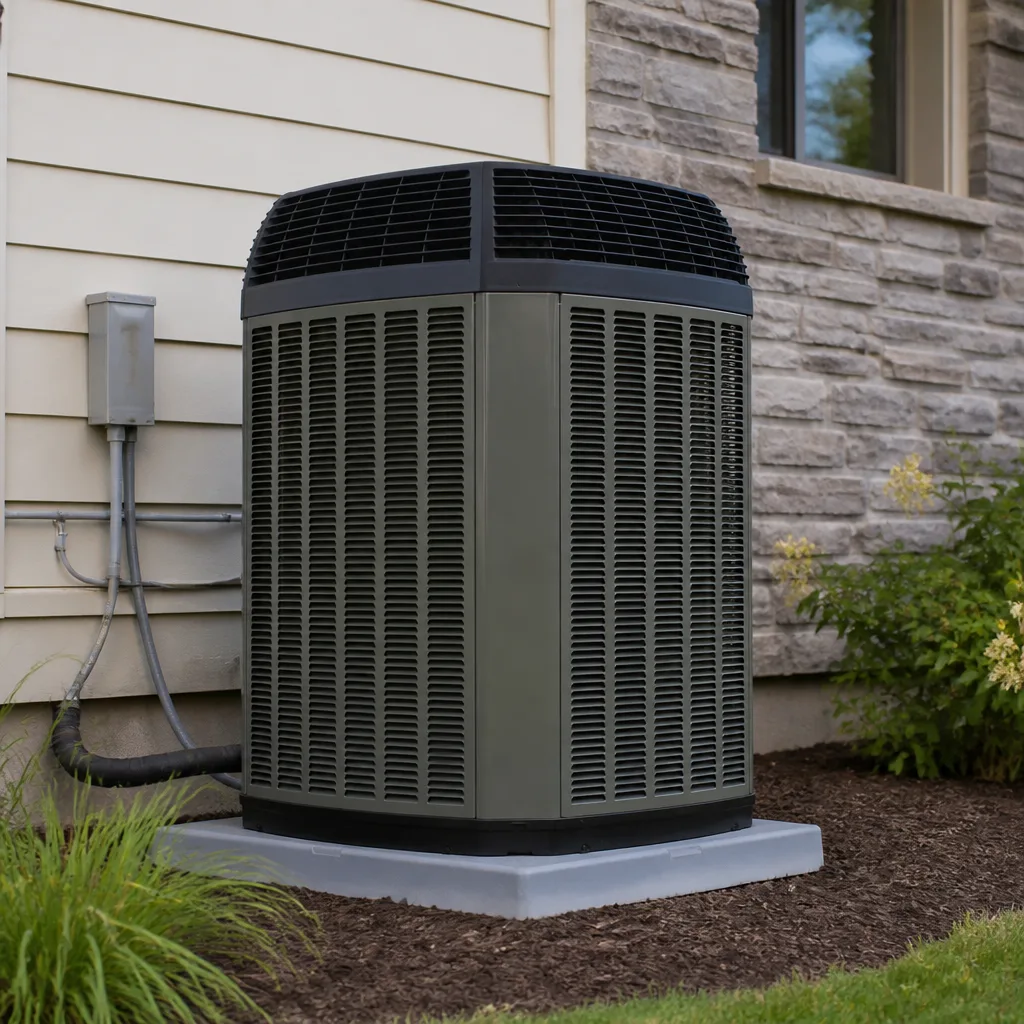
Here’s the compatibility gotcha most people never hear about: Trane systems don’t all use one capacitor. A single-stage XR14 in Austin might run a dual-run capacitor rated at 35/5 microfarads, while a two-stage XL16i needs a different spec entirely. Variable-speed units often use multiple capacitors or different configurations than the older single-stage workhorses people are most familiar with. Here’s what you need to know when we look at your system. The capacitor itself has the microfarad (µF) rating printed right on the side, usually something like “35/5 µF 440 VAC.” A dual-run capacitor is actually two capacitors in one can: one side starts the compressor, the other starts the fan. If the replacement doesn’t match the original’s microfarad rating within the manufacturer’s tolerance (typically plus or minus 6%), the motor runs hotter and the part dies early. A wrong capacitor in a Trane is worse than a failed one because it can take out the compressor over time. That’s the checkable information most people miss.
On the OEM versus aftermarket question for Trane specifically: Trane-branded capacitors are quality parts, but they’re also re-labeled components made by the same manufacturers (American Radionics, Genteq, TITAN HD, and others) that sell under their own names. A good aftermarket capacitor with the same microfarad rating and a 440-volt tolerance will perform just as well and usually costs less. For most Austin homeowners, we recommend the aftermarket equivalent unless the system is under warranty, in which case OEM makes sense to keep the warranty path clean.
Styles & brands we work with
Signs Your Trane Capacitor Replacement Is Failing
- The AC hums but doesn’t start. You hear a low electrical hum from the outdoor unit but the fan isn’t spinning and no cold air is moving. That’s the compressor trying to start without the jolt the capacitor should be providing, which also means the motor is pulling heavy current while it sits there stuck.
- The outdoor fan doesn’t spin, or spins slowly. The fan side of a dual-run capacitor can fail while the compressor side still works, or the other way around. A fan that’s barely turning on a Trane condenser is often running on a capacitor that’s lost most of its microfarad rating.
- The system starts, then shuts off after a few minutes. The compressor gets going, but the capacitor can’t keep the circuit operating correctly, so the unit overheats or trips a safety. This one is frustrating because it might work fine at 8 a.m. and quit by 2 p.m. when the heat load peaks in an Austin afternoon.
- The breaker trips when the AC kicks on. A failing capacitor causes the compressor to pull higher amperage at startup. That extra draw can push a marginal breaker over the edge, especially in older Austin homes where the electrical panel has seen better decades.
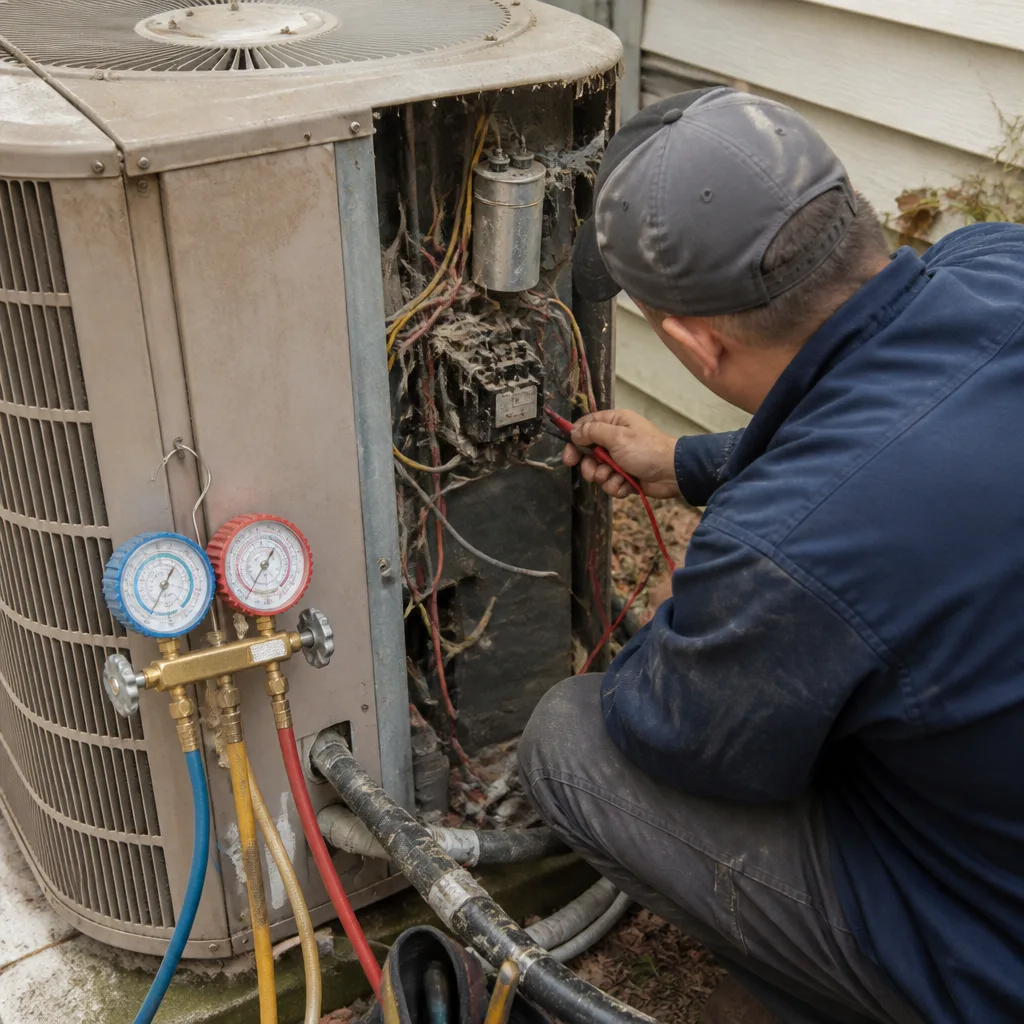
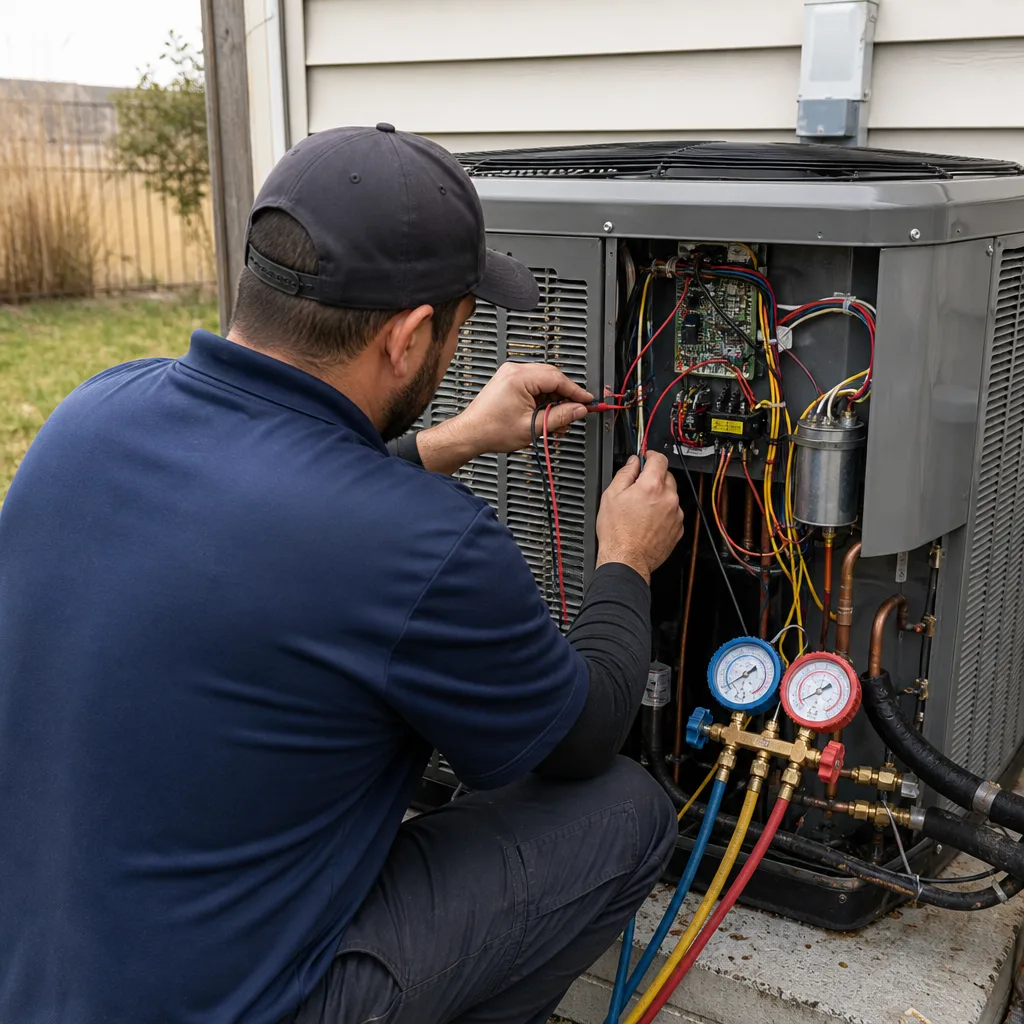
- You can see the capacitor is swollen or leaking oil. If you know where to look and feel safe doing it, a capacitor that looks puffed up, split at the seam, or leaking a small amount of oil is done. This is an inspection that tells the whole story, not a repair step, and we handle it with the power off and the capacitor safely discharged.
See the difference
 Before
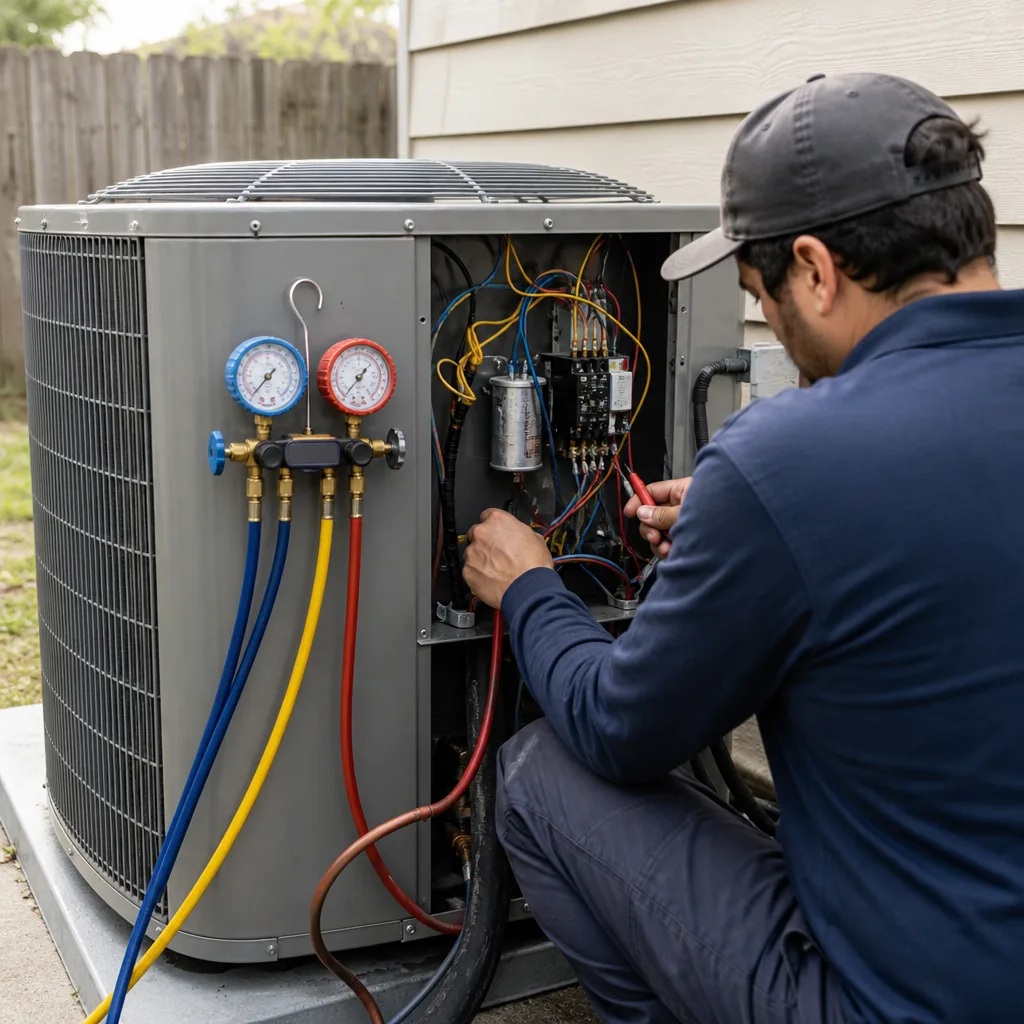 After
After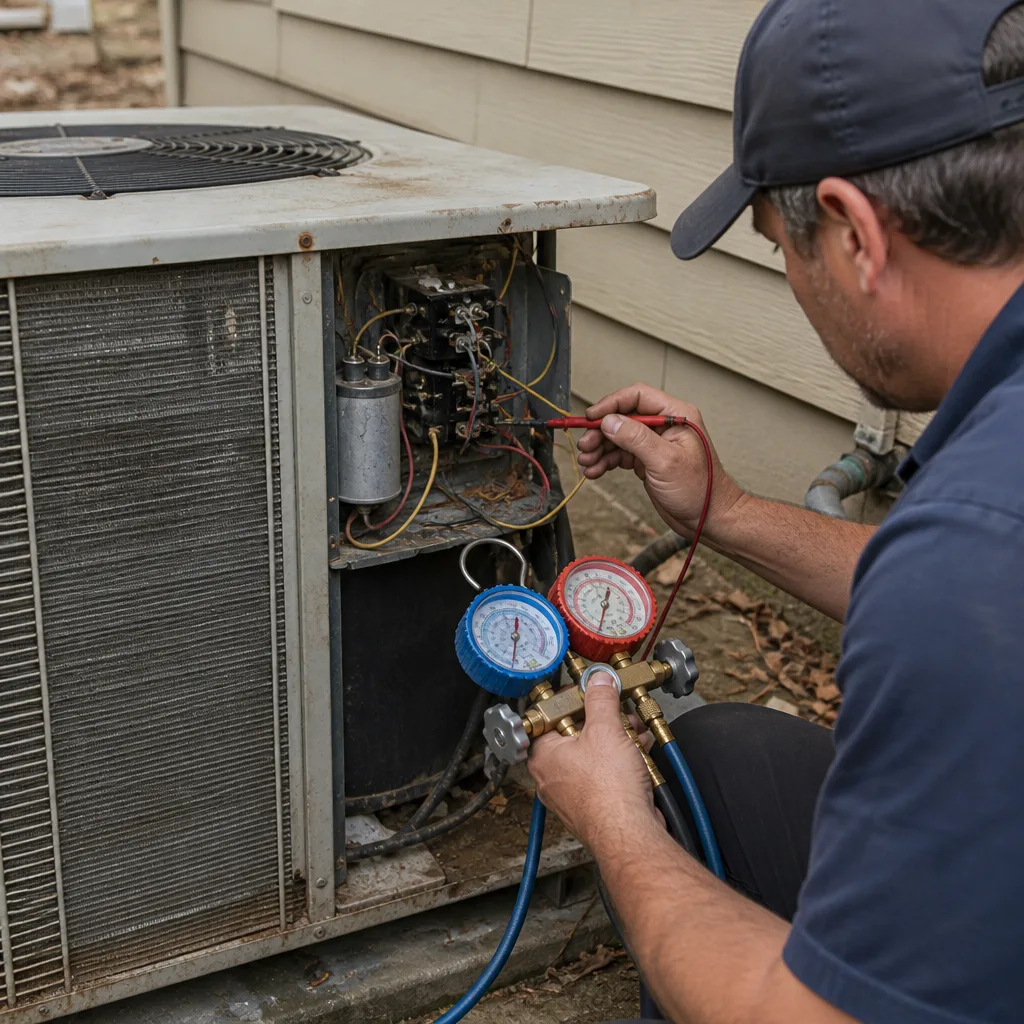 Before
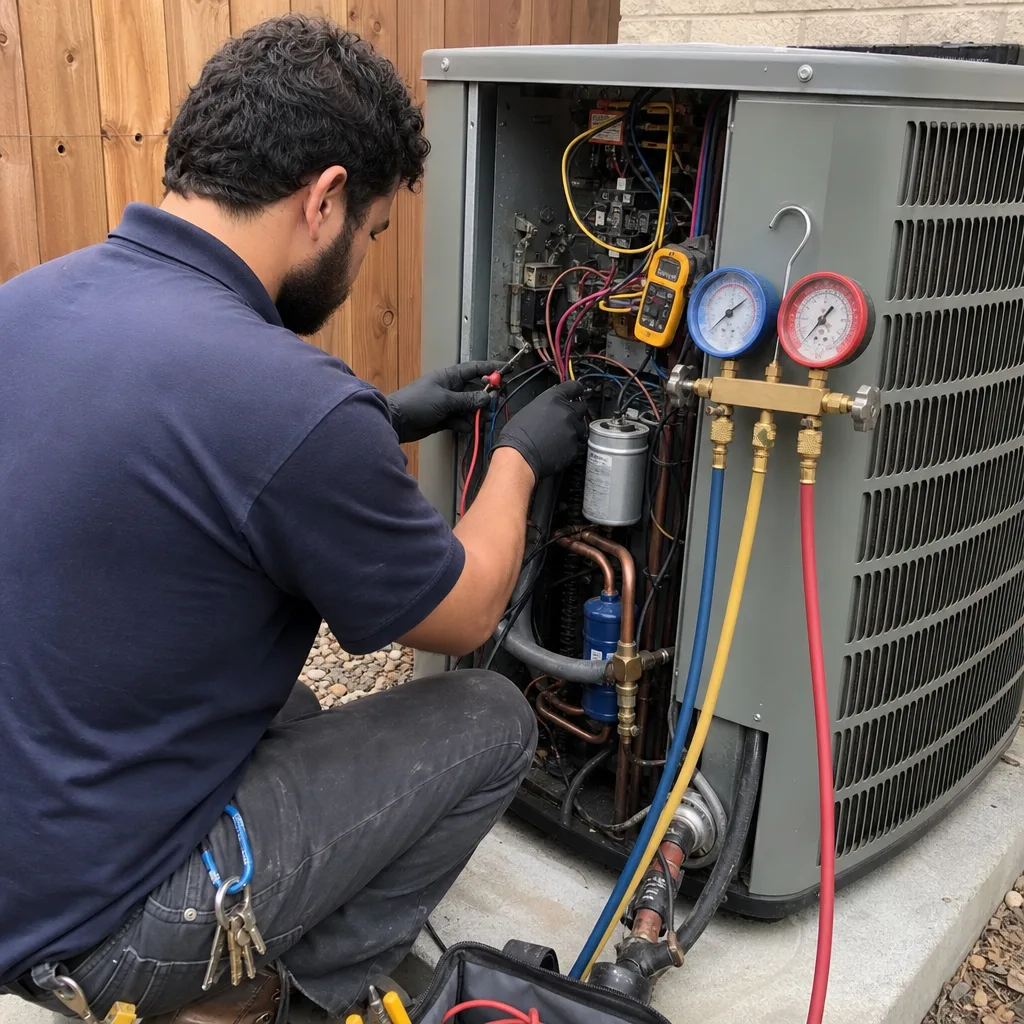 After
After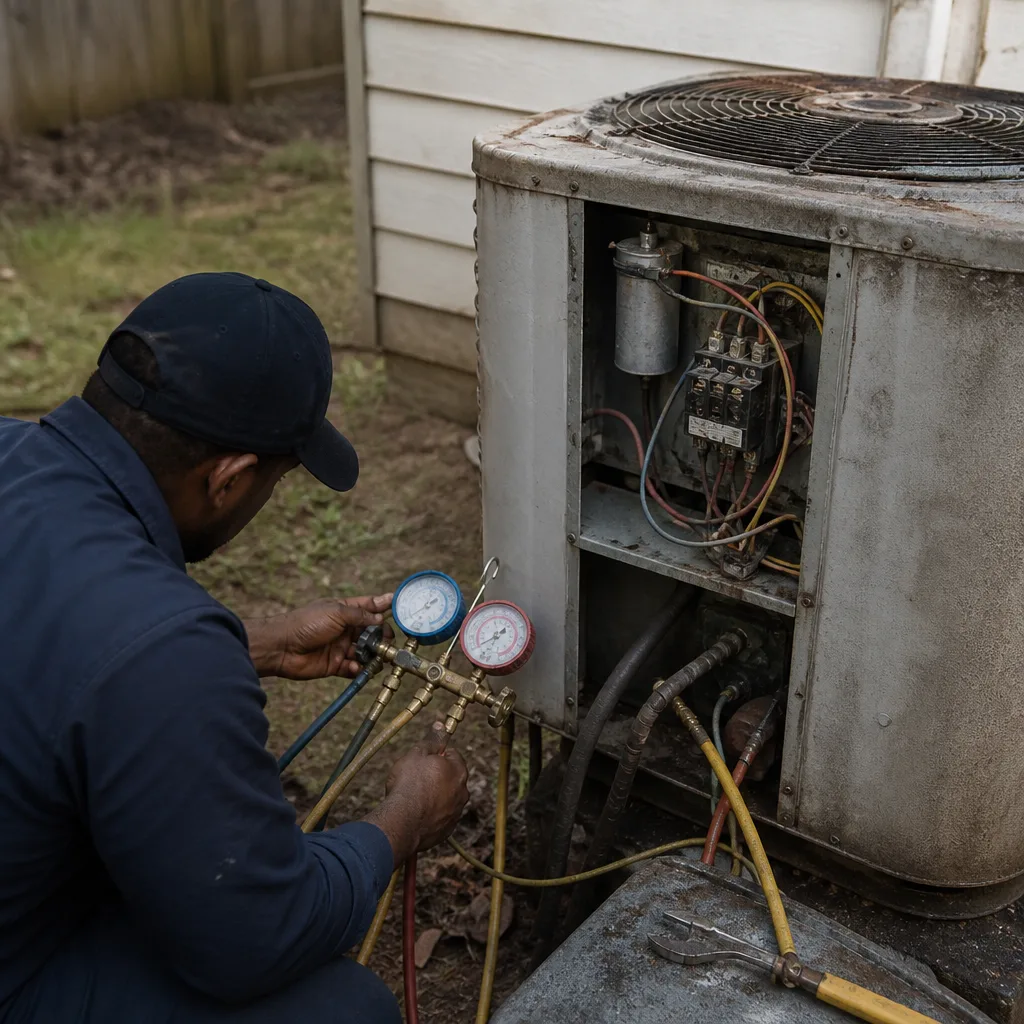 Before
 After
AfterReplacement Cost & What’s Included
For a standard Trane capacitor replacement in Austin, most jobs land between $150 and $350 when you account for the part, the service call, and the labor. A basic single-stage Trane condenser taking a universal or standard dual-run capacitor sits at the lower end of that range. Two-stage systems, variable-speed units, or setups where the capacitor is difficult to access push toward the higher end. If the system is over 12 years old we’ll also check the contactor and wiring connections while we have the panel open, because those parts tend to degrade on the same schedule as the capacitor.
Here’s what you get with Brandt HVAC Co Austin. A written price before any work starts, every time. The capacitor itself, matched to your Trane’s exact microfarad and voltage spec. Installation, testing, and a check of the compressor and fan amperage to make sure the new part is actually solving the problem. And a written guarantee on the repair: if the capacitor fails within 365 days, we return and replace it at no charge. That’s the 365-Day Done Right Promise, and it’s in writing on every job.
We’ll never show up at your door without telling you who’s coming first. Every technician is background-checked, uniformed, and sent to you by name and photo before the visit, with a photo ID badge shown at the door. That’s the Threshold Verified standard we run on, and it matters when you’re letting someone into your home to work on your equipment.
DIY or Call Us?
Let’s be straight: a capacitor stores enough voltage to seriously hurt you even when the power is off. A capacitor that hasn’t been properly discharged can hold a charge for a long time. Touching the wrong terminal is not a DIY mistake you get to make twice. We say this not to scare you but to be honest about a part that looks simple and absolutely is not. This is electrical work on a live-threat component, and it’s one of the repairs where calling a trained professional is the right call.
What you can safely do is confirm the symptom for us. Listen for the hum, check whether the fan is spinning, feel whether warm air is blowing from the registers. That information helps us quote the job accurately before we send a technician. Then call (361) 326-1553 and we’ll take it from there. A live person answers, day or night. We name the problem, name the price, and then we fix it, no surprises after the fact.
FAQs
A Trane capacitor in Austin typically lasts 5 to 10 years, but the Central Texas heat shortens that lifespan compared to milder climates because the constant summer cycling and high ambient temperatures break down the capacitor’s internal materials faster. Units that run hard from May through October in neighborhoods like South Congress or Mueller will usually need a capacitor before a unit in a cooler climate will. Call (361) 326-1553 and we’ll check yours during a standard repair visit.
No, a failed capacitor can’t be repaired, and no reputable technician will try. The failure is internal, whether it’s a loss of capacitance, a shorted winding, or a ruptured case, so the only fix is a new capacitor matched to the original spec.
Most Trane capacitor replacements take 45 minutes to an hour from the time the technician starts the diagnosis to the moment the system is running and tested. If the part is one we keep on the truck, which it usually is for common Trane systems, the whole job is done in one visit.
We stock the most common Trane-compatible capacitor sizes on our service trucks in Austin, and we also carry parts for Carrier and Lennox systems those brands can use. For less common Trane models, especially variable-speed units with unusual specs, we can usually source the part the same day from a local supplier and have your system running within 24 hours.
Written by Devin Marlowe, Owner, Brandt HVAC Co Austin at Brandt HVAC Co Austin, serving Austin and nearby areas.